
Frogspawn and tadpoles
in our wildlife garden pond
Click on the pictures to see a larger view
|
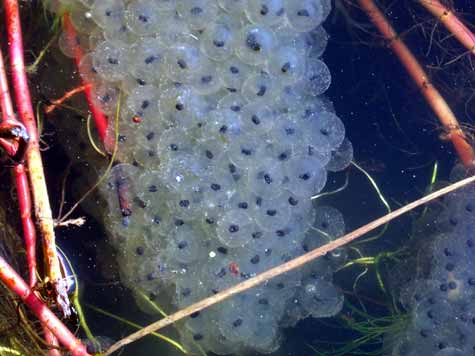
Three weeks after being laid the frogspawn is starting to develop into tadpoles. Although it may not be obvious in this small picture, the black dot inside the frogspawn jelly is now elongating into a tadpole shape. The weather in this part of Lancashire is often cold, and some mornings recently the pond has been frozen. Cold weather can cause the frogspawn to go milky white and kill it. See the FAQ page. |
 |
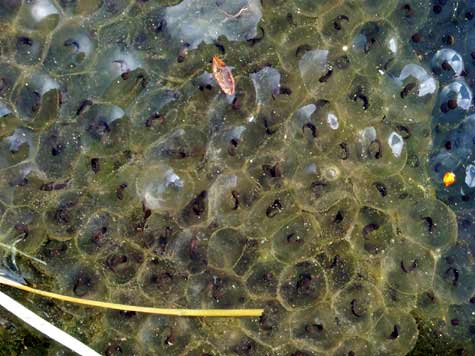 |
At four weeks there is a definite tadpole shape now, but the cold spring is hampering development. Some web sites claim that frogspawn takes only 10 days to develop into tadpoles. Not in the North West of England, it doesn't, and particularly if your garden is like ours and is more than 800 feet above sea level. |
|
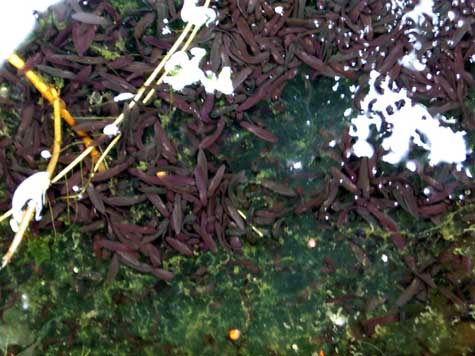
Now five weeks old and much of the frogspawn now looks
like miniature eels, clearly visible on top of the jelly.
This the next development stage, the change into true tadpoles,
complete with wiggling tail, and yes, it's still cold! |
|
||
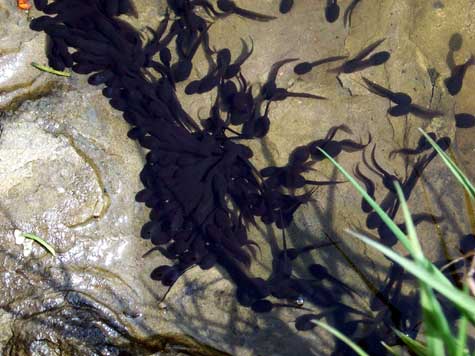
15th June - Disaster strikes! A 'flash flood' (the
heaviest sustained spell of rain in the area for 20 years
- and it rains a lot in Lancashire!) caused the pond to overflow
into the surrounding garden with the loss of many tadpoles
who seemed intent on making a bid for freedom instead of staying
in the deep water of the pond. I scooped up as many as I could
with a tablespoon! I also cleaned the pump filter and found
that many had sneaked through the thin plastic grille of the
pump housing and died. No wonder frogs lay so much frogspawn.
I have replaced the pump's inbuilt sponge filter with a Rotorflush
external filter. This has a fine wire mesh to avoid a
recurrence and minimizes pump maintenance. I have also installed
a controlled overflow pipe to the pond. This is fitted with
a fine gauze to prevent siphoning out the tadpoles as well
and it should cope with future storms. 28th July Tiny froglets were seen in and around the pond. The frogspawn was laid on 4th March, so it has taken a long time to get to this stage, certainly much longer then the text books say! | Frogs, frogspawn & tadpoles - page [1]|
|
|||
 |
|