
On This Day - 7th May
1663 The Theatre Royal, Drury Lane, built by Thomas Killigrew, opened under a charter granted by Charles II.
1765HMS Victory, (see  picture), the ship which became the flagship of British Admiral Horatio Nelson, was launched at Chatham. The ship is now preserved at Portsmouth.
1812The birth of Robert Browning, English poet and one of the foremost Victorian poets.
1821Sierra Leone, Gambia, and the Gold Coast were taken over by the British government to form British West Africa.
1860The birth of English freak showman Thomas Noakes, (later known as Tom Norman). In 1884, he took over the management of Joseph Merrick, otherwise known as the 'Elephant Man' and exhibited him for a few weeks until police closed down the show. Over the next few years, Norman's travelling exhibitions featured Eliza Jenkins, the 'Skeleton Woman', a 'Balloon Headed Baby' and a woman who bit off the heads of live rats, the 'most gruesome' act that Norman claimed to have seen. Other acts included fleas, fat ladies, giants, dwarfs and retired white seamen, painted black and speaking in an invented language, billed 'savage Zulus'.
1915World War I : The Cunard liner Lusitania, bound for Liverpool, was torpedoed by a German submarine off the coast of Ireland with the loss of almost 1,200 lives. The loss of 128 US citizens brought the USA to the verge of war with Germany.
1916The birth of Huw Wheldon, former BBC broadcaster, and Controller of BBC1. In 1968 he became Director of BBC television, a position he held until compulsory retirement in 1975. The period of his administration came to be known as 'the Golden Age of British Television' and included programmes such as Steptoe and Son, Till Death Us Do Part, Dad's Army and Alistair Cooke's America.
1925 The death of the English industrialist, philanthropist, and politician William Hesketh Lever (Lord Leverhulme). He began manufacturing Sunlight Soap, and built a substantial business empire with many well-known brands such as Lux and Lifebuoy. This Leverhulme Memorial (see  picture) stands to the west of the Lady Lever Art Gallery in Port Sunlight, Wirral, Merseyside. See also plinth and inscription - (
 picture)
1928The voting age for women in Britain was reduced from 30 to 21.
1940The 'Norway Debate' began in the House of Commons. It led to the replacement of Prime Minister Neville Chamberlain and the formation of a widely-based National Government led by Winston Churchill which was to govern Britain until the end of World War II.
1945Germany signed an unconditional surrender in a small school in Rheims (France) when General Jodl, German Army Chief of Staff, signed his name on documents that formally ended six years of war in Europe.
1947 The death of Harry Gordon Selfridge, Sr., the American retail magnate who founded the London-based department store Selfridges. At the height of his success, Selfridge leased Highcliffe Castle in Hampshire - (see  picture). He is buried at St. Mark's Church in Highcliffe.
1956Health Minister, RH Turton, rejected calls for a government campaign against smoking, saying no ill effects had been proven.
1959British Rail announced plans to close down 230 stations.
1965White voters in the African colony of Rhodesia backed Prime Minister Ian Smith's Rhodesian Front which was demanding independence from the UK.
1987Ex-Guinness chairman Geoffrey Saunders was remanded on bail on a charge of attempting to pervert the course of justice.
1997Glasgow Rangers won their 9th successive Scottish League title - to equal the record held by their closest rivals, Celtic.
1999The first Scottish Parliament for 300 years was elected. The Scottish Parliament building (see 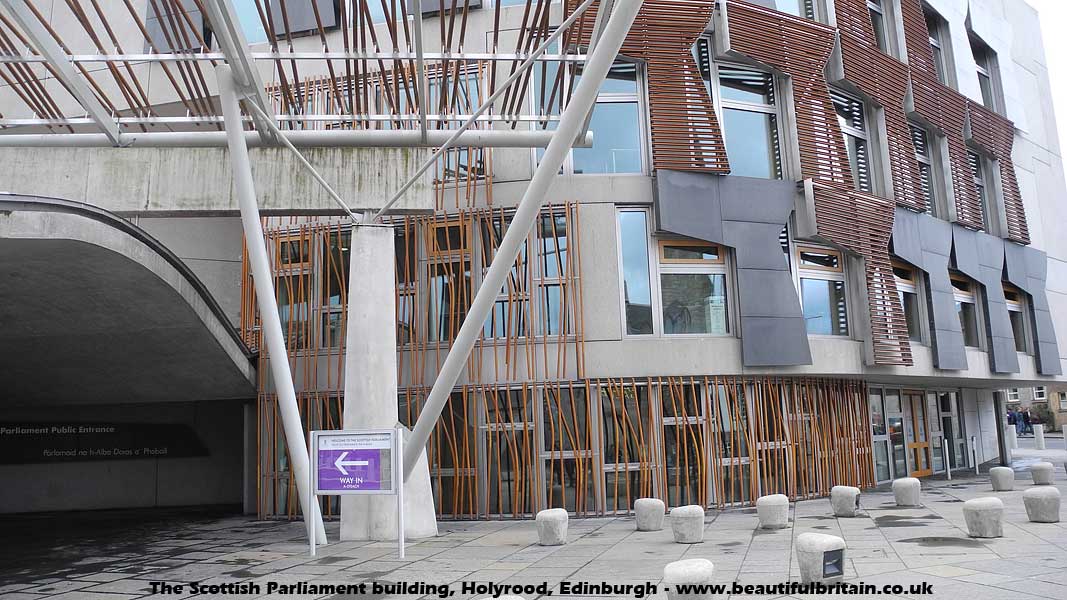 picture) is in Edinburgh and was built at a cost of £414 million (ten times over the original budget)
2002 The Queen officially opened the Gateshead Millennium Bridge (see 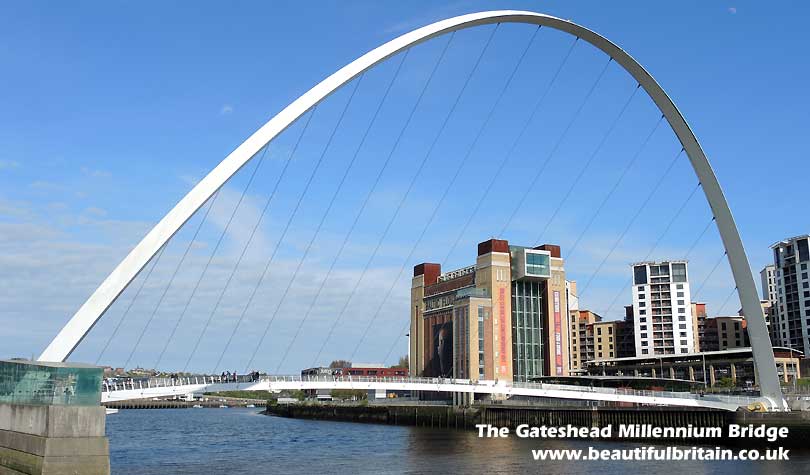 picture) that spans the River Tyne between Gateshead's Quays arts quarter on the south bank, and the Quayside of Newcastle upon Tyne on the north bank. The tilting bridge (the world's first) is sometimes referred to as the 'Blinking Eye Bridge' due to its shape and its tilting method to let tall ships pass underneath.
2014An international league table (Better Life Index) showed that people in Britain were 24 per cent more likely to go out of their way to help a stranger than the average inhabitant of the world’s other leading industrial countries.