
On This Day - 6th April
1199 King Richard I (Richard the Lionheart) died from an infection following the removal of an arrow from his shoulder, after being wounded by a
crossbow bolt during a siege in France.
King Richard I (Richard the Lionheart) died from an infection following the removal of an arrow from his shoulder, after being wounded by a
crossbow bolt during a siege in France.
1320The Scots reaffirmed their independence by signing the Declaration of Arbroath. The Declaration was in the form of a letter submitted to Pope John XXII. It confirmed Scotland's status as a sovereign state and defended Scotland's right to use military action when unjustly attacked.
1580An earth tremor damaged several London churches, including the old St.
Paul's Cathedral.
1812British forces, under the command of the Duke of Wellington, assaulted the fortress of Badajoz in Spain. It was the turning point in the Peninsular War against Napoleon-led France.
1843English poet William Wordsworth was appointed Poet Laureate, a day before
his 73rd birthday. He was born at this house (see 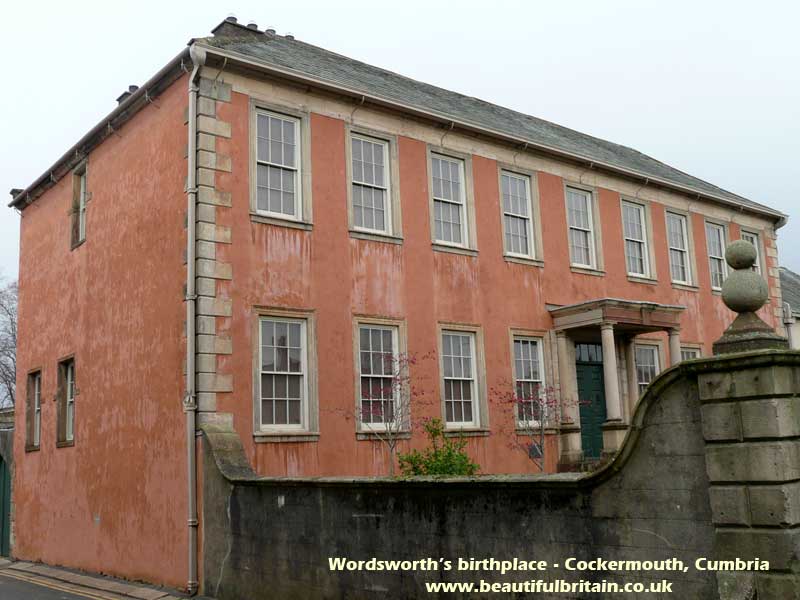 picture) in Cockermouth, Cumbria. For almost 9 years he lived and
wrote at Dove Cottage - Grasmere (see
picture) in Cockermouth, Cumbria. For almost 9 years he lived and
wrote at Dove Cottage - Grasmere (see  picture)
1907 The death of Thomas Beecham, founder of the large pharmaceutical business 'Beechams'. The Grade II listed Beechams Clock Tower and Offices (see 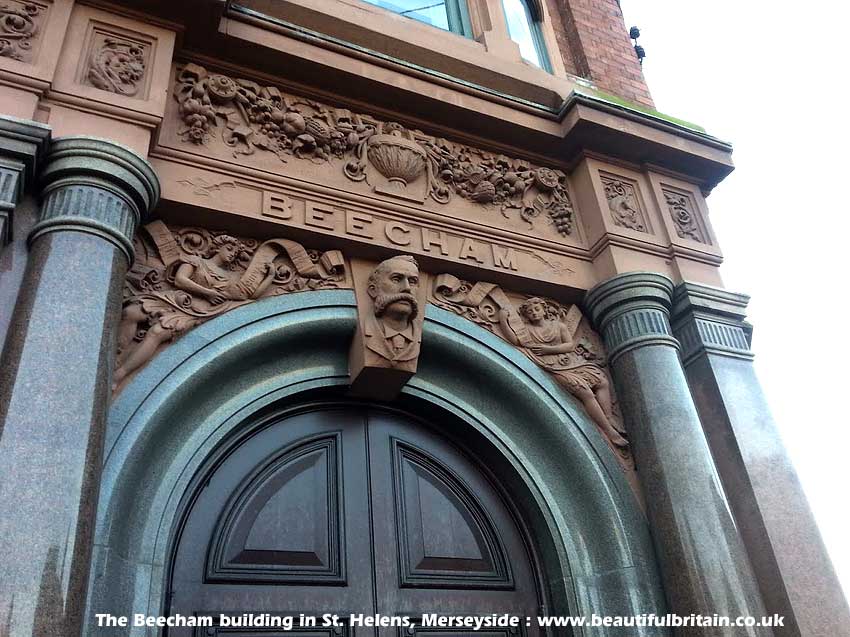 picture) in St Helens were built as the headquarters and factory for his company in the 1880s.
1913Suffragettes increased their militant activities by cutting telephone
lines and damaging post boxes.
1944Pay As You Earn (PAYE) income tax was introduced into Britain. It was
devised by Cornelius Gregg.
1963Britain and the USA signed the Polaris missile agreement. Polaris was
a submarine launched, nuclear tipped weapon designed as a nuclear deterrent.
1965The British Government announced the cancellation of the TSR-2 aircraft project. Only one airframe flew. It was the victim of ever rising costs and inter-service squabbling over Britain's future defence needs.
1974Swedish pop group ABBA won the 19th annual Eurovision Song Contest in Brighton, Sussex, with 'Waterloo'. The Swedish version single was coupled with 'Honey, Honey', while the English version featured 'Watch Out' as the B-side.
1975During 'Operation Babylift' a plane carrying 99 Vietnamese orphans, victims
of the war in Vietnam, landed at Heathrow airport.
1984The 17-year-old South African barefooted, long and middle distance runner,
Zola Budd, was granted British citizenship by Home Secretary, Leon Brittan,
after only a matter of weeks, enabling her to compete as a British citizen
in the Olympic games. The decision provoked considerable controversy.
1989The government announced it was to abolish legislation which guaranteed
'jobs for life' for more than 9,000 dockers.
1990Married women in Britain became independent entities for income tax purposes
for the first time, making them responsible for their own tax declarations.
Their income was no longer assessed with that of their husbands.
1993Following public disquiet, Queen Elizabeth II began paying income tax.
2012A ban on tobacco displays was announced in England, with other parts of the UK planning similar action to drive down smoking rates. Cigarettes and other products are to be kept below the counter in large shops and supermarkets, while small outlets are exempt until 2015.
2014Polish MP Artur Debski arrived in London to live as a migrant on £100 a week, in an attempt to see why so many Poles prefer Britain to their homeland. Poland has one of the EU’s most successful economies; nevertheless, 72% of Poles living in the UK intend to stay and 40% are thinking of applying for British citizenship.
2020 Prime Minister Boris Johnson remained in hospital after being admitted yesterday evening with persistent coronavirus symptoms. Mr. Johnson, aged 55, tested positive for coronavirus 10 days ago and had been self isolating at Downing Street.