
On This Day - 1st April
All Fools' Day, also known as April Fools' Day is a day for practical jokes and hoaxes, but only until 12 noon. The earliest recorded association between 1st April and foolishness can be found in Chaucer's Canterbury Tales (1392).
1204 The death, aged 81, of Eleanor of Aquitaine, wife of Henry II and the mother of Richard the Lionheart, Henry "the Young King" and King John.
1578The birth of William Harvey, the English physician who explained the circulation of
blood.
1780On This Spot, (see 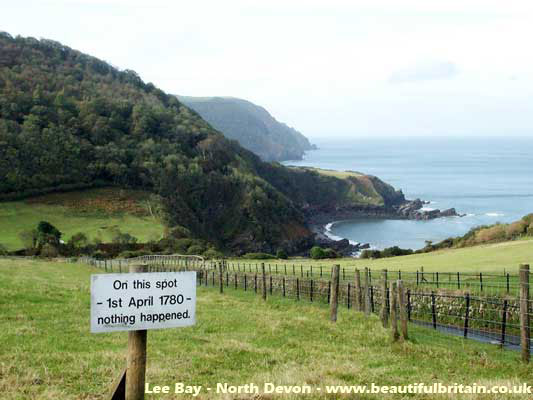 picture) On This Day, nothing happened.
1841The Royal Botanic Gardens at Kew were opened to the public.
1873The British steamer RMS Atlantic ran onto rocks and sank off Nova Scotia, killing 547. It remained the deadliest civilian maritime disaster in history until the sinking of the Danish liner SS Norge in 1904.
1900 The formation of the Irish Guards. The current regiment was formed by order of Queen Victoria in recognition of the many courageous acts carried out by Irish soldiers in the Second Boer War.
1908 The foundation of the Territorial Force, (renamed the Territorial Army in 1920.) It was formed as a volunteer reserve component of the British Army.
1918The Royal Air Force was formed. It incorporated the Royal Flying Corps
and the Royal Naval Air Service.
1933English cricketer Wally Hammond set a record for the highest individual Test innings of 336 not out, during a Test match against New Zealand.
1935Green Belt legislation was introduced to stop indiscriminate building
on many areas of the countryside.
1949The 26 counties of the Irish Free State became the Republic of Ireland.
1969The Hawker Siddeley Harrier entered service with the Royal Air Force.
1973Britain introduced VAT (Value Added Tax). It replaced Purchase Tax and
Selective Employment Tax.
1980Britain's first nudist beach opened at Brighton.
1983Tens of thousands of peace demonstrators formed a human chain stretching
for 14 miles, lining a route along what the protesters called 'Nuclear
Valley' in Berkshire.
1989Despite threats of non-payment, the Community Charge
or Poll Tax was introduced in Scotland.
1990Up to 1,000 prisoners staged a riot at Strangeways Prison in Manchester
in a violent protest against overcrowding. It was the longest prison riot in
British history and lasted until 25th April. One remand prisoner died.
1998A world record price for a musical instrument was set when a 1727 Stradivarius violin
was sold at Christie's for £947,500.
2000The Enigma machine, used by the Germans to encrypt messages in the Second
World War, was stolen from Bletchley Park, Buckinghamshire and a ransom was demanded for its return. The ransom was not paid, but in October 2000 the machine was sent, anonymously and with three of its rotors missing, to BBC journalist Jeremy Paxman.
2009A Super Puma Mk 2 helicopter crashed, 11 nautical miles northeast of Peterhead in Scotland, while returning from a BP oil platform in the Miller oilfield. The crash, caused by gearbox failure, killed all sixteen people aboard.
2014The RAF's 617 'Dambuster' squadron, formed at Scampton on 21st March 1943 and last based at Lossiemouth in Moray, was disbanded as its Tornado aircraft were withdrawn from service. During World War II they practiced their techniques at the Derwent Dam in Derbyshire (see 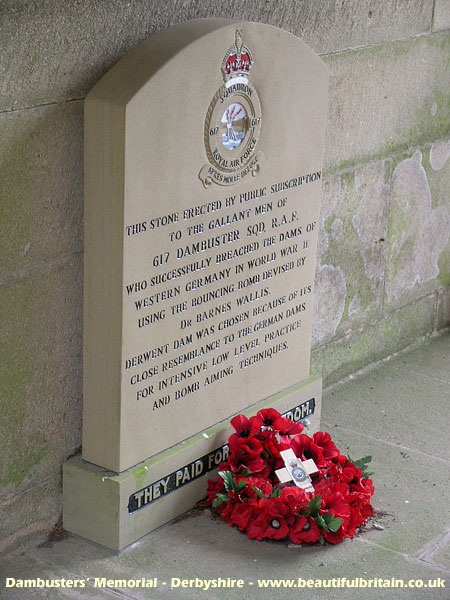 memorial); also at Eyebrook Reservoir in the East Midlands (see
 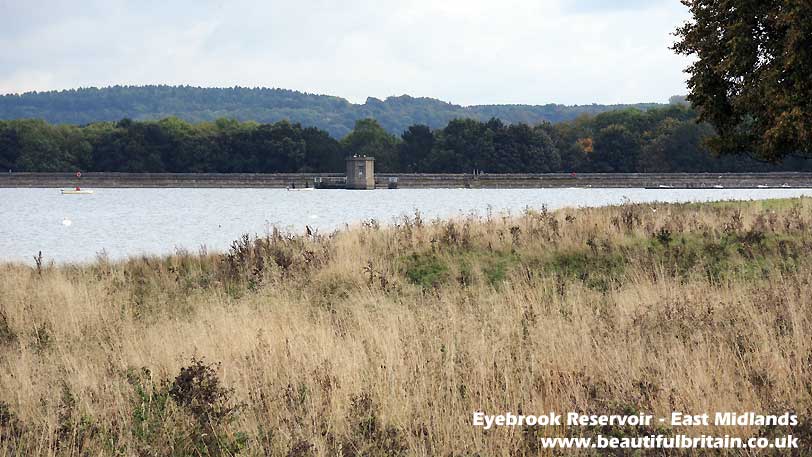 picture). More information here - see
 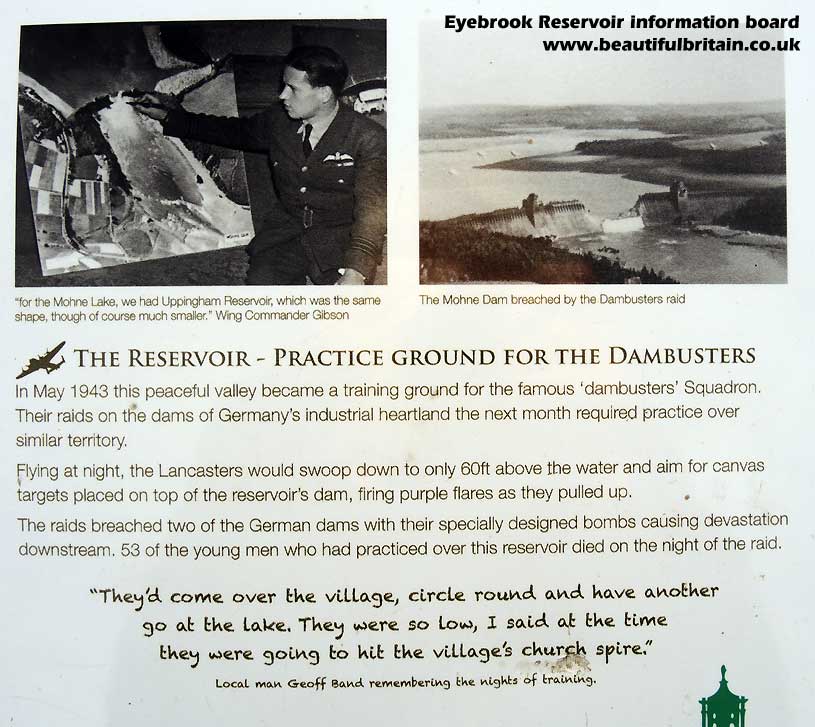 picture.
2015 English Heritage officially became a charity after the government split the public body into two parts - the smaller Historic England and the English Heritage Trust.
2016 The new, mandatory National Living Wage came into force, requiring employers to pay workers aged 25 and over at least £7.20 an hour.