
On This Day - 7th April
1739 English highwayman Dick Turpin was hanged in York for murdering an inn-keeper.
Before becoming a highwayman, he had been a butcher's apprentice.
English highwayman Dick Turpin was hanged in York for murdering an inn-keeper.
Before becoming a highwayman, he had been a butcher's apprentice.
1770William Wordsworth, English romantic poet and Poet Laureate, was born at this house in Cockermouth, Cumbria - (see 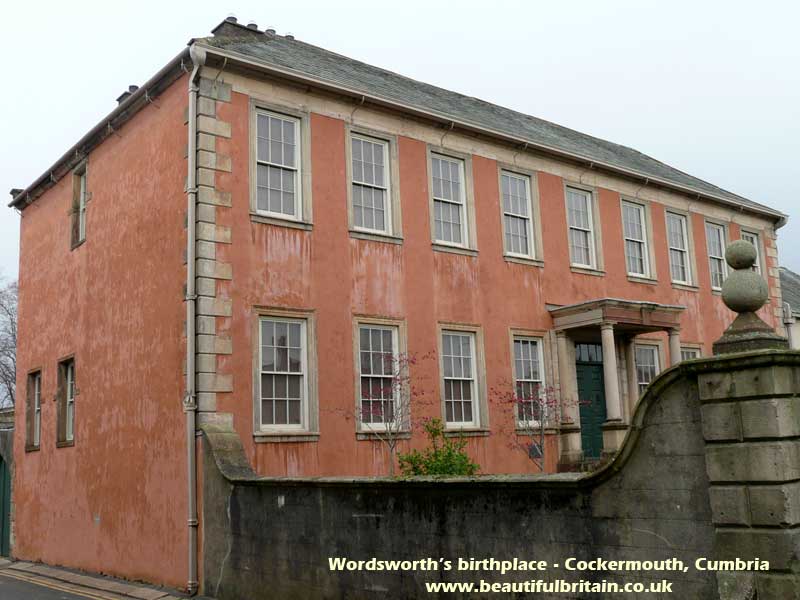 picture). He died on 23rd April 1850 and was buried at St. Oswald's church in Grasmere. (see
 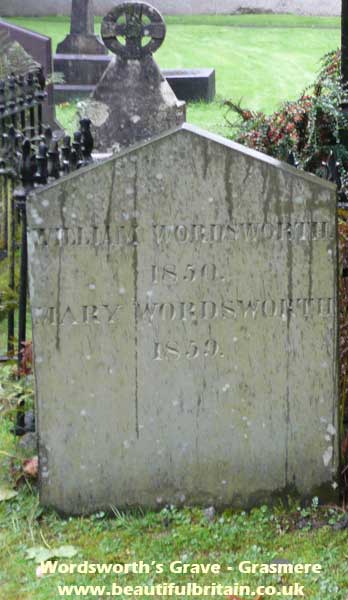 picture)
1827Chemist John Walker of Stockton on Tees sold the world's first box of
'friction matches' that he had invented the previous year. He charged one shilling for a box of 50 matches. Each box was supplied a piece of sandpaper, folded double, through which the match had to be drawn to ignite it. He named the matches 'Congreves' in honour of the inventor and rocket pioneer, Sir William Congreve.
1832Joseph Thompson, a farmer, went to Carlisle to sell his wife, both having
agreed to part. A large crowd gathered as he offered her for 50 shillings.
After an hour, the price was knocked down to 20 shillings, together with a
Newfoundland dog as an incentive.
1853Queen Victoria became the first monarch to receive chloroform. It was
administered to ease the birth of her eighth child, Prince Leopold.
1890 The opening of the Lynton and Lynmouth funicular Cliff Railway - (see 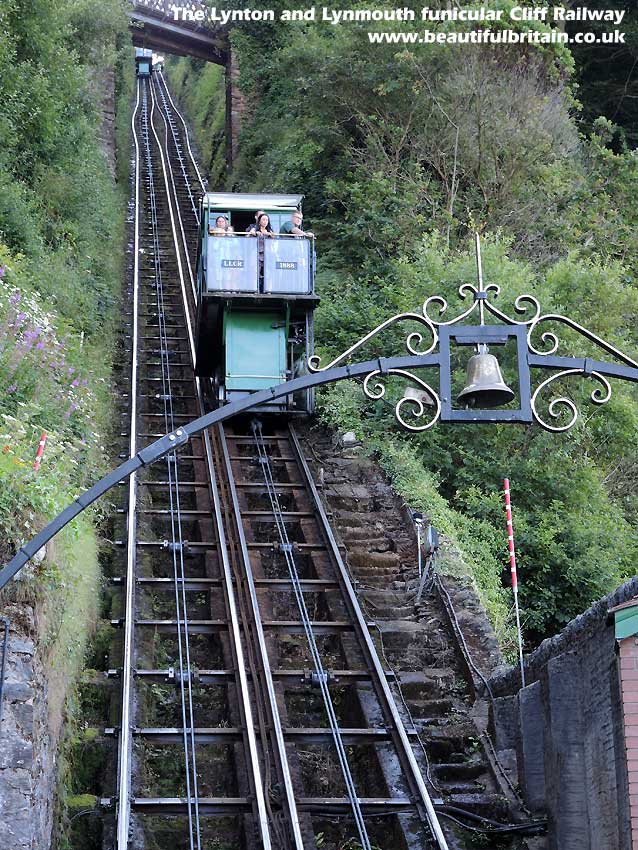 picture). It is the the UK's only fully water powered railway and is also the highest and the steepest totally water powered railway in the world. The cliff railway connects the twin towns of Lynton and Lynmouth in north Devon.
1908H. H. Asquith of the Liberal Party took office as Prime Minister. He served until 1916 making him the longest continuously serving Prime Minister of the 20th century until 5th January 1988, when his record was surpassed by Margaret Thatcher.
1914The House of Commons passed the Irish Home Rule Bill.
1930The birth of German-born, British actor Andrew Sachs. He made his name for his portrayal of Manuel in Fawlty Towers.
1958An Easter march to the Atomic Weapons Research Establishment at Aldermaston
attracted 3,000 anti atomic bomb marchers and a further 12,000 members of the
new CND movement (Campaign for Nuclear Disarmament).
1968British world motor-racing champion Jim Clark died in a crash at the
Hockenheim circuit in Germany. He won two World Championships, in 1963 and 1965 and at the time of his death, aged 32, he had won more Grand Prix races (25) and achieved more Grand Prix pole positions (33) than any other driver. In 2009, The Times placed Clark at the top of a list of the greatest-ever Formula One drivers.
1976MP John Stonehouse resigned from the Labour Party, leaving James Callaghan's
government in a minority of one. Stonehouse is best remembered for faking his own suicide (20th November 1974), by leaving a pile of clothes on a Miami beach. He was presumed dead, and obituaries were published, despite the fact that no body had been found. In reality, he was en route to Australia, hoping to set up a new life with his mistress and secretary, Sheila Buckley. He also faced 18 charges of theft, forgery, attempted insurance frauds and
conspiracy.
1986Home computing pioneer Sir Clive Sinclair sold the rights to his machines
to Amstrad.
1997The 150th Grand National (cancelled on
the 5th) due to bomb threats by the IRA, was held for the first time ever
on a Monday, with the organisers offering free admission. Some 20,000
people had been left stranded over the weekend, as their cars and coaches were
locked in the course. There was limited accommodation space in the city and
surrounding areas, and those local residents not affected by the incident opened
their doors and took in many of those stranded. Read
why American author Bill Bryson loves Britain.
2014It was announced that the body of 25 year old Peaches Geldof had been discovered at her home. She was the second daughter of musician and Live Aid founder Bob Geldof and the television presenter Paula Yates (who died in September 2000, aged 41, of a heroin overdose). An inquest in July 2014 found that the cause of Peaches Geldof's death was also a heroin overdose.