
On This Day - 25th April
1284 The birth, at Caernarfon Castle (see
 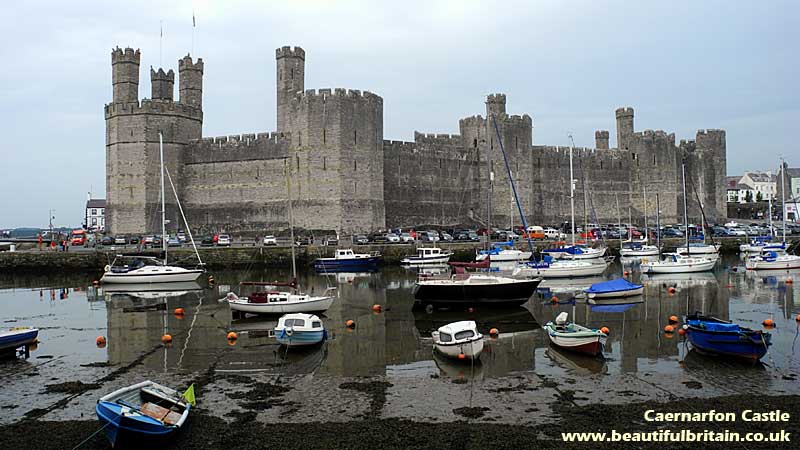 picture) , of King Edward II, who became the first heir-apparent to bear
the title Prince of Wales. King from 1307, he ruled during a period of pestilence,
famine and defeats at the hands of the Scots, and was eventually murdered.
picture) , of King Edward II, who became the first heir-apparent to bear
the title Prince of Wales. King from 1307, he ruled during a period of pestilence,
famine and defeats at the hands of the Scots, and was eventually murdered.
1599The birth of Oliver Cromwell, Protector of England who led his ‘Ironsides’ in
the English Civil War against the ‘Cavaliers’ of King Charles
I. Cromwell’s victories enabled him to have the King tried and beheaded,
after which he established a republic.
1719Robinson Crusoe first appeared in paperback. Written by Daniel Defoe
it was based partly on the story of Alexander Selkirk who was marooned on a
Pacific island for four years.
1769Mark Isambard Brunel, French-born British engineer was born. His son,
Isambard Kingdom Brunel followed a similar career to his father in a life marked
by projects unparalleled in engineering history.
1829Admiral Charles Fremantle arrived in HMS Challenger off the coast of modern day Western Australia prior to declaring the Swan River Colony for Britain.
1848The first Royal yacht, Victoria and Albert, was launched at Pembroke
Docks, after suffering serious damage when first floated.
1859British and French engineers broke ground for the creation of the Suez Canal. The excavation took some 10 years and altogether more than 1.5 million people from various countries were employed.
1915World War I - 90,000 Australian, New Zealand, British and French forces
began landing on the Gallipoli Peninsular to attack Turkish positions. The Lancashire Fusliers won "6 VC's before breakfast" storming the Gallipoli beach. The victory came at a high price, with as many as 700 members of the regiment killed or wounded. Bury Parish Church (see  picture) is the garrison church of the Lancashire Fusiliers. A plaque in the church (see
  picture) commemorates those from the Fusiliers who served in peace and war and this plaque (see
  picture) in Gallipoli Gardens Bury, honours the 6 who were awarded Victoria Crosses
1916The start of the Easter Rebellion in Ireland, mounted by Irish republicans with the aims of ending British rule in Ireland and establishing the Irish Republic. It was the most significant uprising in Ireland since the rebellion of 1798.
1932The birth of William Roache MBE, British actor known for his role as Ken Barlow in the soap opera Coronation Street. He is the longest serving cast member, having appeared since the first episode on 9th December 1960. Roache is also the world's longest-serving television actor (info correct in April 2018)
1953Two Cambridge University scientists published their answer to how living
things reproduced. In an article published in Nature magazine, James D Watson
and Francis Crick described the structure of a chemical called deoxyribonucleic
acid, or DNA. Their achievement was recognized in 1962 when they received the
Nobel Prize for Physiology.
1959Queen Elizabeth II and President Eisenhower officially opened the St.
Lawrence Seaway to link the Atlantic with ports on the Great Lakes.
1969The BBC Radio serial Mrs. Dale's Diary ended after 21 years and more than
5,400 episodes. Her final words were: "I'm rather worried about Jim...."
1982British Royal Marines recaptured South Georgia in the Falkland Islands.
2012 A new initiative paired the Scottish hamlet of Dull with an American town named Boring. The Dull and Boring plan was hatched after a resident of Dull, near Aberfeldy in Perthshire, cycled through Boring in Oregon.
2016 The High Street chain BHS (see 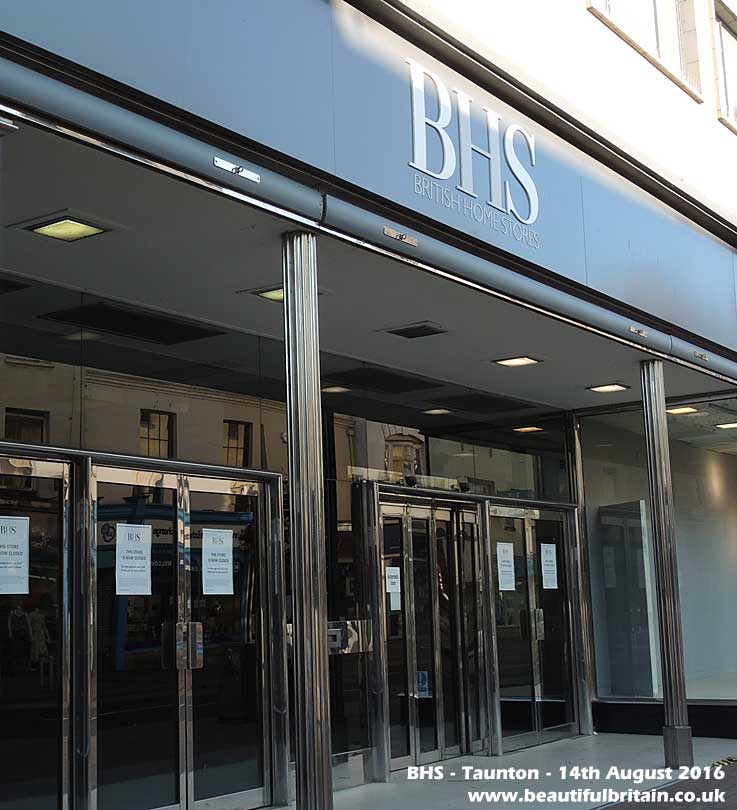 picture) went into administration after 88 years trading. Subsequent rescue bids failed and 11,000 jobs were lost, 22,000 pensions were affected and 164 stores closed. It was the biggest retail failure since Woolworths folded in 2008 with the loss of almost 30,000 jobs.