
On This Day - 2nd August
924 The death, at Oxford, of Ælfweard of Wessex, who was briefly King of the Anglo-Saxons. Ælfweard died only 16 days after his father and was buried at the New Minster, Winchester.
1100King William II of England, (often known as William Rufus) son of William the Conqueror, was killed
by an arrow while hunting in the New Forest after allegedly being mistaken
for a deer. A stone known as the 'Rufus Stone', (see 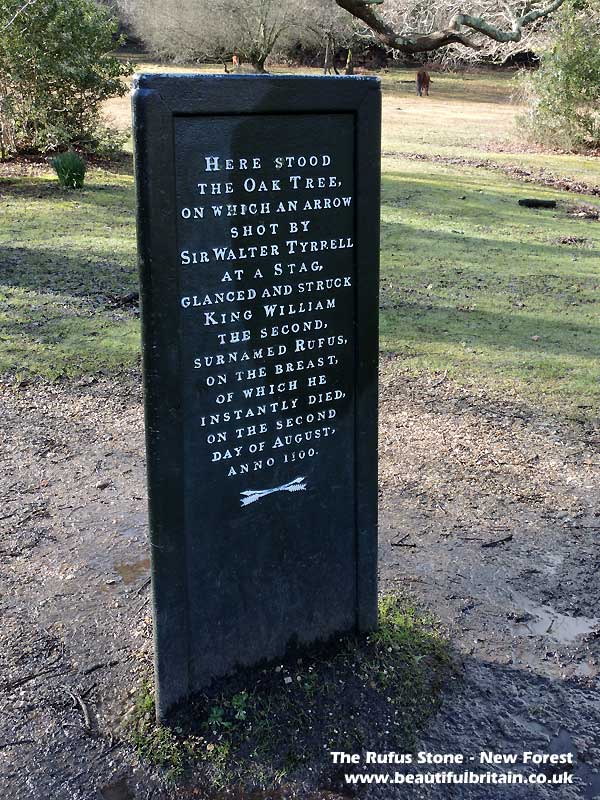 picture) close to the A31 near the village of Minstead is claimed to mark the spot where William II fell was killed. William Rufus also built Brough Castle, (see
 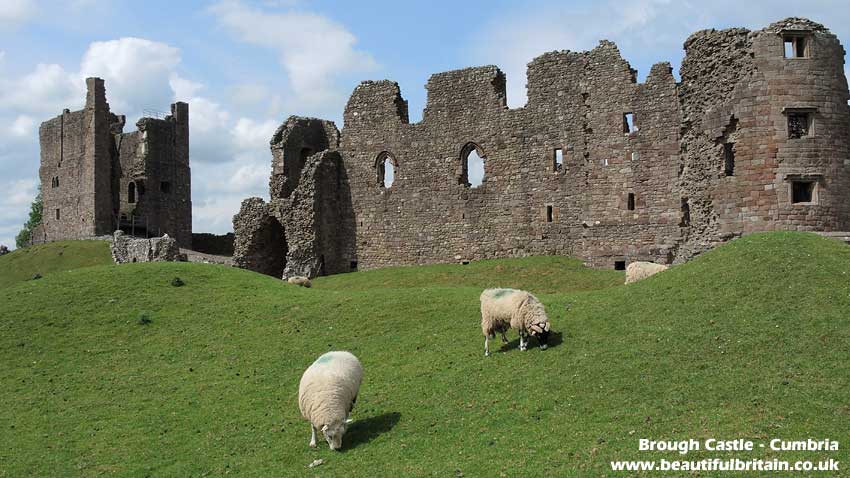 picture), in around 1092.
1610English explorer Henry Hudson sailed into what is now known as Hudson Bay in north eastern Canada, thinking that he had made it through the Northwest Passage and reached the Pacific Ocean.
1776The signing of the United States Declaration of Independence took place. On 4th July earlier that year the thirteen American colonies, then at war with Great Britain, regarded themselves as independent states, and no longer a part of the British Empire.
1784The first specially-built Royal Mail coach began its scheduled service
from Bristol to London.
1788The death of Thomas Gainsborough, English portrait and landscape painter. He preferred landscapes to portraits, but painted King George III and his Queen, although the King was obliged to give the credit to Joshua Reynolds,Gainsborough's rival, as Reynolds was the royal painter.
1865Alice's Adventures in Wonderland by Lewis Carroll was published but was
soon withdrawn because of bad printing. Only 21 copies of the first edition
survived, making it one of the rarest 19th century books. Lewis Carroll was born at Daresbury Parsonage in Cheshire (now in ruins and in the care of the National Trust - (see 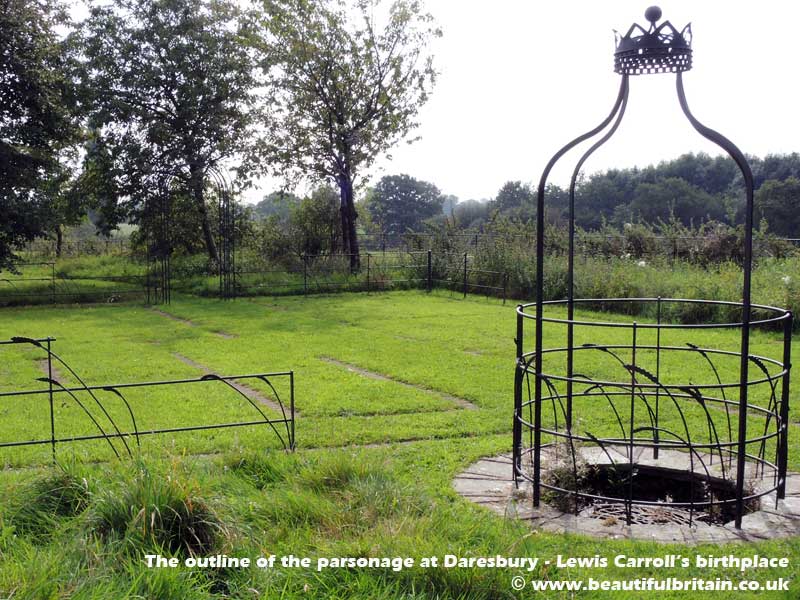 picture),
1870Tower Subway opened in London. It is cited as the world's first underground 'tube' railway, though it was not the first underground railway. That was London's Metropolitan Railway which opened in 1863 and used a 'cut and cover' design to support the roof.
1894Death duties, now known as inheritance tax, were introduced in Britain.
1895 The death (aged 37) of Joseph Thomson, Scottish geologist and African explorer. Thomson's Gazelle and Thomson's Falls (Kenya) are named after him. His motto was 'He who goes gently, goes safely; he who goes safely, goes far.' This monument to Thomson (see 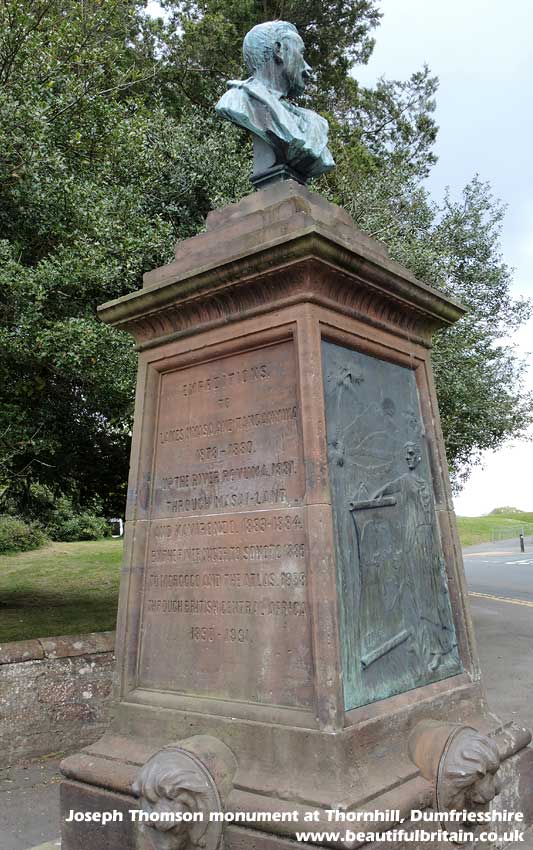 picture) is in Thornhill, Dumfriesshire, two miles from Penpont village where he was born.
1922The death of Alexander Graham Bell, the Scottish scientist who is credited with inventing the first practical telephone.
1925Alan Whicker, broadcaster and writer was born.
1957The official Elvis Presley Fan Club was launched in the UK.
1970The British army used rubber bullets for the first time to quell a riot
in Northern Ireland.
197351 people were killed when fire swept through the Summerland
Amusement Centre at Douglas on the Isle of Man. It was one of the worst British peacetime disasters involving a fire since 1929 when the Glen Cinema in Paisley, Scotland caught fire. It killed 69 children and injured 40 others.
1989Trade restrictions between Britain and Argentina were lifted for the
first time since the 1982 Falklands war.
1993Following speculative pressure on currencies in the European Exchange
Rate Mechanism, the Mechanism collapsed and currencies were allowed to fluctuate
within broad band of 15% on either side of central rates.
2013Magdelena Luczak, 27, and Mariusz Krezolek, 34, from Coventry were served a minimum of 30 years each for what the judge called their 'incomprehensible brutality' that led to the death, from a head injury, of her 4 year old son Daniel. Daniel, who had also been starved by the pair and was subjected to cold water punishment weighed just over a stone and a half when he died and had 'endured severe physical and mental suffering'.
201449 year old Stuart Kettell completed his challenge to push a Brussels sprout up Snowdon using his nose. It took him 3 days and he raised more than £6000 for Macmillan Cancer Support.