
On This Day - 18th December
1559 Queen Elizabeth I of England sent aid to the Scottish Lords to drive the French from Scotland.
1707The birth at Epworth, Lincolnshire, of Charles Wesley, English hymn writer of more than 6,000 hymns. He was an evangelist like his
brother John, who was the founder of Methodism. Their father was an Anglican cleric and they lived here (see 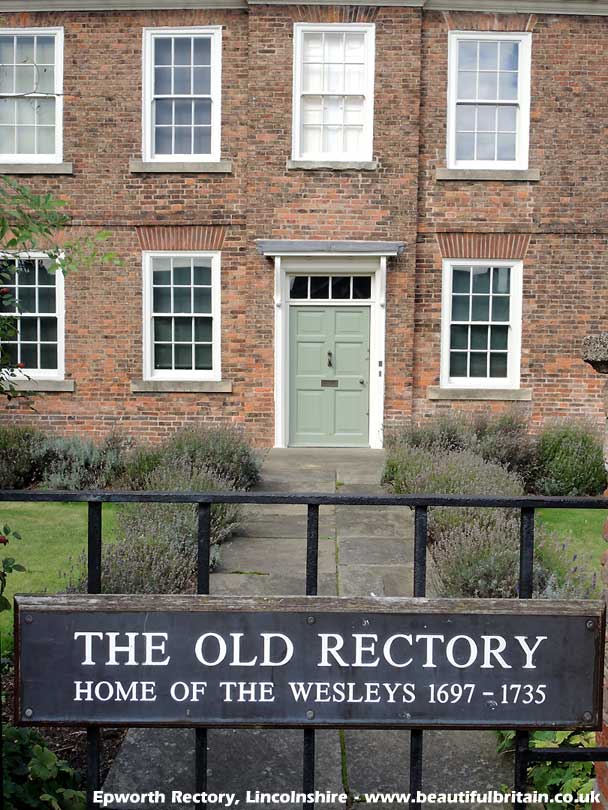 picture). This window in Epworth Methodist Church (see
 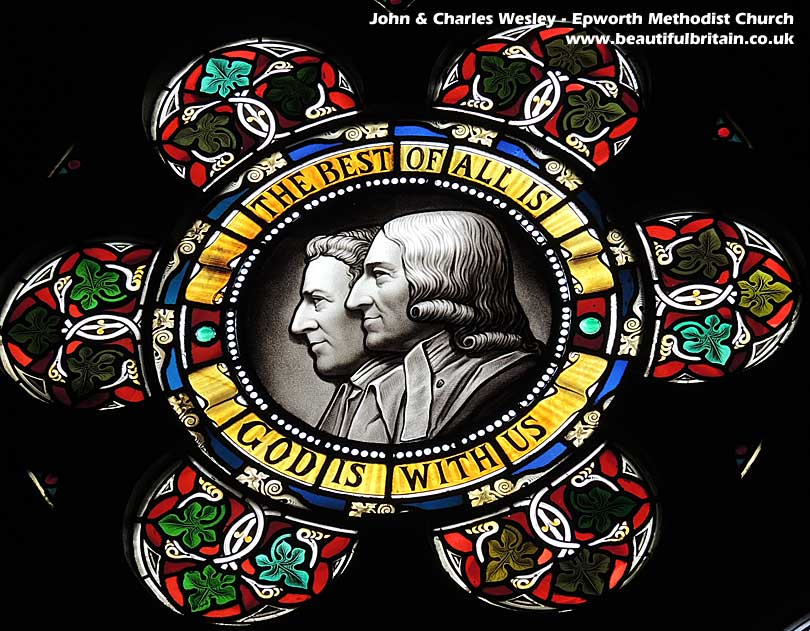 picture) features the two brothers. Charles ministered for part of his life in The New Room Chapel in Bristol, which is the
oldest Methodist Chapel in the world (originally built in 1739) and the cradle of the early Methodist movement.
picture) features the two brothers. Charles ministered for part of his life in The New Room Chapel in Bristol, which is the
oldest Methodist Chapel in the world (originally built in 1739) and the cradle of the early Methodist movement.
1779The birth, in London, of Joseph Grimaldi, English creator of the original white faced clown. He was introduced to the stage at
Drury Lane at the age of three and began to appear at the Sadler's Wells theatre. As Music Hall became popular, he introduced the pantomime
dame to the theatre and was responsible for the tradition of audience participation.
1792Radical political writer Thomas Paine was tried for treason, in his absence, for publishing 'The Rights of Man' in which he
supported the French Revolution and called for the abolition of the British Monarchy.
1912The Piltdown Man was discovered in Sussex by Charles Dawson. It was claimed to be the fossilized skull and remains of the earliest
known European, but in 1953 it was proved to be a hoax. The skull was that of an orang-utan.
1916The Battle of Verdun, the longest engagement of World War I, ended after 10 months and massive loss of life. 23 million shells had
been fired and 650,000 were killed.
1919Pioneering aviator John Alcock, a Captain in the RAF, died in an aircraft accident whilst flying the new Vickers Viking amphibian
to the Paris airshow. Alcock and Lt. Arthur Whitten-Brown were the first to make a non-stop transatlantic flight. A few days after the
flight both Alcock and Brown were honoured with a reception at Windsor Castle during which King George V knighted them and invested them
with their insignia as Knight Commanders of the Order of the British Empire, but after Alcock's death, Brown never flew again.
1946Clement Atlee's Labour government won the vote on state ownership. It led to the nationalizing of the railways, ports and mines.
Labour MPs triumphantly sang 'The Red Flag'.
1974The Government said that it would pay £42,000 compensation to relatives of the 13 men killed in the Bloody Sunday riots in
Londonderry (30th January 1972).
1987Ivan Boesky, the former US ‘King of Arbitrage’ was sentenced to three years’ imprisonment for insider stock
exchange dealings. Some of Boesky’s revelations led to the investigation by the Department of Trade and Industry in Britain into
Guinness’s takeover of Distillers.
1989The Labour Party abandoned its policy on trade union 'closed shops' in line with European legislation.
1997A bill giving Scotland its own parliament for the first time in three centuries was unveiled in Glasgow. Work commenced in June
1999 on the Scottish Parliament Building (see 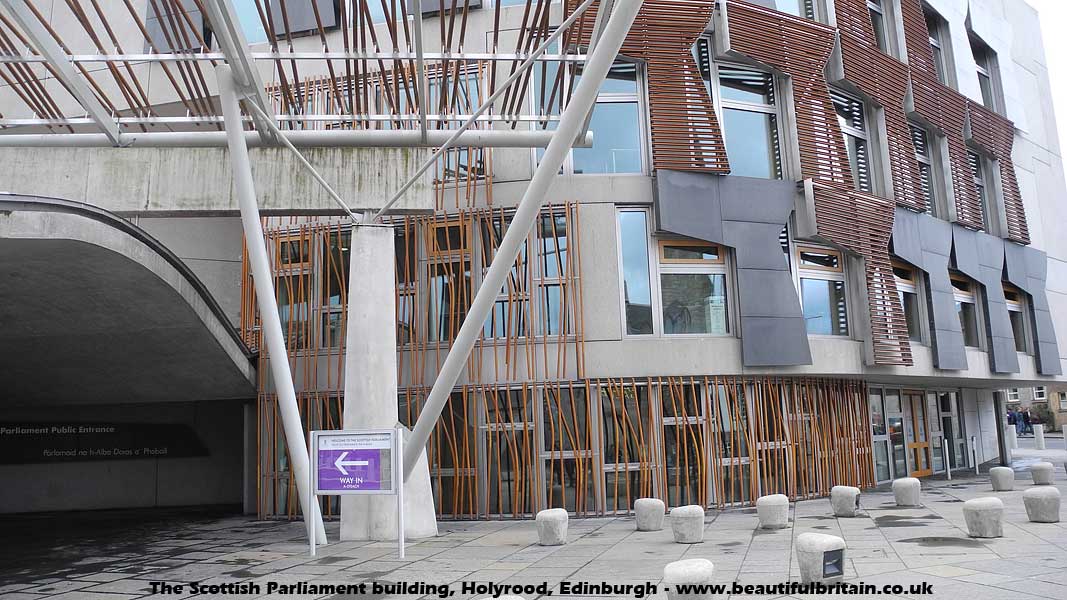 picture). It was built at a cost :- £414 million (ten times over the original budget).
2012The Queen attended a historic cabinet meeting at Downing Street, the first monarch to do so since 1781. Later, Foreign Secretary
William Hague announced that the southern part of the British Antarctic Territory, an unnamed area almost twice the size of the UK would be
called Queen Elizabeth Land.
2012Comet stores closed their doors for the last time, bringing the electrical retailer's 79 year history to an end.
2013The death, aged 84, of the criminal Ronnie Biggs who was part of the gang which escaped with £2.6m from the Glasgow to London
mail train on 8th August 1963. Biggs was given a 30-year sentence but escaped from Wandsworth prison in 1965. In 2001 he returned to the UK
seeking medical helpp, but was sent to prison. He was released on compassionate grounds in 2009 after contracting pneumonia. Coincidentally
Biggs' death occurred hours before the first broadcast of a two-part BBC television series 'The Great Train Robbery'.
2013The Bank of England announced its plans to press ahead with switching to plastic banknotes, starting with the new Sir Winston
Churchill £5 note in 2016. The decision will mark the beginning of the end of 320 years of paper notes from the Bank.
2015The closure of Kellingley Colliery in North Yorkshire, the last remaining deep coal mine in Britain.