
On This Day - 23rd February
1633 The birth of Samuel Pepys, London diarist, Secretary to the Admiralty and
creator of the modern Royal Navy.
The birth of Samuel Pepys, London diarist, Secretary to the Admiralty and
creator of the modern Royal Navy.
1820British police uncovered 'The Cato Street Conspiracy', planned by Arthur
Thistlewood, to assassinate Cabinet ministers. Five of the eighteen conspirators were publicly hanged outside
Newgate prison on 1st May 1820, six were transported to Australia for life, and the rest were either rewarded or
released due to their status as spies, agent provocateurs, or men who had turned King's Evidence.
1821John Keats, English poet, died in Rome, aged 25.
1863Lake Victoria, in Africa, was declared to be the source of the River Nile by
British explorers John Speke and J.A. Grant.
1874Major Walter Clopton Wingfield patented an outdoor game he called
‘Sphairistike’, later known as lawn tennis. Eventually it was adopted by the All England Croquet Club
which sponsored the first Wimbledon championships in 1877.
1920The first regular broadcasting service in Britain started from
Marconi’s studio in Writtle, near Chelmsford. The 30-minute programme was transmitted twice daily. Peter
Eckersley opened with 'Hello! Hello! This is Two-Emma-Toc, Writtle testing.' Two-Emma-Toc stood for 2MT, the
licence granted to Marconi by the General Post Office.
1934The death of Edward Elgar, English Composer See  statue outside Hereford Cathedral. Among his best-known
compositions are orchestral works including the Enigma Variations and the Pomp and Circumstance Marches. This memorial to Elgar (see
statue outside Hereford Cathedral. Among his best-known
compositions are orchestral works including the Enigma Variations and the Pomp and Circumstance Marches. This memorial to Elgar (see 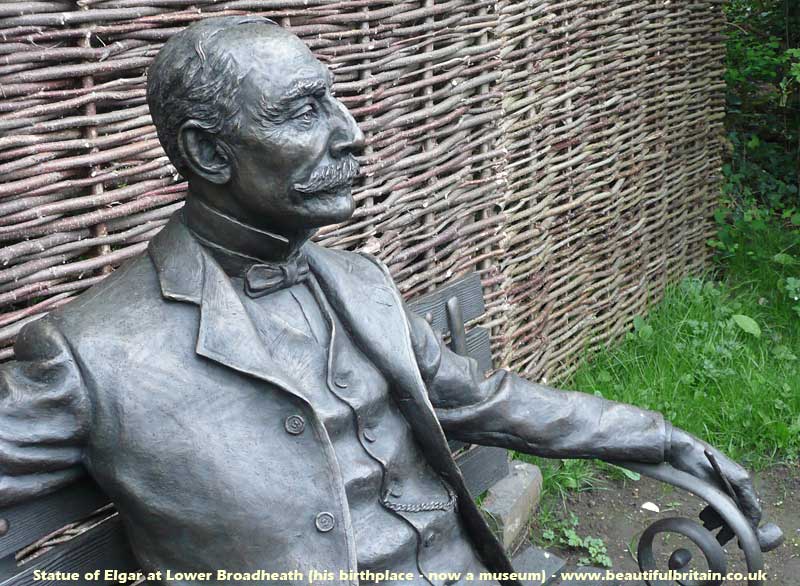 picture) is outside his home at Lower Broadheath.
1945World War II: The German town of Pforzheim was almost completely destroyed
in a raid by 379 British bombers. About one quarter of the town's population (over 17,000 people) were killed in
the air raid. The town was thought by the Allies to be producing precision instruments for use in the German war
effort and to be a transport centre for the movement of German troops.
1953In Britain, an amnesty offered to World War II deserters brought in
applications from more than 3000 servicemen.
1963Peter Hicks, a farmer who electrified his car to ward off traffic wardens in
London's Covent Garden had to wait nine months before police returned his electric device and told him they would
not be prosecuting.
1965The death of Stan Laurel, film comedian, born in Ulverston (which was then
in Lancashire but now lies in Cumbria) in 1890. In 1961 Laurel was given a Lifetime Achievement Academy Award for
his pioneering work in comedy. Ulverston has a Laurel & Hardy Museum. See 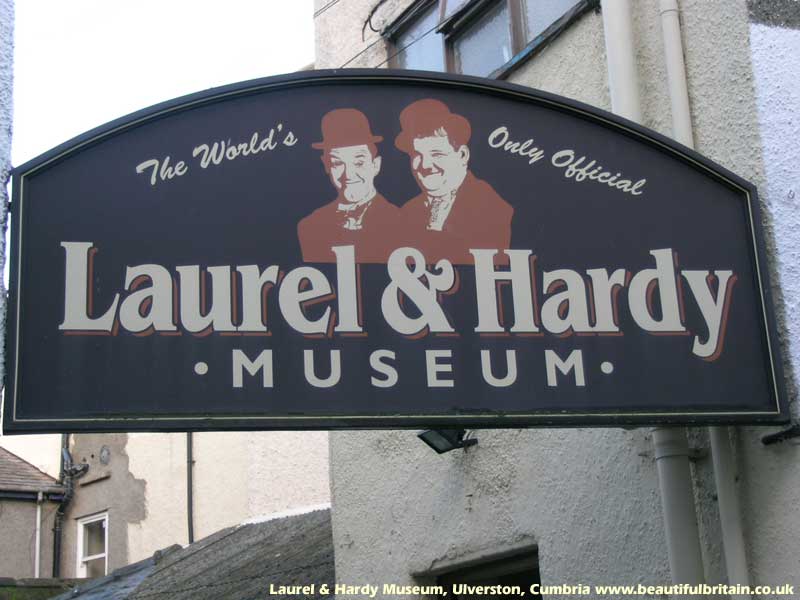 picture.
1998Osama bin Laden published a fatwa declaring jihad against all Jews and
"Crusaders". The term Crusaders is commonly interpreted to refer to the people of Europe and the United
States.
1995 The death of James Alfred Wight (James Herriot ), vet and author of 'All
Creatures Great & Small'. His surgery - see 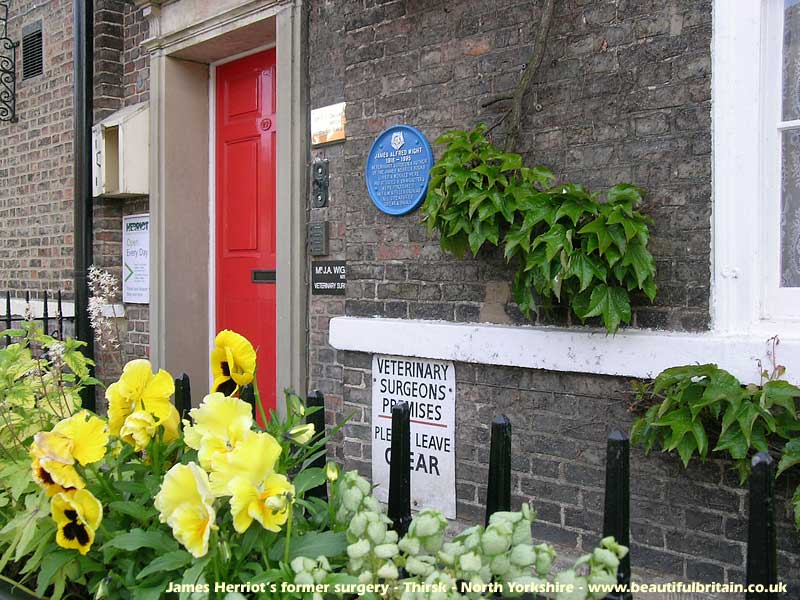 picture and the Blue Plaque
 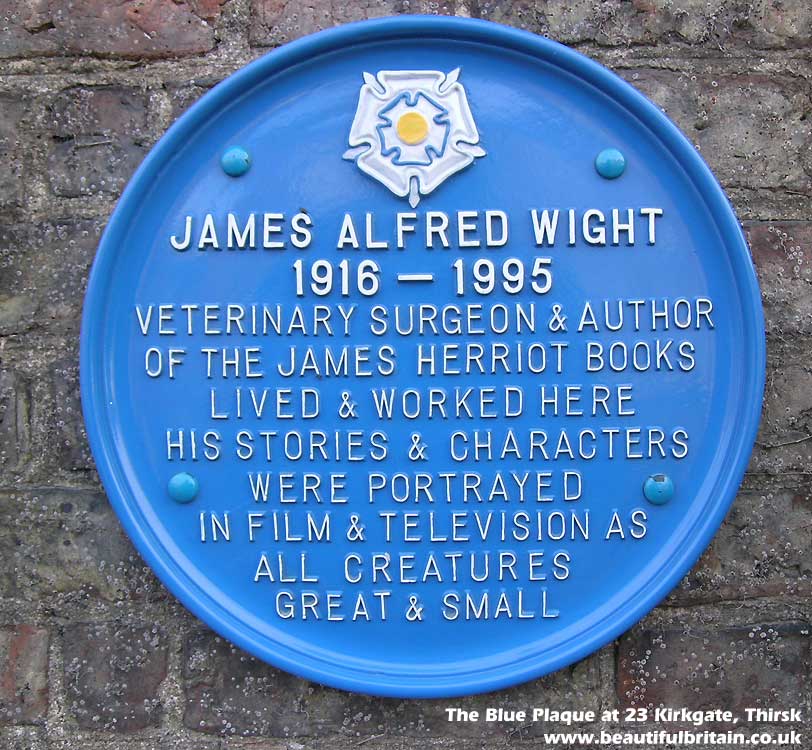 picture, was in Thirsk, North Yorkshire.
2007A train derailed on an evening express service near Grayrigg, Cumbria,
killing one person and injuring 22. The accident resulted in hundreds of points being checked throughout the UK as
similar accidents had occurred on the Rail Network.
2012Taxpayer-backed Royal Bank of Scotland announced a full year loss of nearly
£2bn, further fuelling the debate about bankers' pay and bonuses. Nevertheless, £390m in bonuses was
still paid to RBS's 17,000 investment bankers.
2013Prayers were said for Pope Benedict XVI during a mass at Westminster
Cathedral, as the pontiff prepared to step down at the end of the month. He was the first pope to resign in nearly
600 years.
2014The oldest known survivor of the Nazi Holocaust, Alice Herz-Sommer, died in
London at the age of 110. She was an accomplished pianist and music teacher and a film about her life was nominated
for the best short documentary at the Academy Awards. Born into a Jewish family in Prague in 1903, Ms Herz-Sommer
spent two years in a Nazi concentration camp in Terezin.