
On This Day - 14th February
The Feast Day of St. Valentine, patron saint of lovers. In fact there were fourteen Saint Valentines of ancient
Rome. Of the Saint Valentine whose feast is on 14th February nothing is known, except his name and that he was
buried at the Via Flaminia north of Rome 'on this day'. The day first became associated with romantic love in the
circle of Geoffrey Chaucer in the High Middle Ages, when the tradition of courtly love flourished. Gretna Green, (see 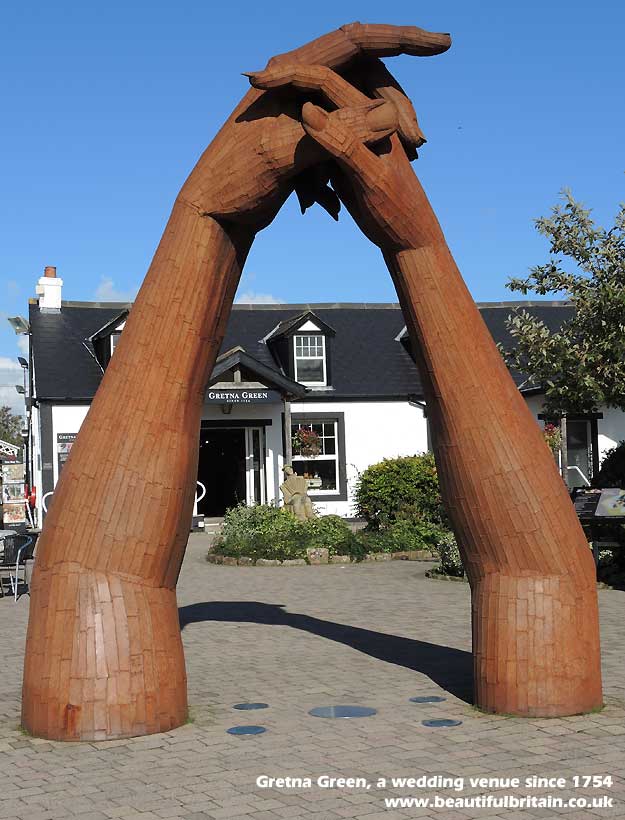 picture) historically the first village in Scotland, has been performing weddings since 1754. They originated from cross-border elopements stemming from differences between Scottish marriage laws and those in neighbouring countries.
1400 The death of King Richard II at Pontefract Castle, Yorkshire. Sources think that the king was either intentionally neglected until he starved to death or that he was cruelly murdered in the dungeons. It's hard to imagine, from these ruins, (see  picture) that Pontefract Castle was once the most important castle in the whole of Yorkshire. The once huge castle was intentionally destroyed by Parliament and the will of the locals as it had been a long-time magnet for trouble, death and despair with armies regularly pillaging the castle and generally pillaging the town as well.
1477 Margery Brews sent a letter to John Paston in Norfolk, addressed - Be my
olde Valentine. It is the oldest known Valentine's Day message in the English language and was uncovered by the
British Library. Read more on the BBC's
website.
Margery Brews sent a letter to John Paston in Norfolk, addressed - Be my
olde Valentine. It is the oldest known Valentine's Day message in the English language and was uncovered by the
British Library. Read more on the BBC's
website.
1556Former Archbishop of Canterbury, Thomas Cranmer, was declared a heretic. He
was tried for treason and heresy after Mary I, a Roman Catholic, came to the throne. Although he apparently
reconciled himself with the Roman Catholic Church, on the day of his execution, on 21st March 1556, he dramatically
withdrew earlier statements and was thus a heretic to Roman Catholics and a martyr to others.
1779Captain Cook, British explorer, navigator and cartographer, was stabbed to death on the beach at Kealakekua (Hawaii) by the
Polynesian natives. Numerous memorials
worldwide have been dedicated to him, including this one at Whitby (see 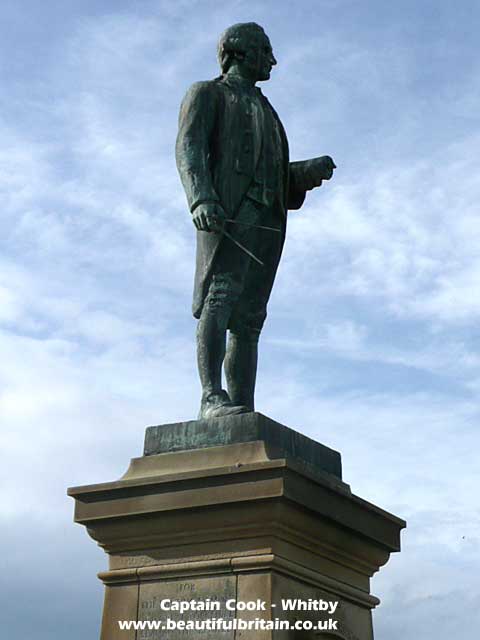 picture) where Cook served
as a merchant navy apprentice.
picture) where Cook served
as a merchant navy apprentice.
1797The Spanish fleet was defeated off Cape St. Vincent by Admiral John Jervis
and Captain Horatio Nelson. Nelson was born here, see 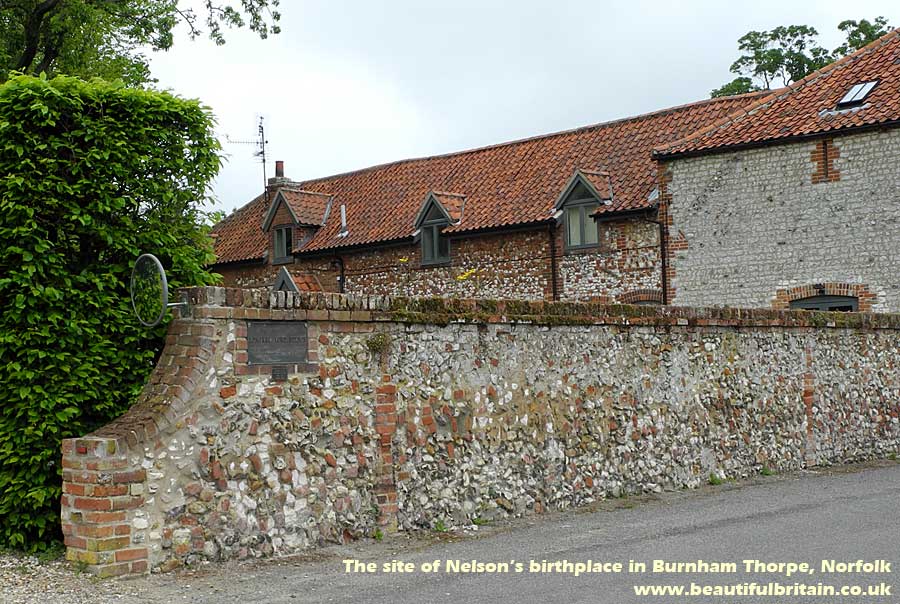 picture, at Burnham Thorpe, Norfolk and subsequently became a British national
hero.
picture, at Burnham Thorpe, Norfolk and subsequently became a British national
hero.
1852London’s famous children’s hospital in Great Ormond Street
accepted its first patient, three year-old Eliza Armstrong. It was the first hospital in the English speaking world
providing in-patient beds specifically for children.
1922Marconi began regular broadcasting transmissions from Essex.
1945World War II: Prague was bombed, probably due to a mistake in the
orientation of the pilots bombing Dresden.
1946The Bank of England was nationalized by the Atlee government.
1963British politician Harold Wilson was elected leader of the Labour Party
following the death of former leader Hugh Gaitskell.
1975The death of the writer, Sir Pelham Grenville Wodehouse, generally known as
P.G. Wodehouse. His career lasted more than 70 years and included novels, short stories, plays, poems, song lyrics,
and numerous pieces of journalism. He wrote 15 plays and 250 lyrics for some 30 musical comedies, but is perhaps
best remembered for his stories of the butler Jeeves and his master Bertie Wooster.
1984British ice skaters Jayne Torvill and Christopher Dean won the ice dance
gold medal at the Winter Olympics in Sarajevo, gaining maximum points for artistic expression.
1989The spiritual leader of Iran, Ayatollah Khomeini, condemned Salman
Rushdie’s award-winning novel, The Satanic Verses, as an insult to Islam and issued a fatwa (edict) calling
on Muslims to kill the author for committing blasphemy. Rushdie and his family went into hiding.
1995 Sizewell B nuclear processing plant in Suffolk, first synchronised with the national grid. It was the UK's only commercial pressurised water reactor (PWR) power station, with a single reactor.
2003Dolly the sheep, the first cloned mammal, was put down after being diagnosed
with a severe lung infection.
2006Chip and PIN was introduced. UK cardholders had to use their PIN (Personal
Identification Number) to be sure that they could pay for goods.
2014 The death (aged 91) of former Preston and England footballer Sir Tom Finney. Finney scored 210 goals in 473 league appearances for Preston North End between 1946 and 1960 and won 76 caps for England. He twice won the footballer of the year title, in 1953-54 and 1956-57. The Preston stadium is located on Sir Tom Finney Way and this statue (see 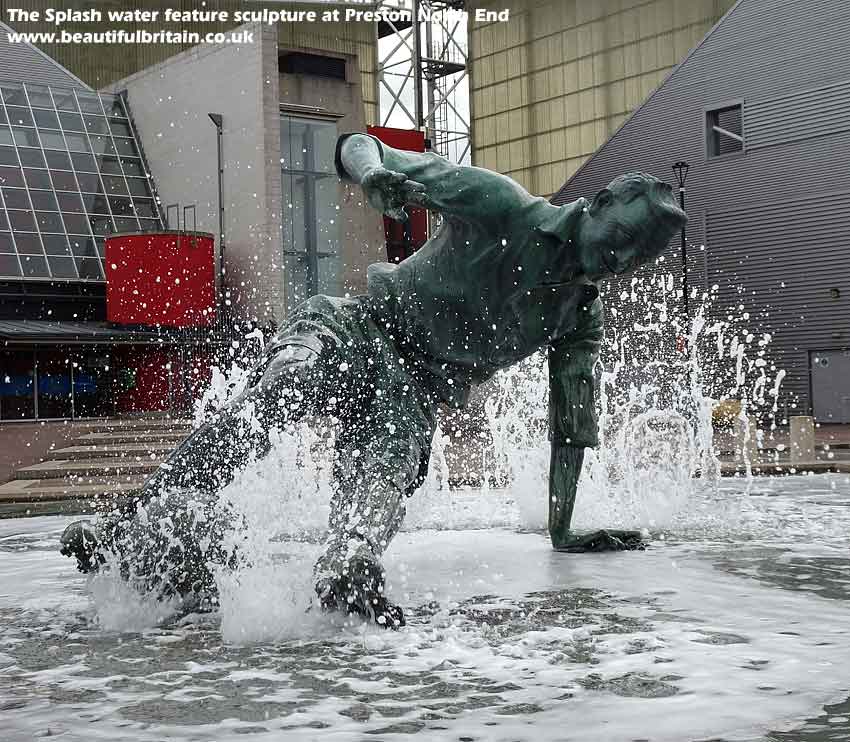 picture) stands outside the ground, while inside, a stand was renamed in his honour in 1995.