
On This Day - 18th January
1486  After 30
years of civil war the Royal Houses of Lancaster and York were united by the marriage of Henry VII to Elizabeth of
York, the eldest daughter of Edward IV.
After 30
years of civil war the Royal Houses of Lancaster and York were united by the marriage of Henry VII to Elizabeth of
York, the eldest daughter of Edward IV.
1670 Henry
Morgan captured Panama. Morgan was a privateer who made a name for himself during activities in the Caribbean,
primarily raiding Spanish settlements. The privateers were private people or ships, authorized by a government to
attack foreign shipping during wartime. It was a way of mobilizing armed ships and sailors without having to spend
public money or commit naval officers. Morgan was one of the most notorious and successful privateers of all time,
and one of the most ruthless.
1778 English
navigator Captain James Cook became the first European to visit the Hawaiian Islands. He named them the Sandwich
Islands, after Lord Sandwich, who was then first Lord of the Admiralty. Captain Cook had associations with Whitby
as a merchant navy apprentice and there is a monument to him (see 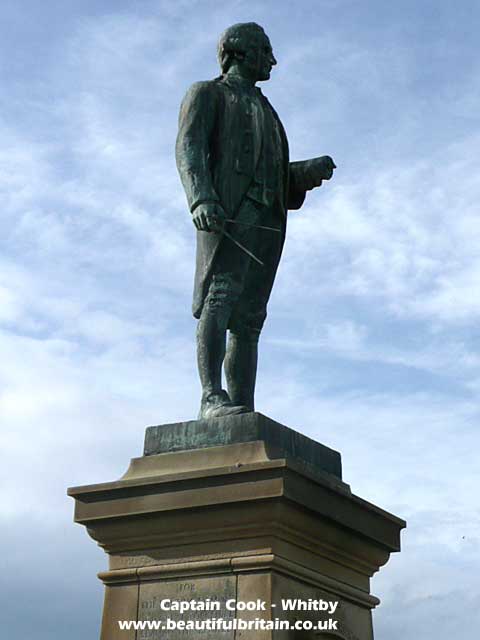 picture) at the top of the town.
1779 The birth
of Peter Mark Roget, English doctor and lexicographer, who produced his Roget's Thesaurus in 1852 after 47
years’ work. It was originally called 'Thesaurus of English Words and Phrases Classified and Arranged so as
to Facilitate the Expression of Ideas and Assist in Literary Composition.'
1788 A British
fleet of eleven ships and 800 convicts landed at Botany Bay, Australia. They created the first British penal
colony, in Port Jackson - Sydney.
1879 The first
edition of Boy’s Own Paper was published. The editor was S.O. Beeton, the husband of Mrs. Beeton, the cookery
book writer.
1884 Dr.
William Price (see 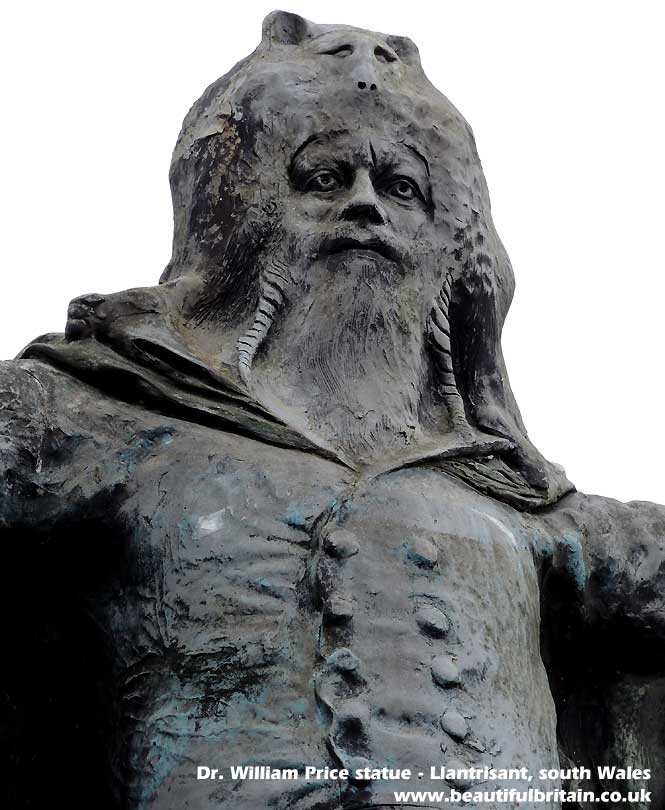 picture), a vegetarian nudist who believed in free love and herbal remedies, was arrested for cremating the body of his infant son, Iesu Grist (the Welsh for Jesus Christ), in front of onlookers on a Llantrisant hillside. Price was arrested and
put on trial by those who believed that cremation was illegal in Britain. However, he successfully argued that
there was no legislation that specifically outlawed it, which paved the way for the Cremation Act of 1902.
picture), a vegetarian nudist who believed in free love and herbal remedies, was arrested for cremating the body of his infant son, Iesu Grist (the Welsh for Jesus Christ), in front of onlookers on a Llantrisant hillside. Price was arrested and
put on trial by those who believed that cremation was illegal in Britain. However, he successfully argued that
there was no legislation that specifically outlawed it, which paved the way for the Cremation Act of 1902.
1886 Modern
field hockey was born, with the formation in England of The Hockey Association.
1888 Birth of
Sir Thomas Sopwith, British aviation pioneer. It was a Sopwith Camel that shot down Von Richthofen, the Red Baron.
On Sopwith’s 100th birthday, a Sopwith Pup built after World War I, led a fly-past over his home in
Hampshire.
1919 Bentley
Motors Limited was founded by Walter Owen Bentley, but the manufacturer did not make
a complete car for 27 years, only engines and chassis. Bentley (see 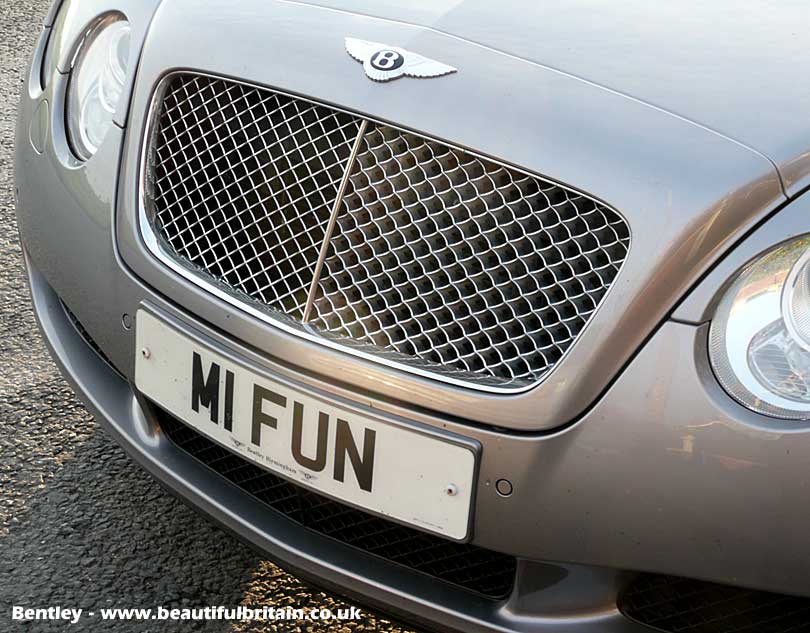 picture) had been previously known for his range of
rotary aero-engines in World War I. He also designed and made production cars that won the Le Mans 24 hours in the
1920s. Bentley was purchased by Rolls-Royce in 1931, which itself was purchased by the Volkswagen Group of Germany
in 1998, although the business is still based in Crewe.
picture) had been previously known for his range of
rotary aero-engines in World War I. He also designed and made production cars that won the Le Mans 24 hours in the
1920s. Bentley was purchased by Rolls-Royce in 1931, which itself was purchased by the Volkswagen Group of Germany
in 1998, although the business is still based in Crewe.
1934 The first
arrest was made in Britain as a result of issuing pocket radios to police. A Brighton shoplifter was arrested just
15 minutes after stealing three coats.
1934 The birth of David Bellamy, English botanist, television presenter and author. In 1989 Bellamy stated that "The profligate demands of humankind are causing far-reaching changes to the atmosphere of planet Earth." but by 2008 he had changed his views and controversially proclaimed that man-made climate change was "poppycock", insisting that climate change was part of a natural cycle.
1936 The death, aged 70, of the British author Rudyard Kipling (born in India). His notable works include The Jungle Book, Kim, Rikki-Tikki-Tavi and Just So Stories.
1958 Bunty was
launched by publishers D.C. Thompson. It was the first comic aimed at a young female readership.
1976 British
Labour MPs Jim Sillars and John Robertson launched the Scottish Labour Party (SLP) to campaign for greater
devolution for Scotland.
2014 UKIP
councillor David Silvester blamed the recent storms and heavy floods across Britain on the Government's decision to
legalise gay marriage.
2014 Lewis
Clarke, a 16-year-old boy from Bristol set a new record by becoming the youngest person to trek to the South Pole.
He spent 48 days at temperatures as low as -50C (-58F) and winds of up to 120 mph (193 kmh), covering a distance of
702 miles.