
On This Day - 28th January
1457 The birth of Henry VII, founder of the Tudor dynasty in England. Henry won
the throne when he defeated Richard III (see
The birth of Henry VII, founder of the Tudor dynasty in England. Henry won
the throne when he defeated Richard III (see 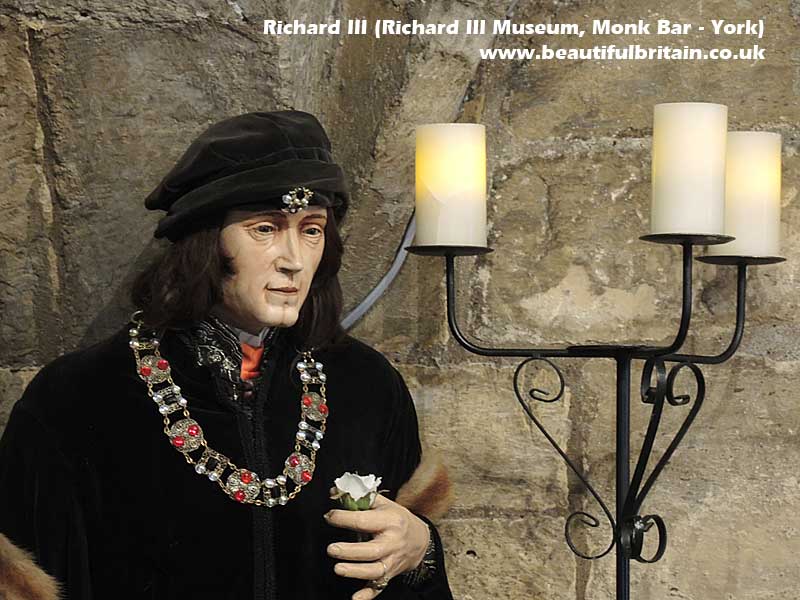 picture - York Museum) at the Battle of Bosworth Field. (see
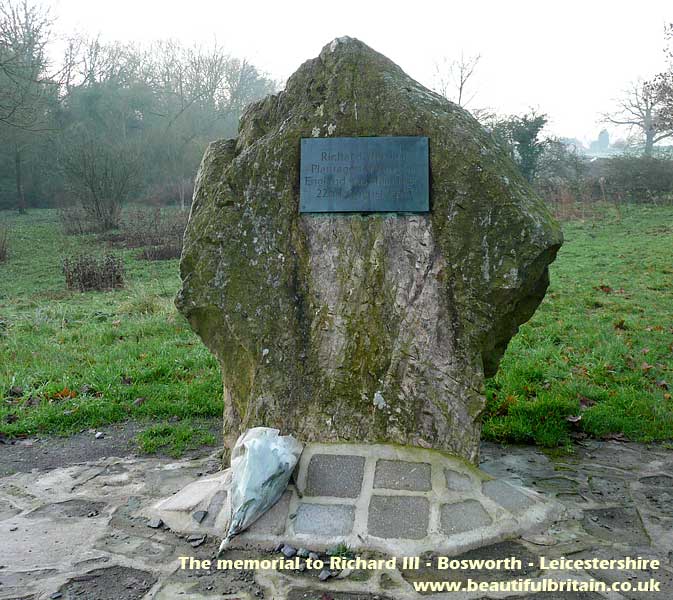 picture) He was the last king of England to win his throne on the field of battle
and he restored order after the Wars of the Roses.
picture) He was the last king of England to win his throne on the field of battle
and he restored order after the Wars of the Roses.
1547The death of Henry VIII, exactly 90 years after the birth of his father
Henry VII. His nine year old son, Edward VI succeeded him and became the first Protestant ruler of England.
1596Sir Francis Drake died from dysentery aboard his ship, off Porto Bello. His
exploits were legendary, making him a hero to the English but a pirate to the Spaniards. It's claimed that King
Philip II of Spain offered a reward of 20,000 ducats, (equivalent to £4,000,000 in today's money) for Drake's
life.
1813The novel Pride and Prejudice, by Jane Austen, was first published. It
follows Elizabeth Bennet as she deals with the issues of manners, upbringing, morality, education and marriage in
the society of the landed gentry of early 19th-century England.
1829The public hanging of Irish body-snatcher William Burke in Edinburgh. Burke
and his accomplice William Hare, sold the corpses of their 17 victims to provide material for dissection to Doctor
Robert Knox. Hare was offered immunity from prosecution if he confessed and if he testified against Burke. After
Burke was hanged he was publicly dissected at the Edinburgh Medical College.
1833Birth of General Charles George Hamilton Gordon, British defender of
Khartoum and often referred to as Gordon of Khartoum.
1841The birth, in Denbigh, of Sir Henry Morton Stanley (born John Rowlands), Welsh journalist
and explorer famous for his exploration of Africa. His mother abandoned him as a very young baby and he was eventually sent to St. Asaph Union Workhouse for the Poor. This commemorative plaque to Stanley, (see  picture) is in St. Asaph Cathedral. The New York Herald
sent him to Africa, in search of Dr. Livingstone, who was born at Blantyre (see
picture) is in St. Asaph Cathedral. The New York Herald
sent him to Africa, in search of Dr. Livingstone, who was born at Blantyre (see
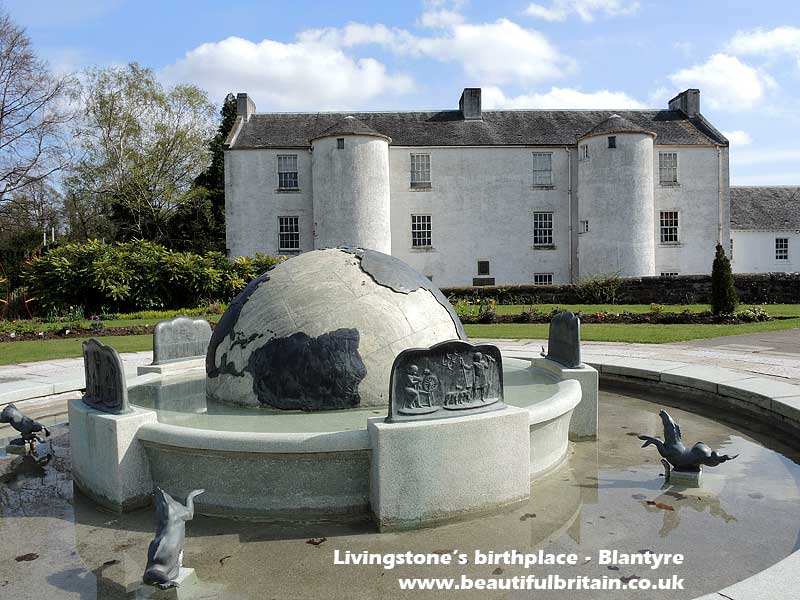 picture) on the outskirts
of Glasgow. Upon finding Livingstone, Stanley allegedly uttered the now-famous greeting, 'Dr. Livingstone, I
presume?' This bronze statue of Stanley (see
picture) on the outskirts
of Glasgow. Upon finding Livingstone, Stanley allegedly uttered the now-famous greeting, 'Dr. Livingstone, I
presume?' This bronze statue of Stanley (see 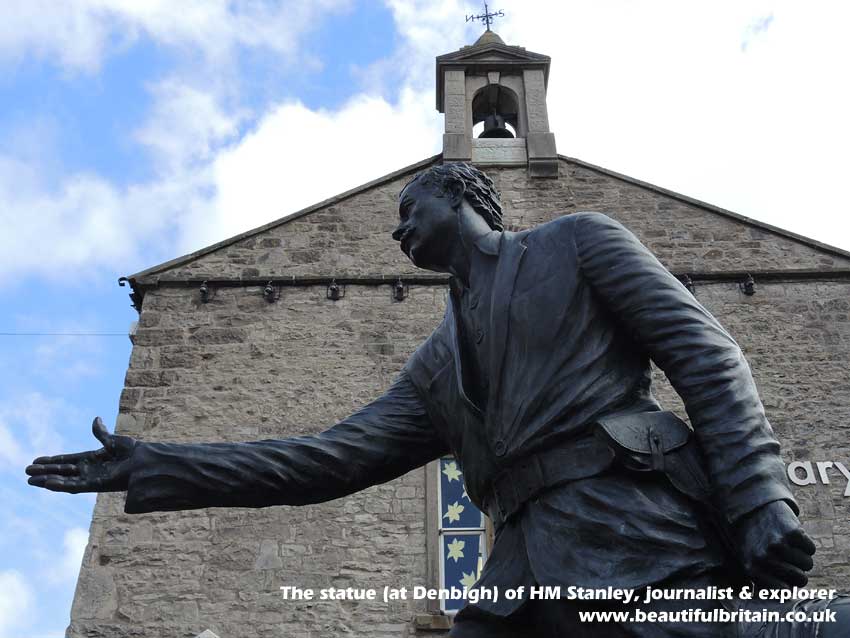 picture) was unveiled in March 2011, in Denbigh, It caused controversy because of Stanley's inhumanity and racist views. The sculpture shows the outstretched hand, the moment when Henry Morton Stanley finally met up with Livingstone.
1896Walter Arnold of Kent was the first British motorist to receive a speeding
fine, for exceeding 2 mph in a built-up area. He was doing 8 mph as he passed the house of the local policeman. The
constable gave chase on his bicycle and after a 5 mile chase Mr. Arnold was arrested. He was fined one shilling for
his offence.
1918The birth of Harry Corbett, the English puppeteer who created Sooty (see
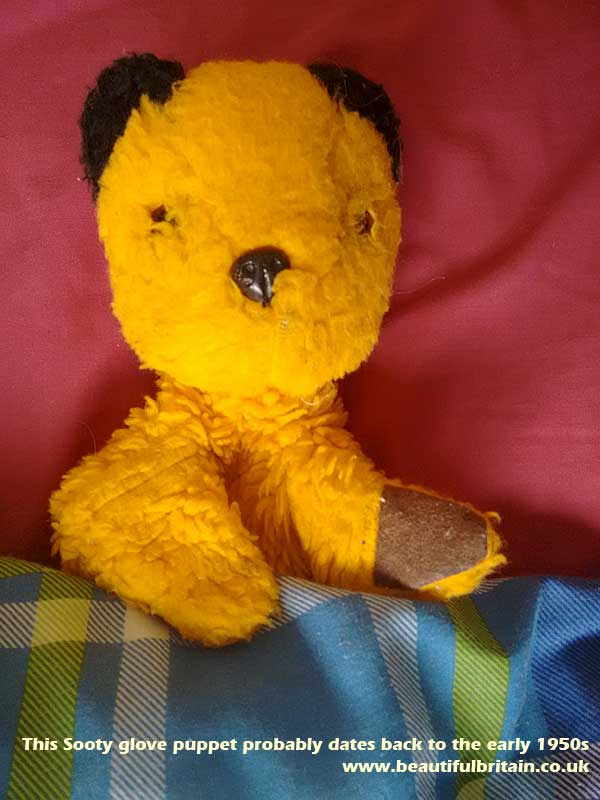 picture). According to the Guinness Book of Records, Sooty is
the longest-running children's programme in the UK. The puppet was 60 years old on 19th July 2008 and, as this was
close to Nelson Mandela's 90th birthday, Sooty sent him a birthday message!
picture). According to the Guinness Book of Records, Sooty is
the longest-running children's programme in the UK. The puppet was 60 years old on 19th July 2008 and, as this was
close to Nelson Mandela's 90th birthday, Sooty sent him a birthday message!
195319 year-old Derek Bentley was hanged at Wandsworth Prison. On 2nd November
1952, he and 16-year-old Christopher Craig were attempting to rob a confectioner’s warehouse in Croydon when
they were caught by police. It was alleged that Bentley urged Craig to fire his gun, injuring one policeman and
killing another. Both boys were found guilty of murder. Craig, too young to hang, was imprisoned, while Bentley was
sentenced to death despite considerable public protest.
1983 The death, aged 42, of Ronald William Wycherley, better known by his stage name Billy Fury. He equalled the Beatles' record of 24 hits in the 1960s, and spent 332 weeks on the UK chart, without a chart-topping single or album. In 2003 this bronze statue of Fury (see 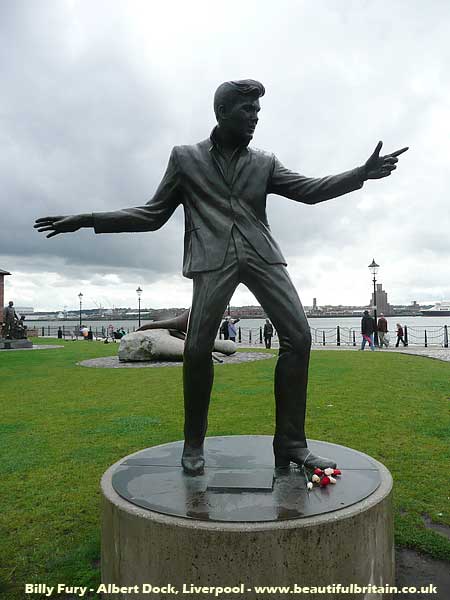 picture) was unveiled at the Albert Dock, Liverpool.
1994The first women only boxing tournament was held at the Marine Halls,
Fleetwood. Diane Berry became the first British super-flyweight women’s champion.
2014A report by the Commons public accounts committee found that the
Queen’s advisers were failing to control her finances, while the royal palaces were 'crumbling'. MPs said
that her advisers had overspent to such an extent that her reserve fund had fallen from £35 million in
2001 to just £1 million. The Queen's courtiers were advised to take money-saving tips from the
Treasury.
2015 Photographers took to Twitter to complain that their pictures of Arlington Row, in the Cotswold village of
Bibury were being 'blighted and photo-bombed' by the bright yellow Vauxhall Corsa that belonged to one of the
residents. See
 picture of Arlington Row,
but without the yellow car!
picture of Arlington Row,
but without the yellow car!