
On This Day - 7th January
1536 Catherine of Aragon, first wife of Henry VIII of England and mother of Mary
I, died, at Kimbolton Castle in Cambridgeshire where she had lived since Henry annulled their marriage. The Pope
had declined the request for an annulment, but Henry married his mistress Anne Boleyn regardless, a chain of events
that led to England's break with the Roman Catholic Church.
Catherine of Aragon, first wife of Henry VIII of England and mother of Mary
I, died, at Kimbolton Castle in Cambridgeshire where she had lived since Henry annulled their marriage. The Pope
had declined the request for an annulment, but Henry married his mistress Anne Boleyn regardless, a chain of events
that led to England's break with the Roman Catholic Church.
1558English forces were ousted from the French port of Calais, led by the Duke
of Guise. Calais had surrendered to an invading English army in 1346 and its recapture by the French saw the last
continental possession of England forfeited.
1618Francis Bacon became Lord Chancellor of England. Later that year he was
accused of taking a bribe, and fined £40,000, a huge sum of money for those times.
1805The famous pugilist Tom Cribb had his first public fight. It was against Tom
Maddox at Wood Green. Cribb was declared the winner after an incredible 76 rounds.
1889Birth of Arthur Clifford Hartley, the English inventor of World War
II’s PLUTO (Pipeline Under The Ocean), a series of 21 undersea pipes used to transport oil from Britain to
continental Europe. He also invented FIDO (Fog Investigation Dispersal Operation) which is credited with bringing
2500 aircraft and 10,000 aircrew safely home during the war.
1904The Marconi company suggested the use of CQD for a distress signal, a derivation of CQ commonly used by telegraphers and wireless operators to address all stations at once. CQ followed by D meant distress. It lasted just two years before being replaced with SOS.
1927A telephone service began operating between London and New York. A
three-minute call cost £15. Nevertheless 31 different people made a call on the firstday.
1945Second World War - General Montgomery held a press conference in which he
claimed credit for victory in the Battle of the Bulge (also known as the Ardennes Offensive). The defeat left many
German units severely depleted of men and equipment. America suffered 89,000 casualties, their bloodiest battle of
World War II
1965Identical twin brothers Ronald and Reginald Kray were in custody, charged in
connection with running a protection racket. When they died (1995 and 2000 respectively) their funerals were like
those of royals, rather than those of notorious criminals.
1976The Ministry of Defence claimed that a British naval frigate, HMS Andromeda,
had been deliberately rammed into by an Icelandic gunboat in the Atlantic. The ‘attack’ was one of
several incidents between Britain and Iceland with regard to disputed fishing territory.
1988The death of the actor Trevor Howard. Howard was one of England's finest
character actors. The 1945 film Brief Encounter launched Howard's career. Much of the film was shot at Carnforth
railway station in Lancashire. The station still retains many of the period features present at the time, such as
this buffet room (see 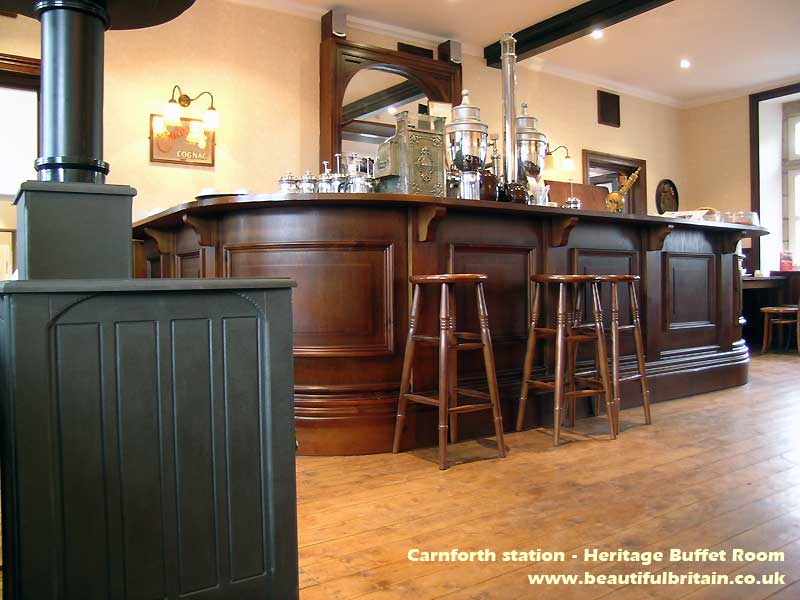 picture) and the station clock, (see
 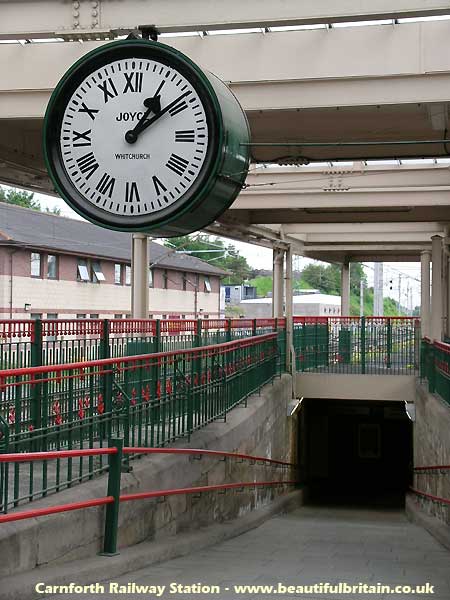 picture), which became a powerful icon in the film. His works included such films as
Mutiny on the Bounty, Von Ryan's Express, The Charge of the Light Brigade, Ryan's Daughter, Superman and Gandhi. He
was awarded, but declined, a CBE in 1982.
picture), which became a powerful icon in the film. His works included such films as
Mutiny on the Bounty, Von Ryan's Express, The Charge of the Light Brigade, Ryan's Daughter, Superman and Gandhi. He
was awarded, but declined, a CBE in 1982.
1994After a wait of 800 years, girls were invited to join the Cathedral Choir at
Wells in Somerset. See 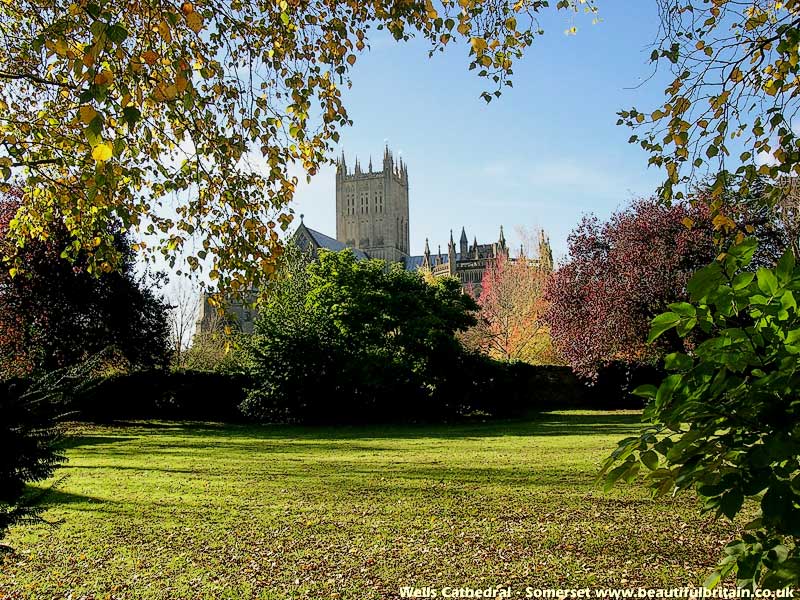 picture of Wells Cathedral.
2000Former Cabinet minister Jonathan Aitken was released from jail after serving
less than half of his 18-month sentence. He had been imprisoned for perjury and perverting the course of justice
after his libel case against the Guardian Newspaper and Granada Television collapsed.
2012 Casualty, the longest-running emergency medical drama television series in the world, was broadcast from Cardiff's Roath Lock studios in the Porth Teigr area of Cardiff Bay (see 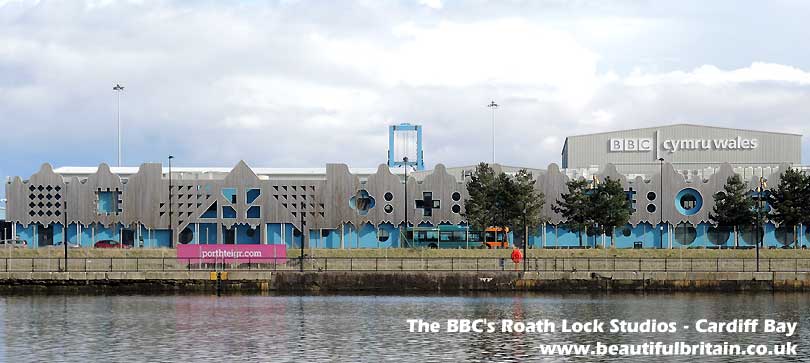 picture) for the first time. For 25 years the fictional Holby City Hospital’s emergency department had been staged in studios in Bristol.
2014The Royal mail issued a series of stamps celebrating characters from more
than 60 years of children’s television. Characters ranged from Andy Pandy (screened in 1950) to Peppa Pig
(who celebrated her 10th anniversary in 2014).
2014 Figures from 'Care for the Wild' showed that pilot culls of badgers in Somerset and Gloucestershire had cost more than £7m - equivalent to more than £4,000 per badger killed. The government scheme was to test how effective, humane and safe a cull could be in their attempt to stop the spread of bovine TB.