
On This Day - 25th January
1327 The accession of King Edward III. During his long reign of 50 years (the second longest in medieval England) he transformed the country into one of the most formidable military powers in Europe and saw vital developments in legislation and government, in particular the evolution of the English Parliament.
1533 The Bishop of Lichfield secretly married King Henry VIII to Anne Boleyn, the
second of Henry's six wives. She had, ten days previously, discovered that she was pregnant.
The Bishop of Lichfield secretly married King Henry VIII to Anne Boleyn, the
second of Henry's six wives. She had, ten days previously, discovered that she was pregnant.
1554Sir Thomas Wyatt gathered an army of 4000 men in Kent at the start of his
rebellion against Queen Mary. His fellow conspirators were timid and inept and he eventually surrendered. He was
executed and his body 'quartered' on 11th April.
1627The birth of the Honourable Robert Boyle, one of the pioneers of modern
chemistry and physics.
1759The birth in this cottage at Alloway (see 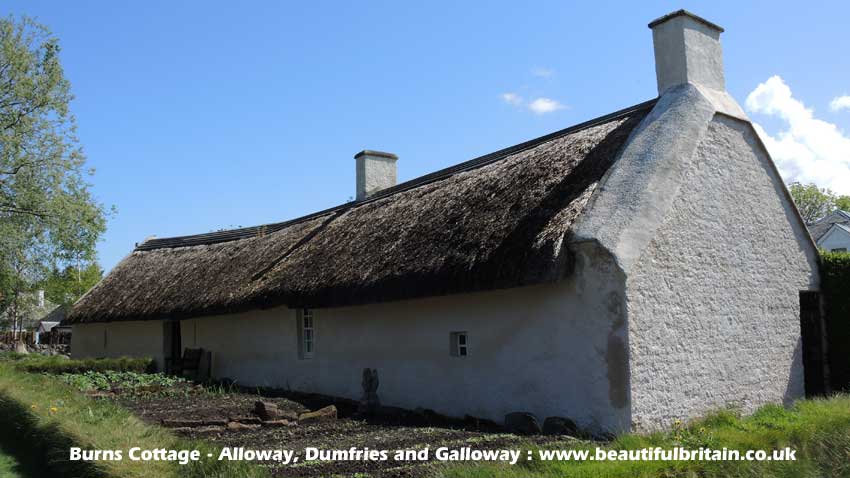 picture) of Robert Burns, Scotland’s national poet. He lived at this house in Dumfries (see
 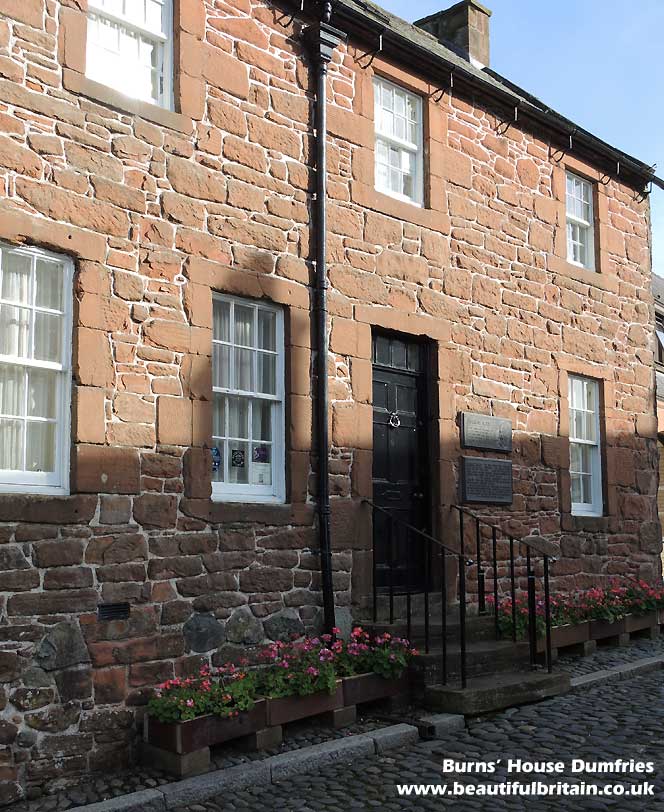 picture and
 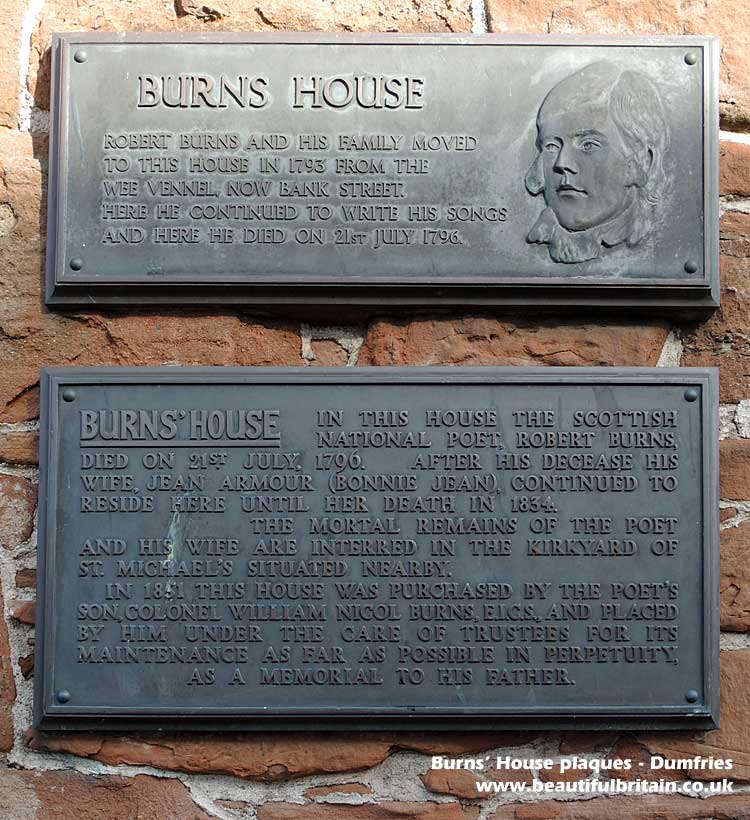 plaques) from 1793 until his death. His birthday is
celebrated as ‘Burns Night’ by Scotsmen all over the world. Burns also collected folk songs from across
Scotland, often revising or adapting them. His poem (and song) Auld Lang Syne is often sung on New Year's Eve, or
Hogmanay, as it's known in Scotland.
plaques) from 1793 until his death. His birthday is
celebrated as ‘Burns Night’ by Scotsmen all over the world. Burns also collected folk songs from across
Scotland, often revising or adapting them. His poem (and song) Auld Lang Syne is often sung on New Year's Eve, or
Hogmanay, as it's known in Scotland.
1791The British Parliament passed the Constitutional Act of 1791 and split the
old Province of Quebec into Upper and Lower Canada.
1855The death of the writer Dorothy Wordsworth, sister of the romantic poet
William Wordsworth.
1858Mendelssohn's Wedding March was first played .... at the wedding of Queen
Victoria's daughter Princess Victoria and Crown Prince Frederick of Prussia.
1874The birth of William Somerset Maugham, English playwright, novelist and
short story writer. He was among the most popular writers of his era and reputedly the highest paid author during
the 1930s.
1899The Wireless Telegraph & Signal Company began manufacture of the first
radio sets, at Chelmsford.
1911The Daily Herald was launched. It was the first newspaper to sell two
million copies.
1919The founding of The League of Nations, forerunner of the United Nations. It
was the first permanent international organization whose principal mission was to maintain world peace.
1972The world's first kidney and pancreatic tissue transplant was carried out in
London
1981‘The Gang of Four’ (Roy Jenkins, Dr. David Owen, Shirley
Williams and Bill Rodgers) split from the British Labour party to form the Social Democrats.
1989Actor John Cleese won damages for libel at the High Court over an article in
the Daily Mirror, which claimed he had become like Basil Fawlty in his comedy series Fawlty Towers
1990The so called Burns' Day Storm occurred on this day over north-western
Europe, and was one of the strongest storms on record. It started on the birthday of poet Robert Burns, lasted for
two days, caused widespread damage and was responsible for 97 deaths.
2003During the Iraq invasion, a group of people left London for Baghdad, to
serve as human shields and thus prevent the U.S. led coalition troops from bombing certain locations.
2013 Thorpe Park ordered experts to redesign its £20m new rollercoaster 'The Swarm', due to open on 15th March, after dummies lost limbs during dry run tests.
2014Sixteen schoolgirls made history by ending a tradition of male-only choral
singing at Canterbury Cathedral stretching back more than a thousand years. The girls' choir had their first public
performance 'On This Day', at evensong. "The girls will initially only be singing at services when boy
choristers, boarders at St Edmund's school, take their twice-termly breaks. There are no women in the cathedral's
adult choir."