
On This Day - 1st July
1690 The Battle of the Boyne was
fought on the east coast of Ireland, between the Catholic King James and
the Protestant King William. The battle, won by William, ultimately helped
ensure the continuation of Protestant supremacy in Ireland. Curiously,
Battle of the Boyne Day is celebrated on 12th July. The mismatch occurred
under the Gregorian calendar and 11 days were effectively lost, causing
people at the time to clamour 'Give us back our 11 days!'
The Battle of the Boyne was
fought on the east coast of Ireland, between the Catholic King James and
the Protestant King William. The battle, won by William, ultimately helped
ensure the continuation of Protestant supremacy in Ireland. Curiously,
Battle of the Boyne Day is celebrated on 12th July. The mismatch occurred
under the Gregorian calendar and 11 days were effectively lost, causing
people at the time to clamour 'Give us back our 11 days!'
1837Compulsory registration of
births, marriages and deaths came into effect in England and Wales.
1899 The birth, in Scarborough, Yorkshire of the stage and film actor Charles Laughton. His biggest film hits were The Barretts of Wimpole Street, Mutiny on the Bounty, Jamaica Inn and The Hunchback of Notre Dame.
1903The birth of Amy Johnson CBE, a
pioneering English pilot. She was born at this house (see 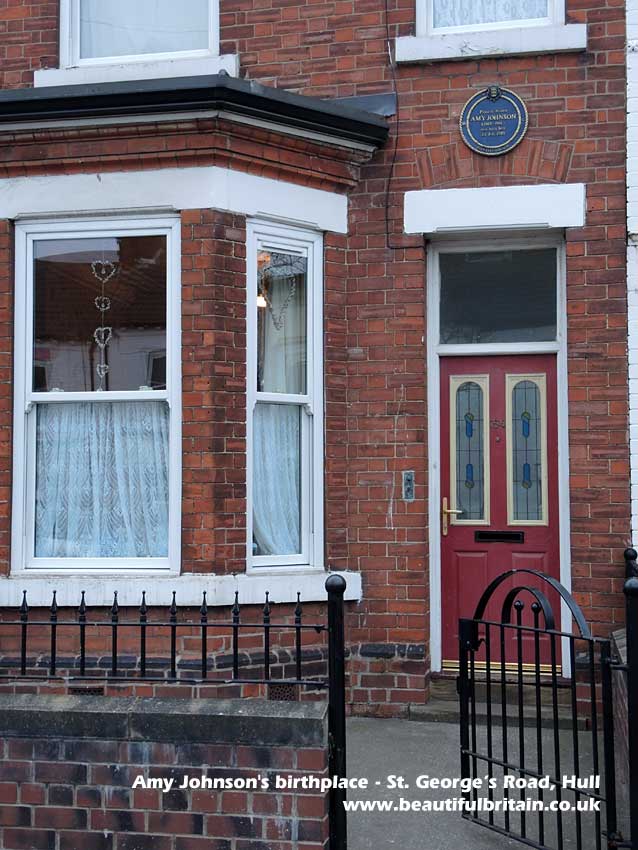 picture) on St. Georges Road in Hull which has a commemorative blue plaque (see
 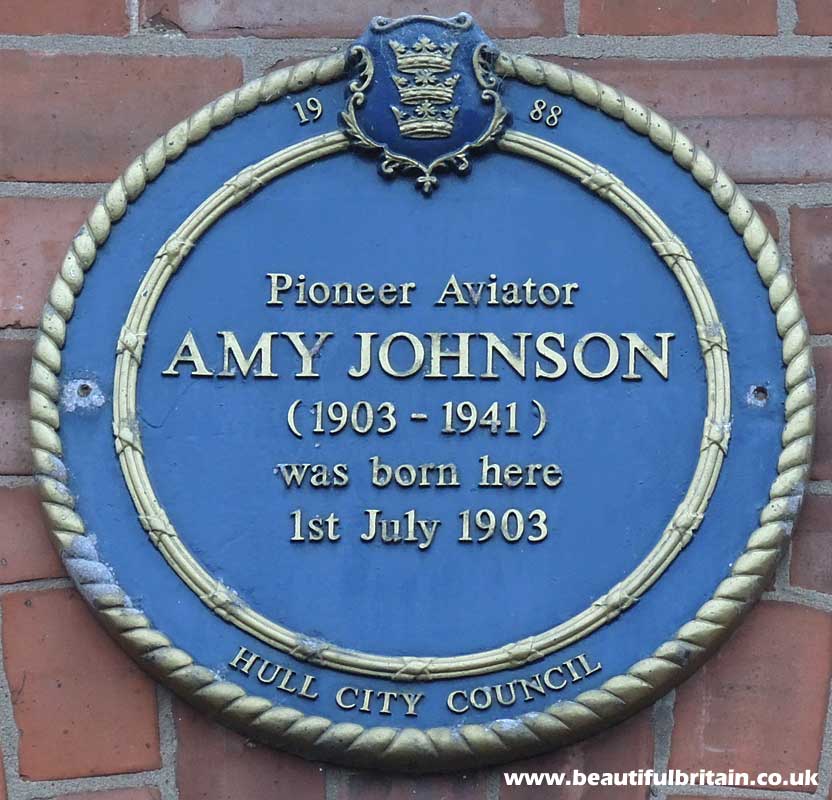 picture). Flying solo or with her husband, Jim Mollison,
Johnson set numerous long-distance records during the 1930s. She flew in
the Second World War as a part of the Air Transport Auxiliary where she
died during a routine flight when returning an aircraft to base.
picture). Flying solo or with her husband, Jim Mollison,
Johnson set numerous long-distance records during the 1930s. She flew in
the Second World War as a part of the Air Transport Auxiliary where she
died during a routine flight when returning an aircraft to base.
1911The introduction of the British
Copyright Act - protecting an author's works for 50 years after their
death.
1916World War I: Almost 20,000 British soldiers were killed and a further 57,500 were injured on the first
day of the Battle of the Somme. It was the greatest number of British
casualties in a single day's fighting in modern history. British casualties on day one were greater than the total combined British casualties in the Crimean, Boer, and Korean wars.
1942World War II: The first Battle
of El Alamein, a battle of the Western Desert Campaign in North Africa, was
fought between the Axis forces (Germany and Italy) commanded by Field
Marshal Rommel, and Allied forces of the British Eighth Army commanded by
General Claude Auchinleck. The battle halted the second, and final advance
by the Axis forces into Egypt.
1960Ghana became a Republic and
Queen Elizabeth II ceased to be its Head of state.
1961Diana, the Princess of Wales,
was born.
1963The British Government admitted
that the former diplomat Kim Philby, a high-ranking member of British
intelligence had worked as a double agent before defecting to the Soviet
Union.
1967Colour television came to
Europe with a seven hour transmission on BBC 2 from the Wimbledon Lawn
Tennis Championships.
1969Prince Charles was invested
Prince of Wales by his mother, Queen Elizabeth II, at Caernarfon Castle in
north Wales. (see 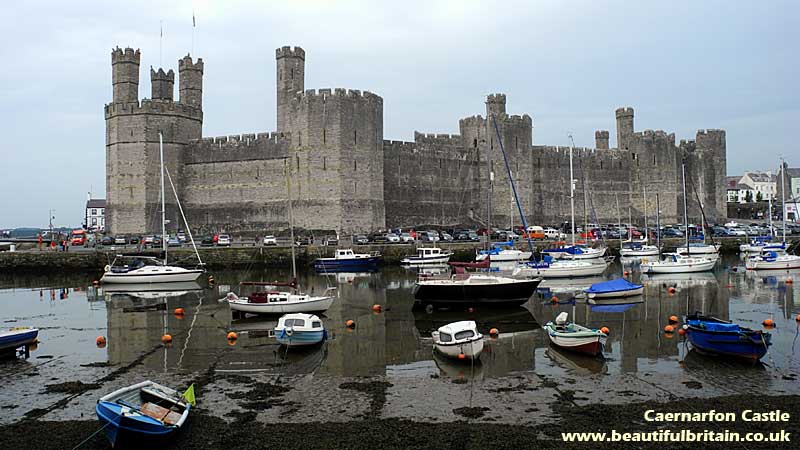 picture of Caernarfon
Castle)
picture of Caernarfon
Castle)
1977British tennis player Virginia
Wade won the Women's Singles Championship at Wimbledon in its Centenary
Year and during Queen Elizabeth II's Jubilee year.
1996In addition to a practical
exam, learner drivers in Britain had to pass a written exam for the first
time.
1998The first meeting of the
historic Northern Ireland Assembly in Belfast, following the signing of the
Good Friday Peace Agreement.
2005 The final unveiling of Anthony Gormley's' Another Place' on Crosby
Beach near Liverpool, where 100 cast iron figures face out to sea. ( 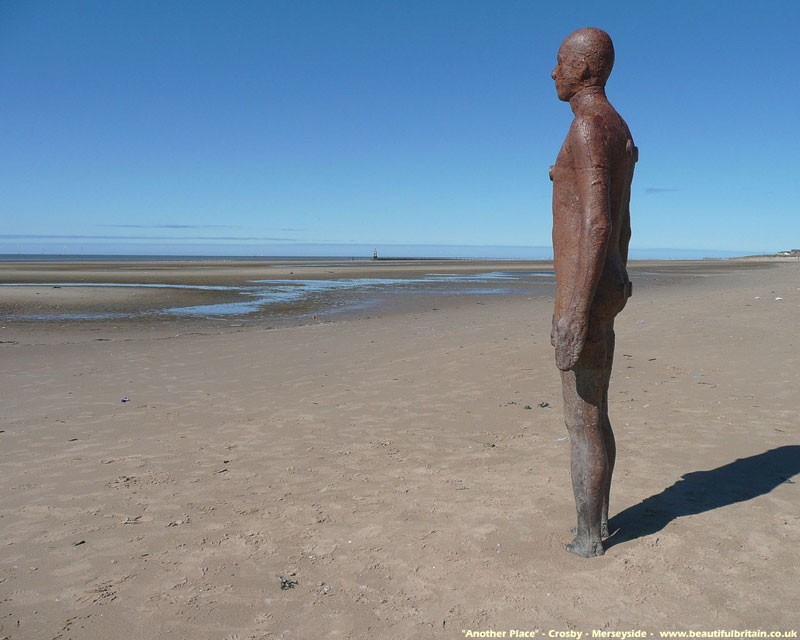 picture of 'Another Place' )
2006The death of Freddie Trueman
OBE, Yorkshire and English cricketer, generally acknowledged as one of the
greatest fast bowlers in history. Yorkshire born Prime Minister Harold
Wilson once described Trueman as the 'greatest living Yorkshireman'. This
(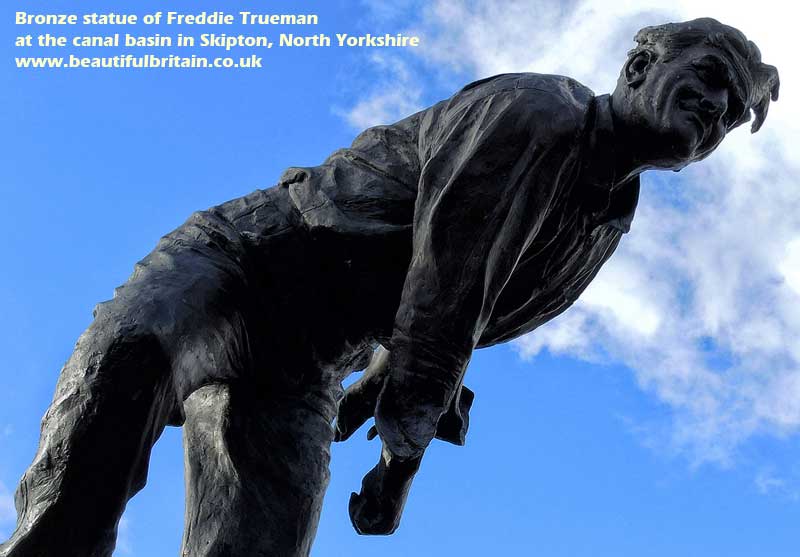 bronze statue
of him) is in the canal basin at Skipton, North Yorkshire, the town where he lived
for many years.
bronze statue
of him) is in the canal basin at Skipton, North Yorkshire, the town where he lived
for many years.
2007 A smoking ban came into force in England, making it illegal for anyone to smoke in an enclosed public place and within the workplace.
2014Tracey Emin's modern artwork
'My Bed' was sold at auction by Christie's in London for £2.2m. The
work features an unmade bed surrounded by a floor littered by empty vodka
bottles, cigarette butts and condoms. It was put up for sale by the art
collector Charles Saatchi with a guide price of between £800,000 and
£1.2m.
2015 The death (aged 106) of Sir Nicholas George Winton MBE. He was a British humanitarian who organized the rescue of 669 children, most of them Jewish, from Nazi-occupied Czechoslovakia during the 9 months before war broke out in 1939. The operation was later known as the Czech Kindertransport.