
On This Day - 30th July
1718 William Penn, English Quaker leader and founder of the American colony
of Pennsylvania died.
William Penn, English Quaker leader and founder of the American colony
of Pennsylvania died.
1746 The death of Francis Towneley, English Jacobite who was executed for his role in the rebellion of 1745. His head was placed on a pike on Temple Bar, London but was secretly removed and has since been in possession of the Towneley family. See 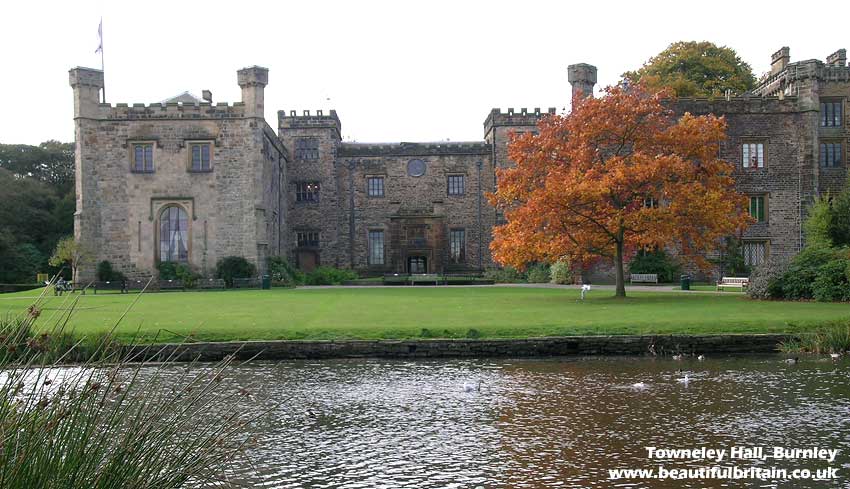 picture of Towneley Hall, Burnley. The skull is now preserved in the chapel at Towneley Hall. The chapel's early 16th Century altarpiece (see
 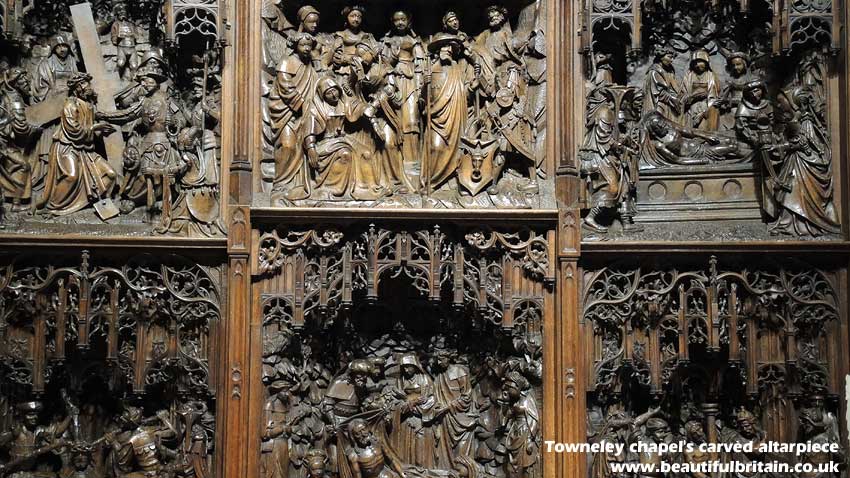 picture) is a magnificent example of Flemish craftsmanship.
1818Emily Brontë, English novelist and author of Wuthering Heights was
born at this house (see  picture) in Thornton, West Yorkshire. Emily was the third eldest of the four surviving Brontë siblings, between the youngest Anne and her brother Branwell. She published under the pen name Ellis Bell. The Brontës' later home (see
 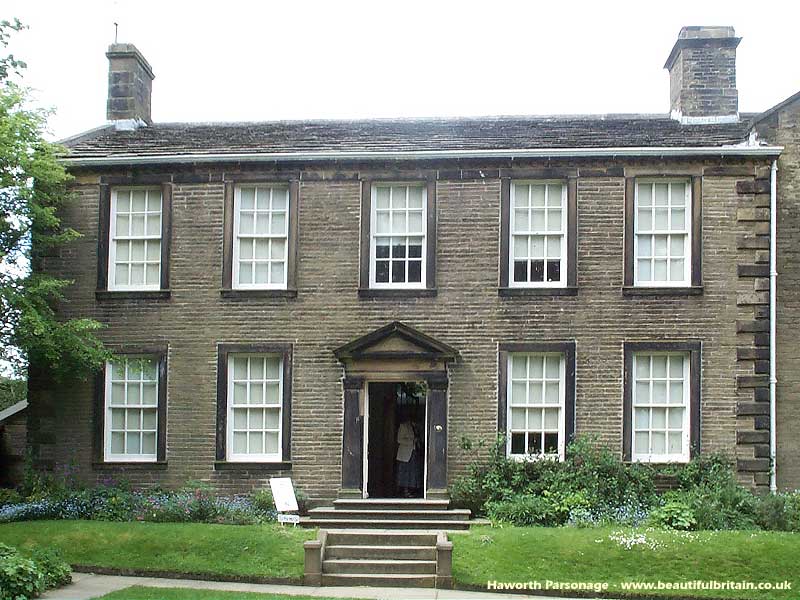 picture) was the Haworth Parsonage,
in West Yorkshire. You can find out much more about the Brontës
by visiting the
picture) was the Haworth Parsonage,
in West Yorkshire. You can find out much more about the Brontës
by visiting the  Haworth
page in the Out & About section of this website.
Haworth
page in the Out & About section of this website.
1898The birth of Henry Moore, English sculptor and artist. He was best known for his semi-abstract monumental bronze sculptures which are located around the world as public works of art. See 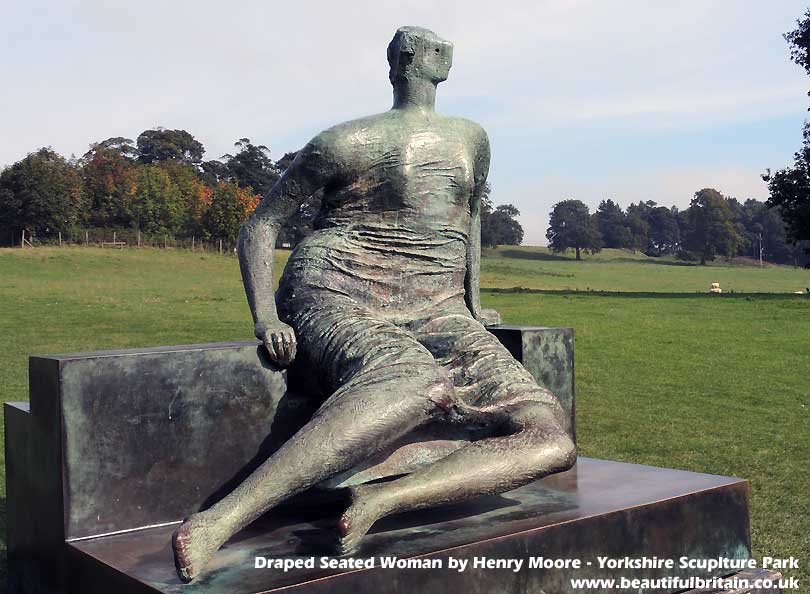 picture of 'Draped Seated Woman' at the Yorkshire Sculpture Park. His forms are generally pierced or contain hollow spaces. Many interpreters liken the undulating form of his reclining figures to the landscape and hills of his birthplace, Yorkshire.
1900London Underground's Central Line was opened by the Prince of Wales,
with a two pence (tuppence) fare for all destinations.
1935'Penguin' paperback books, founded by Allen Lane, went on sale in Britain.
1938 The first edition of The Beano was published. It is the longest running British children's comic magazine, published by DC Thomson in Dundee. By April 1950 the weekly circulation was almost 2,000,000. The Beano reached its 4,000th issue on 28th August 2019.
1940The birth of Sir Clive Sinclair, inventor and pioneer of the first home computers
(Sinclair ZX80, ZX81 and Spectrum). His ZX 80 computer was launched in 1980 (as reflected in the name) and cost less than £100. At that time computers cost at least £700 (over £3,000 when adjusted for inflation). Sinclair was an inventor first and a businessman second. In 1983, he formed Sinclair Vehicles and released the Sinclair C5, a small, one-person battery electric recumbent tricycle. In 2010 Sinclair stated that he did not use computers himself, and preferred using the telephone to email.
1948The world's first radar station was opened, to assist shipping at the
port of Liverpool.
1958Daley Thompson, British athlete was born. He won the decathlon gold medal at the Olympic Games in 1980 and 1984, and broke the world record for the event four times. With four world records, two Olympic gold medals, three Commonwealth titles, and wins in the World and European Championships, Thompson is considered by many to be the greatest decathlete of all time.
1963Kim Philby, British intelligence officer from 1940 and Soviet agent from
1933, fled to the USSR.
1966England won the Football World Cup in London, beating West Germany 4
- 2. This was England's first (and only) win since the tournament began in
1930. England forward Geoff Hurst became the only man to score a hat-trick
in a world cup final for a winning team.
1968The Beatles closed the Apple Boutique, and gave clothes away for free
to passers-by.
1973British victims of the drug Thalidomide were awarded £20 million
compensation as their 11 year case against the Distillers company ended in
victory.
1991Italian tenor Pavarotti celebrated 30 years in opera with a huge, free
concert in Hyde Park.
2000The News of the World came under mounting pressure to end its 'name and
shame' campaign against paedophiles.
2006The world's longest running music show Top of the Pops was broadcast for the last time on BBC Two. The show had aired for 42 years. 2213 episodes were screened, the first being broadcast on New Year's Day 1964. Disc Jockey Jimmy Savile (who died on October 29th 2011) was the presenter of both the first and last shows. In October 2012 numerous allegations were made that Savile had sexually abused hundreds of young people, stretching from 1955 to 2009. In the aftermath, his gravestone at Scarborough was removed at the request of Savile's family and plaques and statues of him in other locations were removed to prevent further defacement.
2014A large part of the 144-year-old Grade II listed pier at Eastbourne's seafront was 'reduced to a mangled wreck' after a huge blaze that is believed to have started in wall panelling. In the aftermath, Prime Minister David Cameron and Chancellor George Osborne pledged up to £2 million to help Eastbourne's tourism industry recover from the pier's loss.