
On This Day - 4th June
1704 The birth of Benjamin Huntsman
who experimented in steel manufacture at Handsworth, near Sheffield. The
local cutlery manufacturers initially refused to buy his steel as it was
harder than the German steel they were accustomed to using. Huntsman did
not patent his process, and his secret was discovered by a Sheffield
iron-founder called Walker who, according to a popular story, got into
Huntsman's works in the disguise of a starving beggar asking to sleep by a
fire for the night. One of the original main buildings at Sheffield's
Northern General Hospital is named after Huntsman, and in Sheffield city
centre is a Wetherspoons pub called The Benjamin Huntsman.
The birth of Benjamin Huntsman
who experimented in steel manufacture at Handsworth, near Sheffield. The
local cutlery manufacturers initially refused to buy his steel as it was
harder than the German steel they were accustomed to using. Huntsman did
not patent his process, and his secret was discovered by a Sheffield
iron-founder called Walker who, according to a popular story, got into
Huntsman's works in the disguise of a starving beggar asking to sleep by a
fire for the night. One of the original main buildings at Sheffield's
Northern General Hospital is named after Huntsman, and in Sheffield city
centre is a Wetherspoons pub called The Benjamin Huntsman.
1738The birth of George III, King
of England from 1760. There was continual friction between him and his
Prime Minister, Pitt, who was highly popular with the people. During his
reign he mishandled the conflict with the American colony, which led to the
War of Independence. He went insane in 1811 and the Prince of Wales was
appointed Regent.
1805The first official Trooping The
Colour took place at Horse Guards Parade in London.
1879The birth of Lucie Attwell,
English children's author and illustrator. She was known for her cute,
nostalgic drawings of children, based on her daughter, Peggy. See 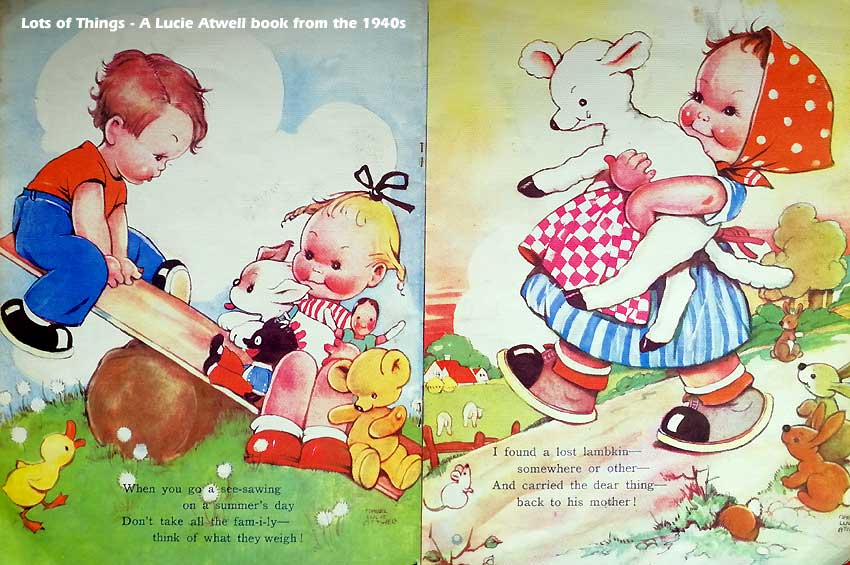 illustration from 'Lots of Things, our book from the 1940s. In 1921, J.M.
Barrie personally requested her to illustrate the gift-book edition of
Peter Pan. The Lucie Attwell Annual was published for more than 50 years,
from 1922 to 1974.
illustration from 'Lots of Things, our book from the 1940s. In 1921, J.M.
Barrie personally requested her to illustrate the gift-book edition of
Peter Pan. The Lucie Attwell Annual was published for more than 50 years,
from 1922 to 1974.
1910Christopher Cockerell, the
English engineer who invented the hovercraft, was born. Cockerell lived and
died in Hythe and this plaque (see 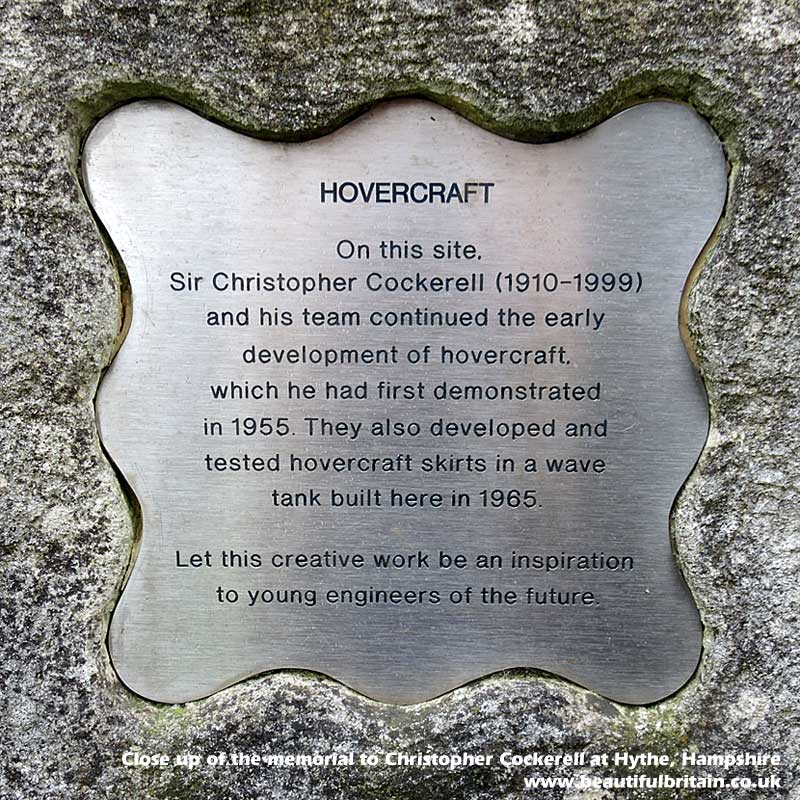 picture), on a monument in Hythe, outlines his work.
1913Suffragette Emily Davison ran
out in front of King George V's horse, Anmer, at Tattenham Corner on the
Epsom racecourse. She was trampled, never regained consciousness and died a
few days later.
1940World War II: The Dunkirk
evacuation ended. British forces completed the evacuation of 300,000 troops
from Dunkirk in France. To rally the morale of the country, Winston
Churchill delivered his famous 'We shall fight on the beaches ... we shall
never surrender' speech to the House of Commons.
1962The Beatles signed a recording
contract with EMI Parlophone.
1967British Midland flight G-ALHG
crashed in Hopes Carr, Stockport, killing 72 of the 84 passengers and crew on board and left 12 people with serious injuries. Although the plane came down in the centre of a busy industrial town, miraculously, nobody outside the plane was injured. An air accident investigation found the cause of the crash to be fuel starvation due to a fault in the fuel lines and the poor warning system on the Canadair C-4 Argonaut propeller aircraft.
1977Five British plane-spotters
imprisoned in Greece for alleged spying were released after 10 weeks in
jail.
1977Scottish football fans caused
at least £15,000 damage by breaking the goals and digging up the
pitch at Wembley after Scotland beat England 2-1.
1991Defence Secretary Tom King
confirmed Britain would reduce the amount it spent on the army.
1998The five major nuclear powers
(the United States, Russia, China, France and Great Britain) renewed their
appeal for India and Pakistan to stop development of nuclear arms and
offered to help the two antagonists resolve their conflict over the Kashmir
region.
1999A man who had all his fingers
severed in a horrific accident at work became the first person to have all
his fingers re-attached. Two teams of doctors along with nurses and theatre
technicians performed the delicate micro-surgical procedure in a marathon
18-hour operation at Withington Hospital, Manchester.