
On This Day - 20th June
1214 The University of Oxford
received its charter. Oxford is the second-oldest surviving university in
the world (Bologna in Italy is the oldest) and the oldest in the
English-speaking world.
The University of Oxford
received its charter. Oxford is the second-oldest surviving university in
the world (Bologna in Italy is the oldest) and the oldest in the
English-speaking world.
1380The birth of John Plantagenet, duke of Bedford, 3rd son of Henry IV and a general and statesman who commanded England’s army during a critical period in the Hundred Years’ War with France. After many successes, he came under pressure from a French army led by Joan of Arc. She was eventually captured by the English and Bedford had her tried and burnt at the stake as a witch in 1431.
1497 The consecration of St. Mary's Church, Fairford (Cotswolds), one of the finest 'wool churches' in England (see 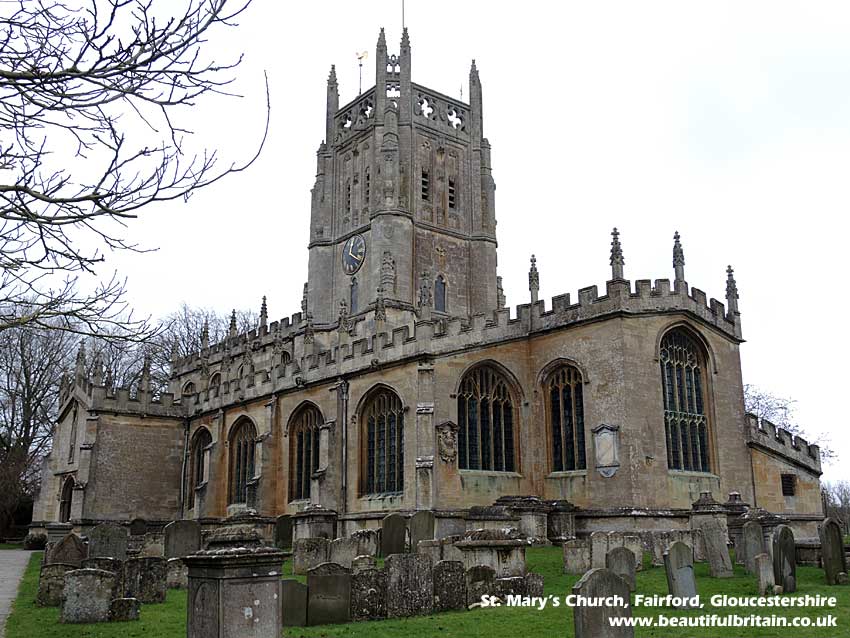 picture). Successful wool merchants lavished money on their parish churches and John Tame (see
 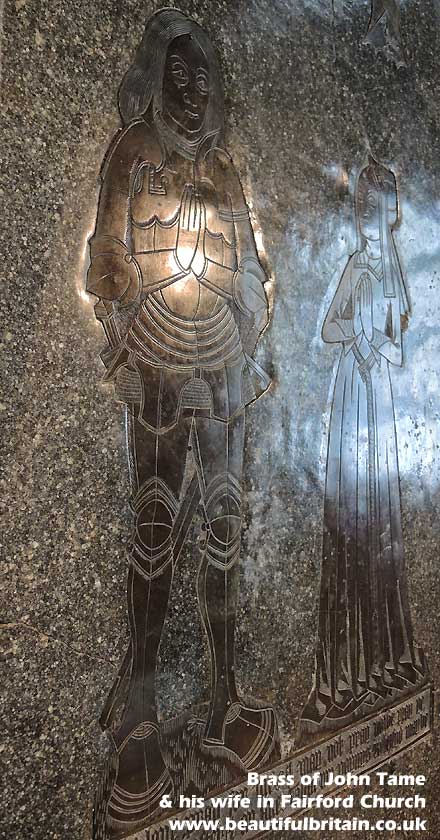 monumental brass), a wealthy wool merchant completely rebuilt the church at his own expense. Unusually, the churchyard includes a stone memorial to Tiddles (see
 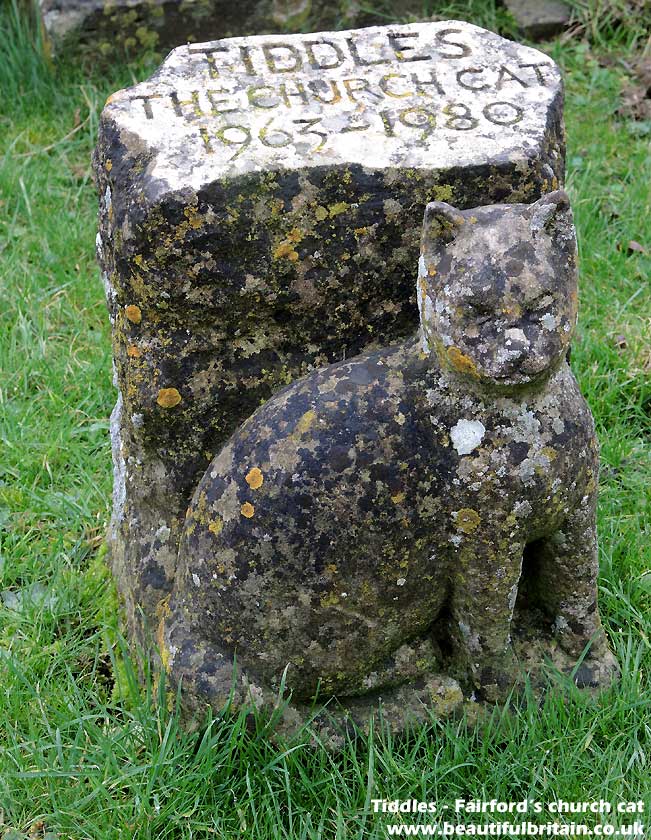 picture), the church cat who 'guarded' the church and its precincts from 1963 to 1980.
1756In India, the night of the
infamous 'Black Hole of Calcutta', where more than 140 British soldiers and
civilians were placed in a small prison cell - 18 feet by 14 feet - by the
Nawab of Bengal. The following morning only 23 emerged alive.
1819The U.S. vessel SS Savannah
arrived at Liverpool. She was the first steam-propelled vessel to cross the
Atlantic, although most of the journey was made under sail.
1837On the death of William IV,
Queen Victoria, aged 18, acceded to the throne. At the time of Victoria's
death her reign of 63 years and 7 months was longer than that of any other
British monarch and the longest of any female monarch in history. On 9th
September 2015 Queen Elizabeth II overtook Queen Victoria as the longest
serving monarch of the United Kingdom, Canada, Australia, and New
Zealand.
1876 The death of James Baird, Scottish foundryman, industrialist, philanthropist and MP for Falkirk Burghs. He founded William Baird & Co. which went on to become the largest producers of iron in Britain, employing 10,000 people. He is buried at Alloway churchyard- see 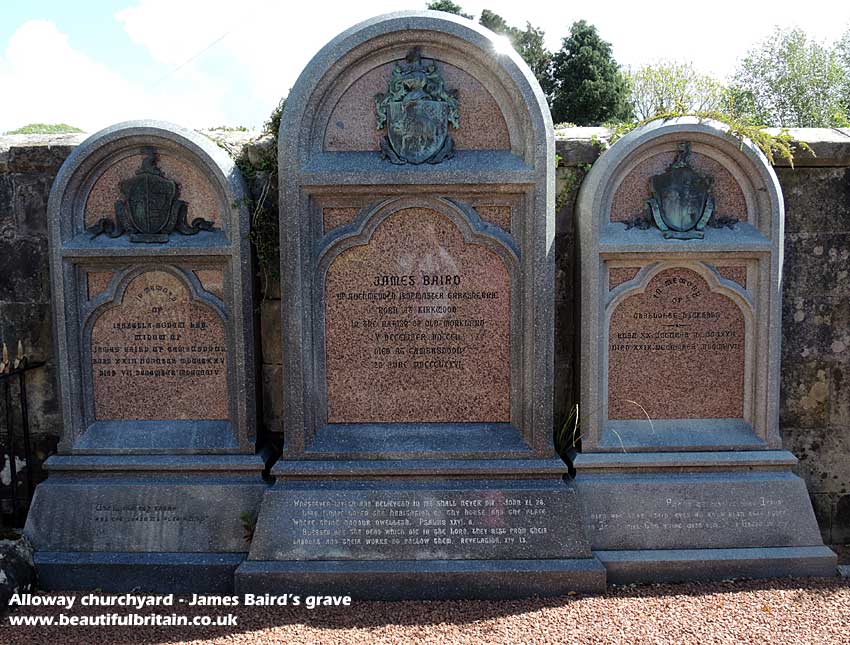 picture. The village was also the birthplace of the Scottish poet Robert Burns.
1887On Queen Victoria’s
Golden Jubilee, Buffalo Bill Cody staged a Royal Command performance of his
famous Wild West Show, and four European kings boarded the original
Deadwood coach driven by Cody.
1887Britain's longest railway
bridge over the River Tay opened. The first had collapsed in 1879 whilst
the Edinburgh to Dundee train was crossing, killing over 90 people.
1906Catherine Cookson, English
novelist, was born.
1934The birth of Wendy Craig, BAFTA
Award winning actress who is best known for her appearances in the sitcoms
Butterflies.
1949American tennis player
'Gorgeous' Gussie Moran caused a sensation at the Wimbledon Championships
by wearing lace-trimmed pants under a short skirt.
1984The biggest exam shake up for
over 10 years was announced with O Level and CSE exams to be replaced by
new examinations, to be known as GCSEs.
1986In the wake of the Chernobyl
disaster, the government ordered a temporary ban on the slaughter and
movement of lambs in some parts of the country.
1990British Chancellor John Major
proposed a new European currency which would circulate alongside existing
national currencies.
1995Shell abandoned at the eleventh
hour its plan to dump the disused Brent Spar rig in the Atlantic, provoking
a furious reaction in the British government. Meanwhile, the environmental
campaign group Greenpeace claimed victory in the high-profile battle.
1996English cricket umpire Harold
'Dickie' Bird received a standing ovation by players and spectators at
Lords when he took the field to officiate in his final Test Match.
1997Former Conservative minister
Jonathan Aitken lost his libel action against The Guardian newspaper over
allegations that wealthy Arabs paid for him to stay at the Ritz Hotel in
Paris while he was a minister.
2014England were eliminated at the
group stage of the Fifa World Cup for the first time since 1958. They were
knocked out after just two matches, with Roy Hodgson's side beaten by Group
D rivals Italy and Uruguay.