
On This Day - 6th June
1683 The Ashmolean Museum, on
Oxford's Beaumont Street, opened as the world's first university
museum.
The Ashmolean Museum, on
Oxford's Beaumont Street, opened as the world's first university
museum.
1813In the 'War of 1812', at the
Battle of Stoney Creek, a British force of 700 under John Vincent defeated
an American force twice its size under William Winder and John
Chandler.
1820Caroline, Princess of Wales,
whom George IV wished to divorce, triumphantly entered London, demanding
her recognition as queen.
1844The Young Men's Christian
Association (YMCA) was founded in London.
1844The Factory Act in Britain
restricted female workers to a 12-hour day; children between eight and 13
years were limited to six-and-a-half hours.
1868The birth of Captain Robert
Falcon Scott, English naval officer and Antarctic explorer who set out on a
second expedition to reach the South Pole in 1910; which turned out to be
an ill-fated race to beat the Norwegian, Amundsen. This statue of Robert
Falcon Scott (see 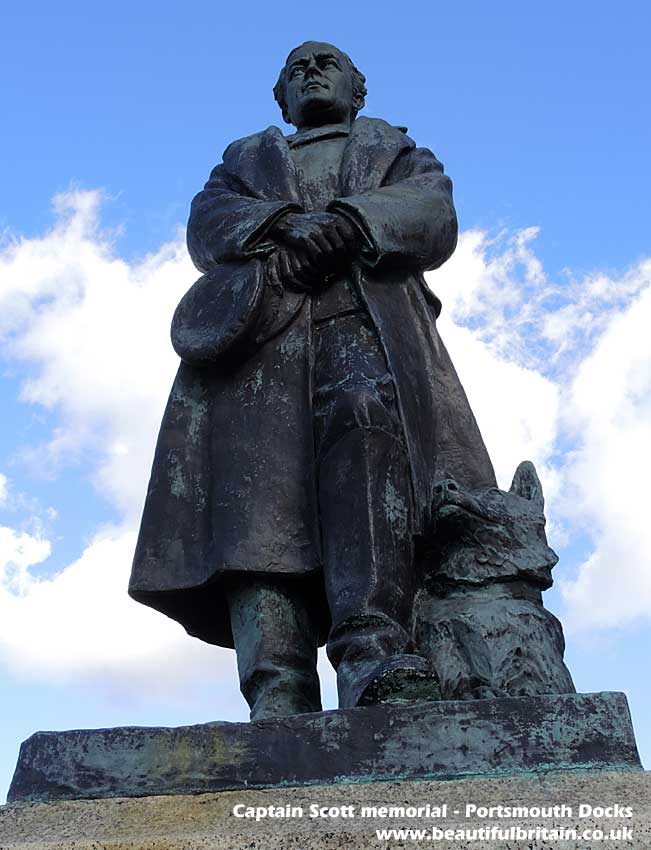 picture) at Portsmouth Historic Dockyard was sculpted by his widow,
Kathleen Scott. See also
picture) at Portsmouth Historic Dockyard was sculpted by his widow,
Kathleen Scott. See also 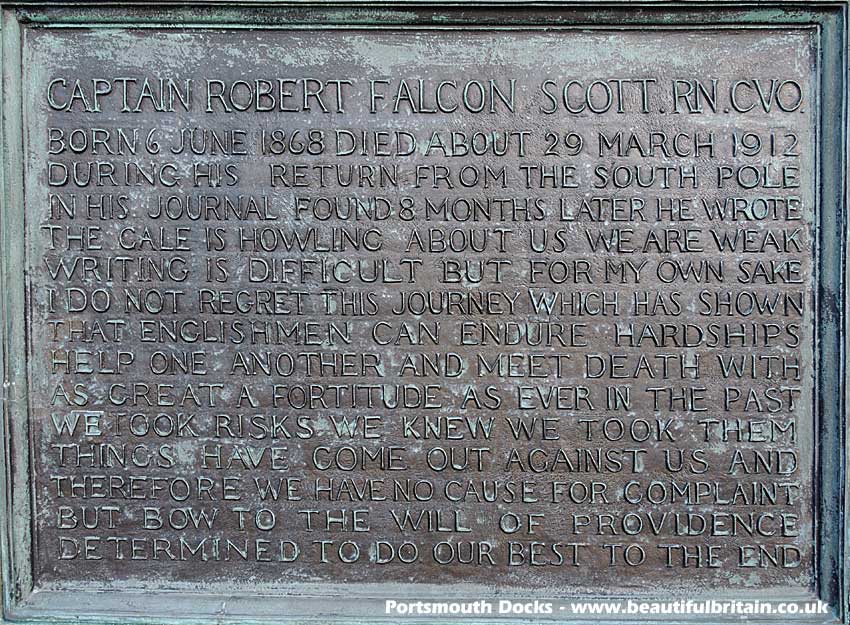 picture of the plaque.
1896The birth of Henry Allingham,
English First World War veteran, and supercentenarian (i.e. someone who has
reached the age of 110 years). For one month, he was verified as the oldest
living man in the world. He was also the last survivor of the Battle of
Jutland, the last surviving member of the Royal Naval Air Service and the
last surviving founding member of the Royal Air Force.
1918The birth of Kenneth Connor, English comedian and actor.
He did much stage work and radio work, including 11 years with Ted Ray in 'Rays a Laugh'. He also appeared in 18 of the 31 'Carry On' films and was in 62 episodes of 'Allo 'Allo! written by Jeremy Lloyd and David Croft, where he played the part of Monsieur Alfonse, the elderly funeral director.
1921The Southwark Bridge in London
was opened to traffic by King George V and Queen Mary.
1936Gatwick Airport opened in
Surrey. Half a century later, it became Britain’s second biggest
international airport, and one of the world’s busiest.
1944World War II: The Battle of
Normandy began. D-Day, code named Operation Overlord, commenced with the
landing of 155,000 Allied troops on the beaches of Normandy in France to
liberate Western Europe from German occupation.The allied soldiers quickly
broke through the Atlantic Wall and pushed inland in the largest amphibious
military operation in history. See 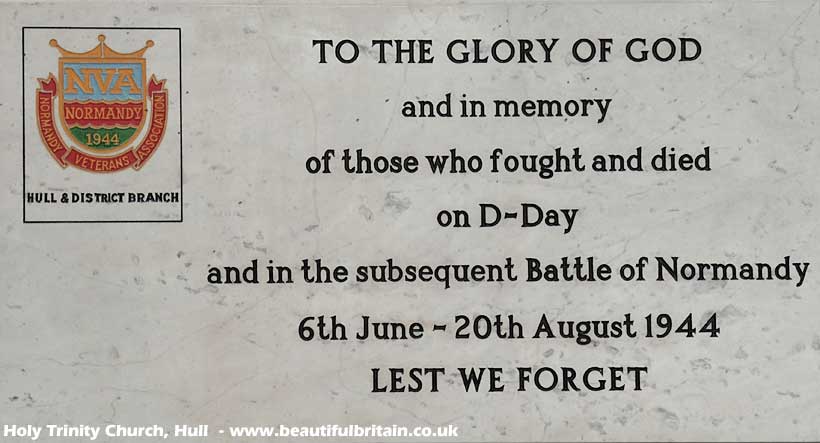 memorial plaque at Hull's Holy Trinity Church and the Commandos' Memorial (see
 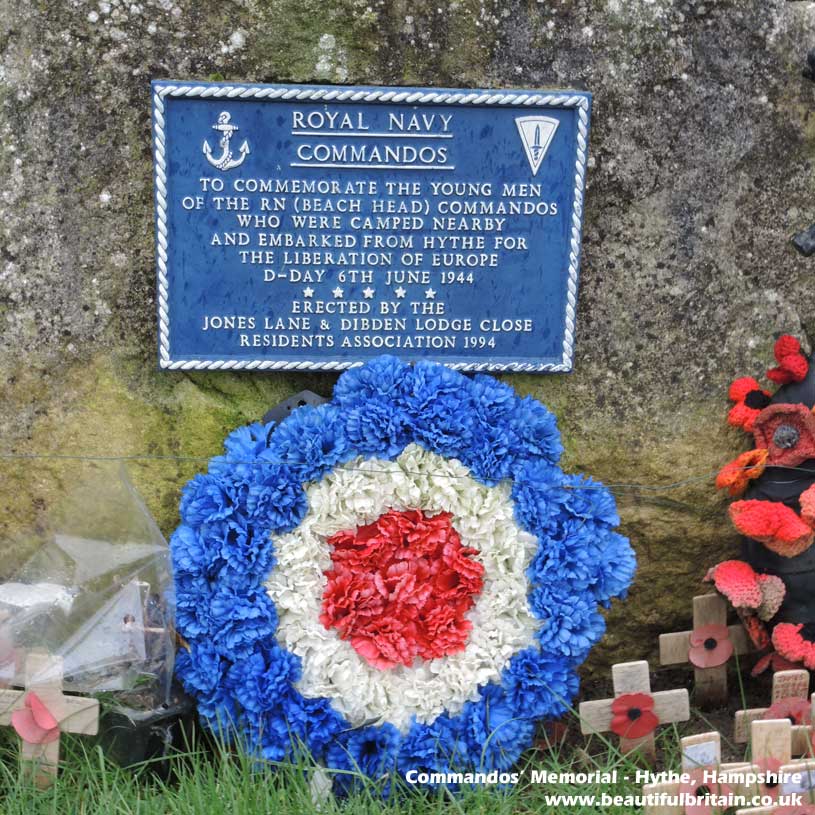 picture) at Hythe in Hampshire.
1949Nineteen Eighty-Four, George
Orwell’s prophetic novel of a world ruled by Big Brother, was
published.
1958Mike Gatting, English cricketer
was born.
1962An unknown British group, The
Beatles, played at an audition for EMI record producer George Martin.
1967President Nasser closed the
Suez Canal, alleging that US and British forces were aiding Israel.
1968 The death of Randolph Churchill, journalist, Conservative MP for Preston from 1940-45 and the only son of Winston Churchill. He is buried in St Martin's Churchyard in Bladon, Oxfordshire, along with other members of the Churchill family.
1975Results of a nationwide
referendum on 5th June backed the UK's continued membership of the EEC by a
large majority.
1988 Queen Elizabeth II stripped champion jockey Lester Piggott of his OBE after he was jailed for tax evasion.
1994Six detainees held in an
Oxfordshire immigration centre made their escape after a rooftop
protest.