
On This Day - 21st June
1377 The death of Edward III, King of England. His long reign of 50 years was the second longest in medieval England (after that of his great-grandfather Henry III). He transformed the Kingdom of England into one of the most formidable military powers in Europe and saw vital developments in legislation and government, in particular the evolution of the English parliament.
1675The laying of the foundation
stone of the new St Paul's Cathedral in London. The cathedral was designed
by Sir Christopher Wren and the site faced that of the church destroyed in
the Great Fire of London in 1666.
1706The birth of John Dollond,
English optician. Dollond & Aitchison opticians was established in
1750.
1791The birth of Robert Napier,
Scottish engineer who is often called 'The Father of Clyde Shipbuilding'.
His first engine, the Leven engine, is on display at the Scottish Maritime
Museum in Dumbarton.
1798During the Irish Rebellion the
British Army defeated Irish rebels at the Battle of Vinegar Hill in
Enniscorthy, County Wexford. It marked a turning point in the rebellion, as
it was the last attempt by the rebels to hold and defend ground against the
British military.
1809 The death (aged 39, at Stamford, Lincolnshire) of Daniel Lambert, a jailer and animal breeder from Leicester who was famous for his unusually large size. See 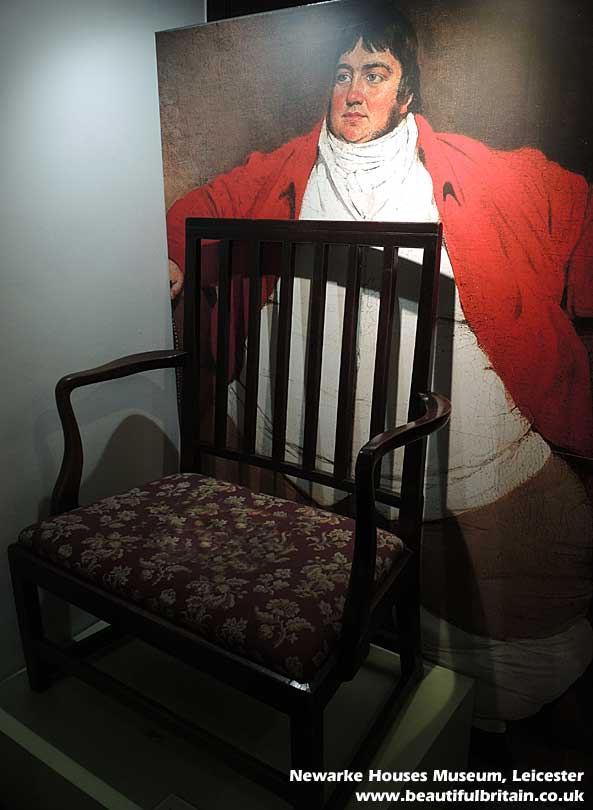 picture of the Daniel Lambert chair and his portrait in Newarke Houses Museum, Leicester. By the time he was aged 35 he weighed 50 stone (700 lb / 320 kg) and was the heaviest authenticated person at the time. He died suddenly and was buried in St Martin's Church graveyard. See
 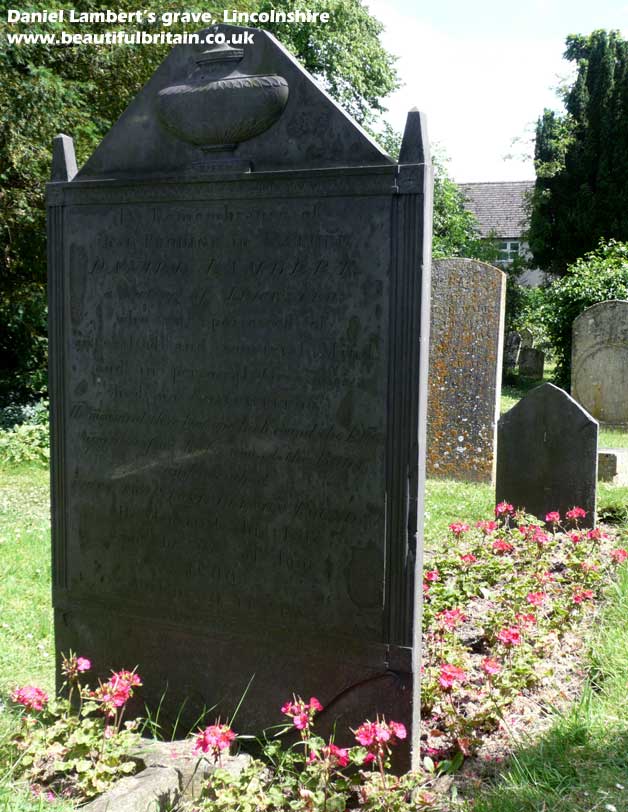 picture.
1854The first Victoria Cross,
Britain's highest medal for bravery, was awarded to Charles Lucas, who was
awarded it during the Crimean War for conspicuous bravery. The medal was
made from metal from a cannon captured at Sebastopol. The Victoria Cross
was extended to colonial troops in 1867 and to date a total of 1,356
Victoria Crosses have been awarded.
1898A reporter covering the launch
of HMS Albion on the Thames was in such a hurry to file his story that he
missed the fact that 38 people drowned when a temporary jetty
collapsed.
1919German sailors scuttled 72
warships at Scapa Flow in the Orkneys even though Germany had surrendered.
It was the greatest act of self-destruction in modern military history.
1937First televising of the
Wimbledon Lawn Tennis Championships.
1942German forces under
Field-Marshal Rommel captured Tobruk.
1948The first stored programme to
run on a computer was put through its paces on the Small Scale Experimental
Machine, known as Baby, at Manchester University.
1954The birth, in Oldham,
Lancashire of actress Anne Kirkbride, best known for her long-running role
as Deirdre Barlow in Coronation Street, which she played for 42 years from
1972 until her death in 2014. In January 2014 the soap left its long
established Quay Street site (see 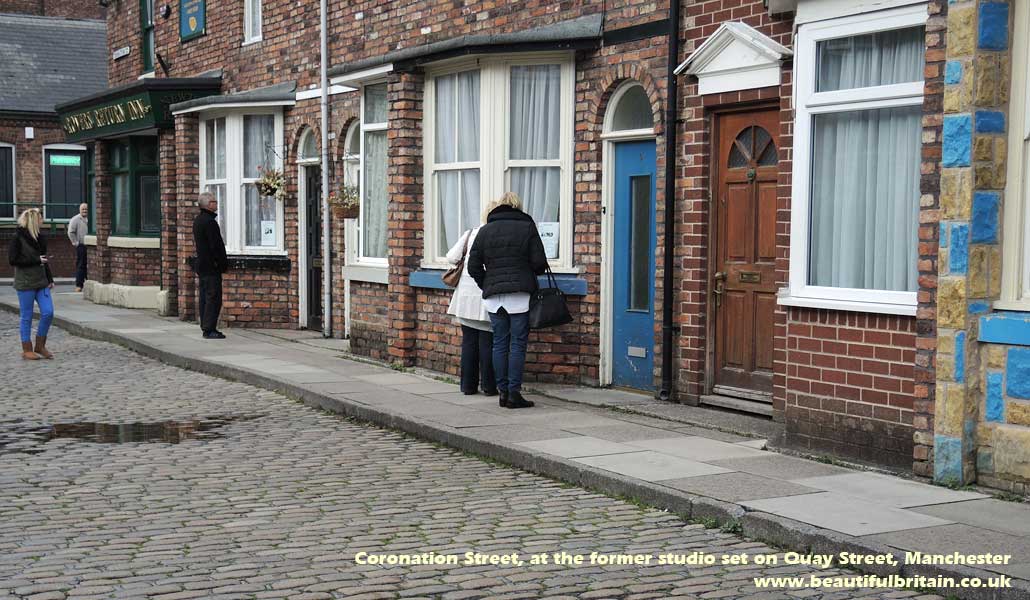 picture) in Manchester city centre and moved to this purpose built set (see
 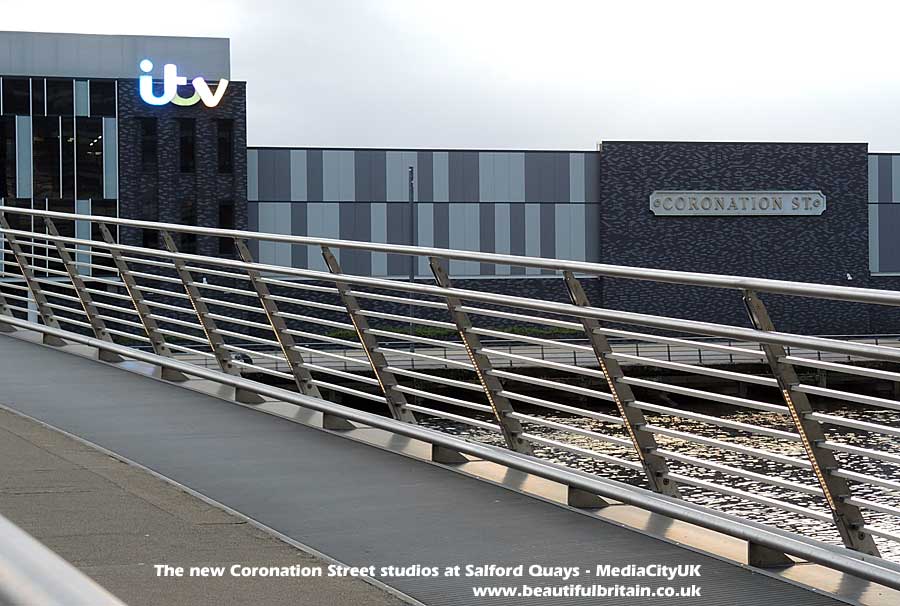 picture) at MediaCityUK
1969The BBC TV broadcast 'Royal
Family' - a documentary going behind the public facade of the British Royal
Family. This was the first time anyone had seen Queen Elizabeth II, her
husband the Duke of Edinburgh and their children other than on official
engagements.
1970Tony Jacklin won the US Open at
Hazeltine Golf Club, Minnesota. He was the first Briton to win since Ted
Ray in 1920.
1982Diana, Princess of Wales, gave
birth to a boy, (Prince William) sixteen hours after checking in to St
Mary's Hospital, in London.
1991British Gas chairman Robert
Evans came under fire for accepting a pay increase of 66%, taking his
annual wage to £370,000.
1996Britain and other members of
the EU reached an agreement for the phased lifting of the ban on British
beef. French farmers, however, blockaded two channel ports.