
On This Day - 26th June
1483 Richard, Duke of Gloucester,
began to rule England as Richard III, (see
Richard, Duke of Gloucester,
began to rule England as Richard III, (see 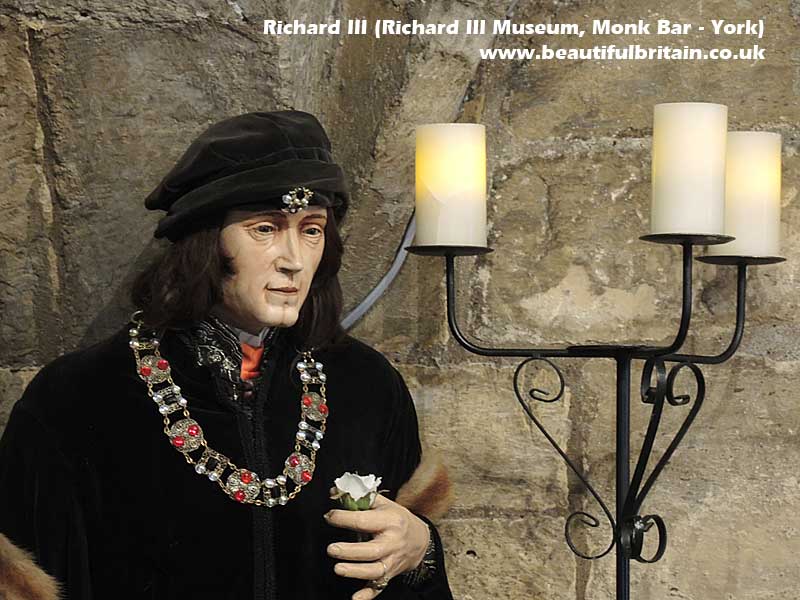 picture - York Museum) having deposed his nephew, Edward V.
Edward and his brother, Richard, Duke of York, were soon afterwards
murdered in the Tower of London.
picture - York Museum) having deposed his nephew, Edward V.
Edward and his brother, Richard, Duke of York, were soon afterwards
murdered in the Tower of London.
1817The birth of Branwell
Brontë, at this house (see  picture) in West Yorkshire. He was a painter, poet, the
only son of the Brontë family, and the brother of the writers
Charlotte, Emily, and Anne. You can find out more about the Brontës
and Haworth on the
picture) in West Yorkshire. He was a painter, poet, the
only son of the Brontë family, and the brother of the writers
Charlotte, Emily, and Anne. You can find out more about the Brontës
and Haworth on the  Beautiful Britain website.
1826 The death, in Bolton of Samuel Crompton, the inventor of the 'spinning mule' (see 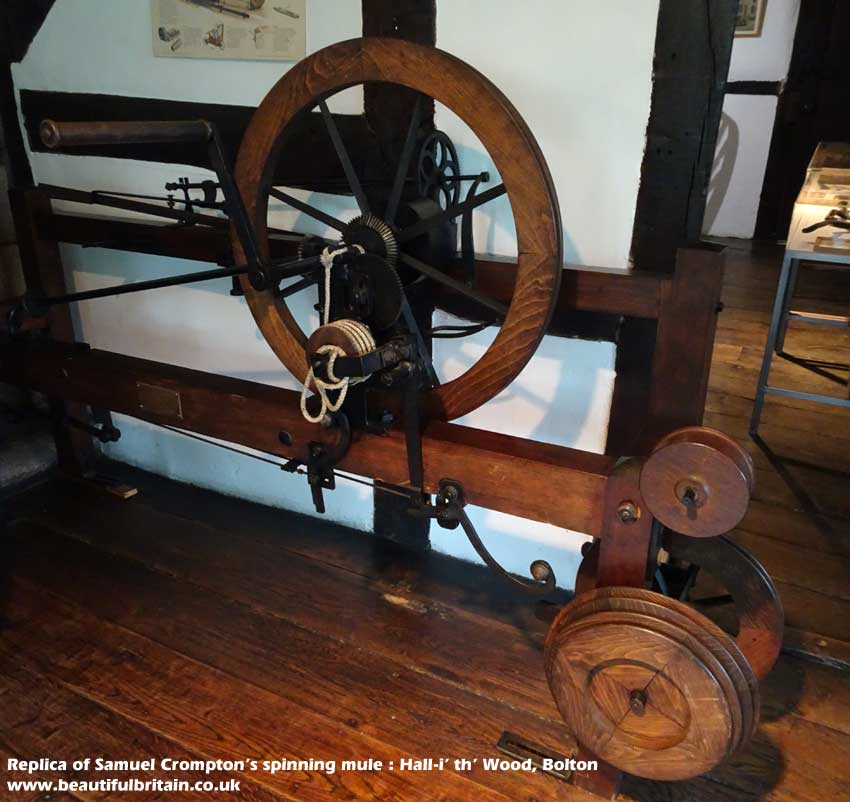 picture) a machine that revolutionised the industry worldwide. His grave, (see
 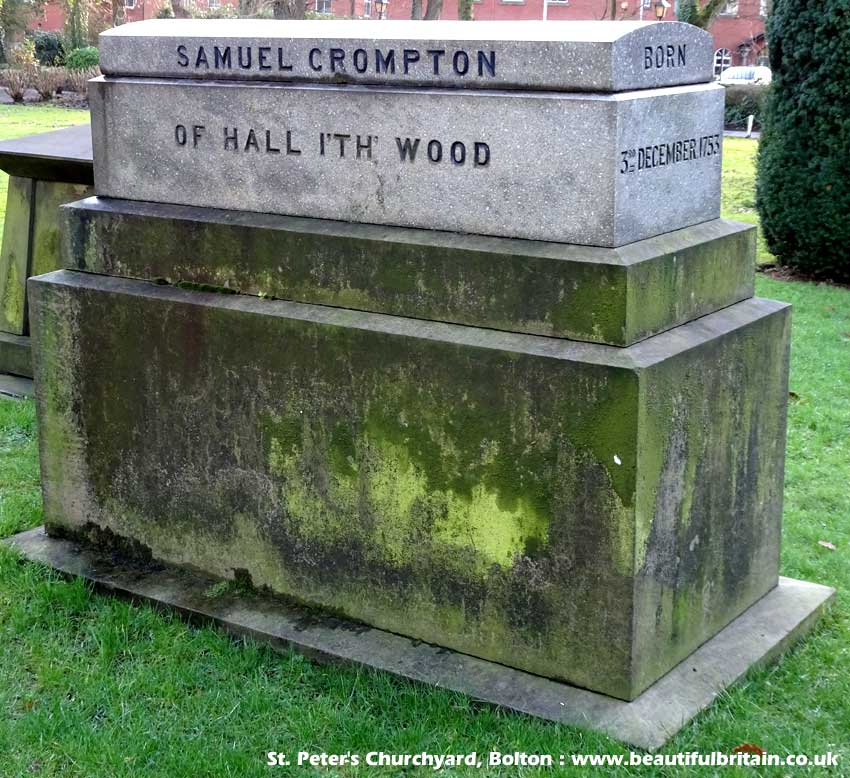 picture) is at the parish church of St Peter's, in Bolton.
1830George IV died. His brother,
William IV ascended the throne.
1857The first investiture ceremony
for Victoria Cross awards took place in Hyde Park, London. Queen Victoria
presented 62 servicemen with Britain's highest military honour.
1862Joseph Wells (father of sci-fi
writer H.G. Wells) was a Kent cricketer and became the first man to take
four first class wickets with four consecutive balls, playing against
Sussex.
1909London's Victoria & Albert
Museum opened to the public
1939Britain's first National
Serviceman, Private Rupert Alexander, signed up for the Middlesex Regiment.
His service number was 10000001.
1945Delegates from nations around
the world signed the United Nations Charter, designed to help ensure future
world peace. The first meeting of the U.N. General Assembly occurred in
London early the following year.
1959The St. Lawrence Seaway,
connecting the Great Lakes with the Atlantic Ocean, was opened by Queen
Elizabeth II and President Eisenhower.
1974British actor Richard Burton
divorced his wife, actress Elizabeth Taylor for the first time. They
remarried on 10th October 1975 and divorced for the second time on 29th
July 1976.
1977Peter Sutcliffe (the Yorkshire
Ripper) killed 16 year old Jayne MacDonald in Leeds. She was the fifth of
his 13 victims. Her murder changed public perception of the killer, as she
was the first victim who was not a prostitute. In 1981 Sutcliffe was
convicted of murdering 13 women and attacking seven others. He is currently
serving 20 sentences of life imprisonment in Broadmoor Hospital.
1986Entrepreneur Richard Branson
set off on his second attempt to claim the transatlantic powerboat record
for Britain. He smashed the previous record by two hours but was denied the
Blue Riband by the trustees of the award because he had broken two rules of
the competition; he had stopped to refuel and his vessel did not have a
commercial maritime purpose.
1991After campaigning to prove
their innocence for 15 years, the 'Maguire Seven' were cleared by the Court
of Appeal of running an IRA bomb factory in England.
1997Dresses belonging to Diana,
Princess of Wales were auctioned for more than £2million in New
York.
1999 The National Stadium of Wales (see 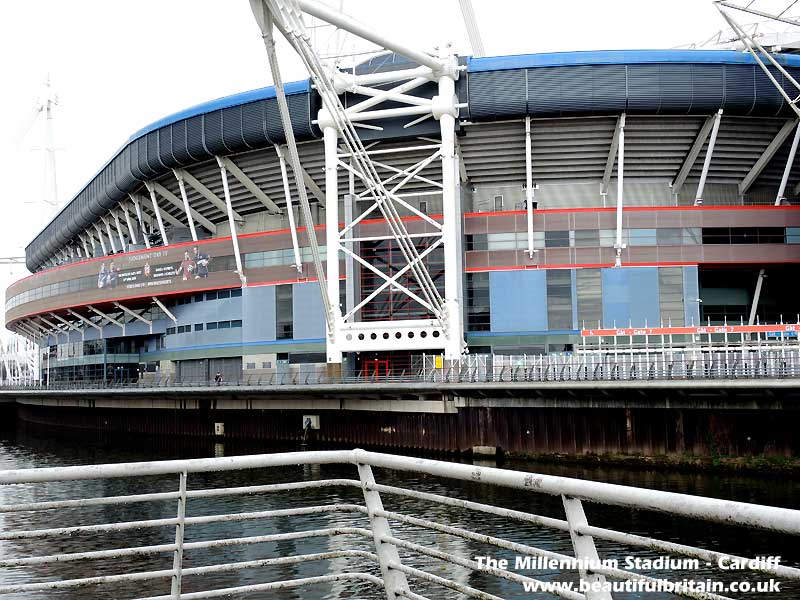 picture and also
known as the Millennium Stadium and Principality Stadium) held its first
major event, an international rugby union match, when Wales beat South
Africa in a friendly by 29–19 before a test crowd of 29,000.
picture and also
known as the Millennium Stadium and Principality Stadium) held its first
major event, an international rugby union match, when Wales beat South
Africa in a friendly by 29–19 before a test crowd of 29,000.
2012A gas explosion in a house in
Shaw, Lancashire, killed two-year-old Jamie Heaton who was discovered in
the rubble of the adjoining property. The blast also caused
£1.2million of damage along the street and a number of houses had to
be demolished. 28-year-old Andrew Partington was arrested two days later
and jailed for 10 years after it was proved that he had cut the gas pipes
in his terraced home following an argument with his girlfriend.
2014David Greaves, 43, who took two
cash tills and three plasma televisions from The Railway pub in Accrington,
Lancashire, lost his stolen goods when two other opportunistic thieves took
them as he went back to steal more. Greaves was sentenced to nine months in
prison, suspended for 12 months.