
On This Day - 2nd June
1420 King Henry V of England married
Catherine of Valois, daughter of Charles VI, King of France.
King Henry V of England married
Catherine of Valois, daughter of Charles VI, King of France.
1840Thomas Hardy, English novelist
and poet was born here (see 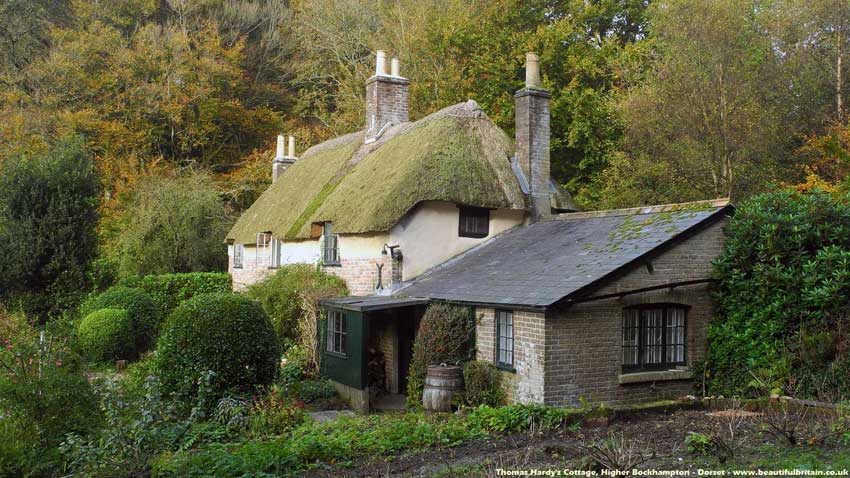 picture) at Higher Bockhampton, Dorset. He continues to be widely regarded
for his novels, such as Tess of the d'Urbervilles and Far from the Madding
Crowd.
picture) at Higher Bockhampton, Dorset. He continues to be widely regarded
for his novels, such as Tess of the d'Urbervilles and Far from the Madding
Crowd.
1850The birth of Jesse Boot,
chemist, philanthropist and founder of 'Boots the Chemist'.
1857Edward Elgar, English composer
was born here (see 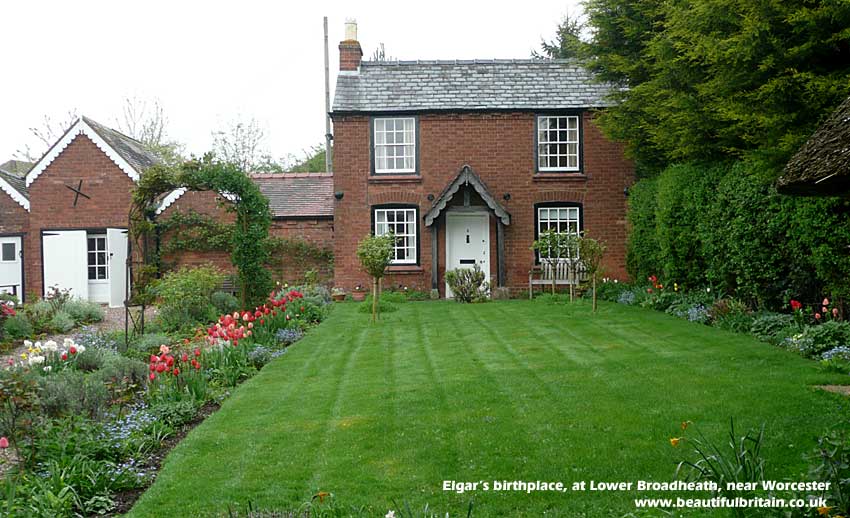 picture) at Lower Broadheath, near Worcester. Among his
best-known compositions are orchestral works including the Enigma
Variations and the Pomp and Circumstance Marches. This memorial to Elgar
(see
picture) at Lower Broadheath, near Worcester. Among his
best-known compositions are orchestral works including the Enigma
Variations and the Pomp and Circumstance Marches. This memorial to Elgar
(see 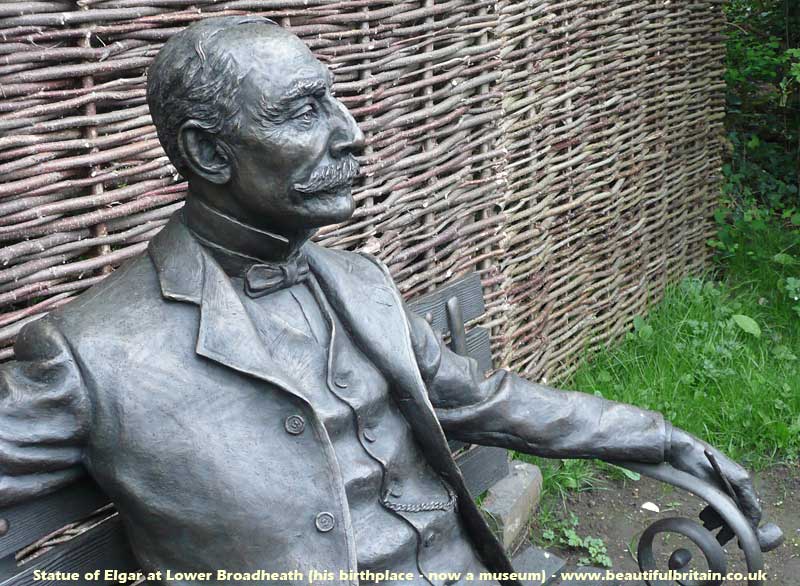 picture) is outside his home.
1868The first meeting of the Trades
Union Congress (TUC), in Manchester.
1910The Hon. C.S. Rolls became the
first Briton to fly across the Channel travelling from Dover to Sangatte
and back in a Short-Wright biplane. The following year on this day, the Air
Navigation Act came into force to control the requirements of both pilots
and machines.
1924England spoke to Australia by
wireless, the first time that a wireless conversation had been held between
2 countries or over so great a distance. The transmissions, by the
Amalgamated Wireless Co. were between Poldhu in Cornwall and Vaucluse in
Sydney.
1946The birth of Peter Sutcliffe,
the serial killer who was dubbed 'The Yorkshire Ripper'. In 1981 Sutcliffe
was convicted of murdering 13 women and attacking seven others. He is
currently serving 20 sentences of life imprisonment in Broadmoor Hospital.
In 2010 The High Court dismissed an appeal, confirming that he would serve
a whole life tariff and would never be released from imprisonment.
1953The coronation of Queen
Elizabeth II took place in Westminster Abbey, London. It was the first
British coronation to be televised and was a cold, wet day. The 1923 processional cross (see 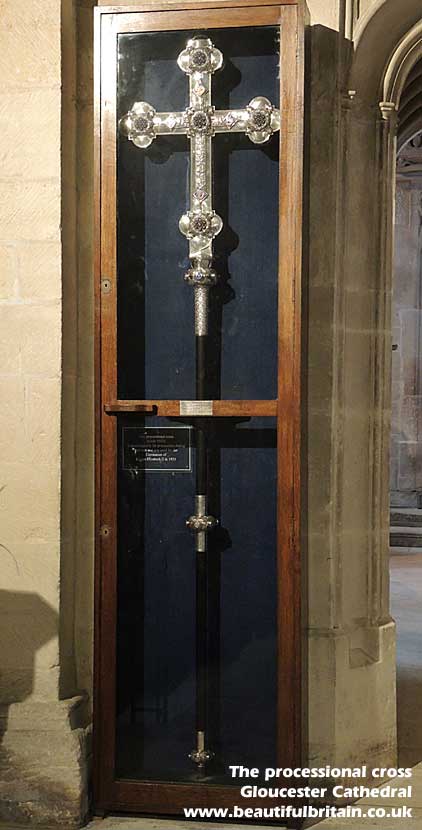 picture) that was used in the coronation is from Gloucester Cathedral.
1954British jockey Lester Piggott,
aged 18, became the youngest jockey to win the Derby.
1970 The collapse of the Cleddau Bridge in Pembrokeshire. Errors in the box girder design caused it to collapse during its construction. A 230 feet (70 m) cantilever being used to put one of the 150-tonne sections into position collapsed on the south side of the estuary. Four workers died and five were injured. The bridge finally became operational in 1975.
1985The Union of European Football
Associations (UEFA) announced an indefinite ban on English football clubs
from taking part in any of the European competitions, after continued
hooliganism by their fans when travelling abroad.
1988The Australian High Court
rejected Britain's bid to ban further publication of the 'Spycatcher'
memoirs of former British secret agent Peter Wright.
199425 senior intelligence
officers, involved in counter terrorism in Northern Ireland, were killed
when their Chinook helicopter crashed on the Mull of Kintyre in
Scotland.
1997Dr. Stephen Martin & David
Mitchell became the first Britons to reach the North Pole without
backup.
2010Twelve people were killed and
25 injured when gunman Derrick Bird opened fire in west Cumbria, apparently
shooting people at random, before shooting himself.
2012The start of 4 days of
celebrations to commemorate Queen Elizabeth II's Diamond Jubilee.
2014 Ninety seven year old Dame Vera Lynn
released a new album (Vera Lynn: National Treasure - the Ultimate
Collection) to mark the 70th anniversary of the D-day landings on 6th June
1944. Vera Lynn is the first person in music history to celebrate 90 years
of showbusiness, the first British performer to top the US official charts,
the oldest living artist to have had an official UK No.1 album and the only
recording artist in the world to have spanned the pop charts from the 1940s
to the 21st century. An unprecedented achievement, which breaks all records
in the history of music.
2014More than 40,000 tickets were
sold over the opening weekend of the new tram route in Edinburgh. The 8.7
mile route cost £776m and involved six years of disruption and
problems, including a bitter dispute between the council and its
contractor.
2022Thursday 2nd and Friday 3rd June saw an extended Bank Holiday and weekend break to celebrate the Platinum Jubilee of Queen Elizabeth II, the first British monarch to celebrate a Platinum Jubilee. She acceded to the throne on 6th February 1952 on the death of her father George VI, who died from a coronary thrombosis, aged 56.
<