
On This Day - 14th June
1381 Richard II met leaders of Wat
Tyler's Peasants' Revolt on Blackheath. The Tower of London was stormed by
rebels who entered without resistance. The revolt later came to be seen as
a mark of the beginning of the end of serfdom in medieval England. Although
the revolt itself was a failure it increased awareness in the upper classes
of the need for the reform of feudalism in England and the appalling misery
felt by the lower classes as a result of their enforced
near-slavery.
Richard II met leaders of Wat
Tyler's Peasants' Revolt on Blackheath. The Tower of London was stormed by
rebels who entered without resistance. The revolt later came to be seen as
a mark of the beginning of the end of serfdom in medieval England. Although
the revolt itself was a failure it increased awareness in the upper classes
of the need for the reform of feudalism in England and the appalling misery
felt by the lower classes as a result of their enforced
near-slavery.
1645The Battle of Naseby
(Northamptonshire) was fought. See 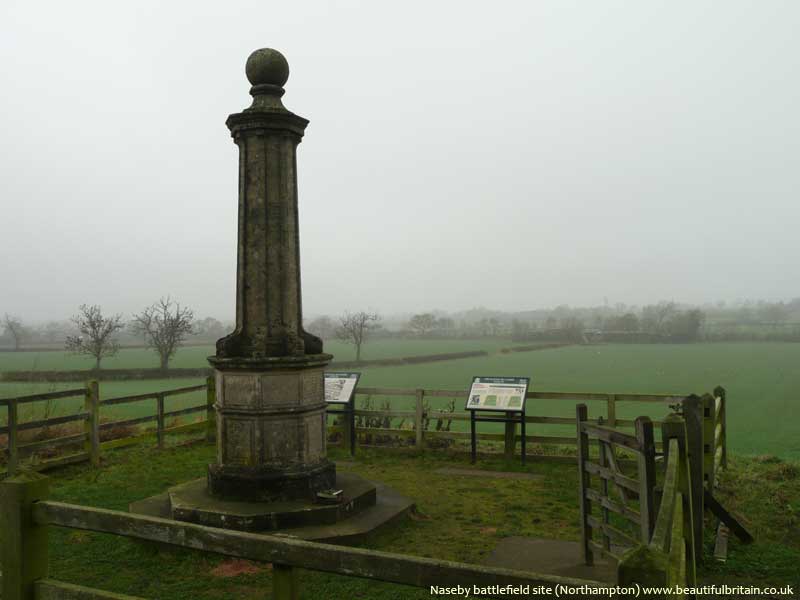 picture. It was
the key battle of the first English Civil War. 12,000 Royalist forces of
King Charles I were beaten by 15,000 Parliamentarian soldiers commanded by
Sir Thomas Fairfax and Oliver Cromwell.
picture. It was
the key battle of the first English Civil War. 12,000 Royalist forces of
King Charles I were beaten by 15,000 Parliamentarian soldiers commanded by
Sir Thomas Fairfax and Oliver Cromwell.
1789English Captain William Bligh
and 18 others, cast adrift from the H.M.S. Bounty, reached the island of Timor (Southeast Asia) after
travelling nearly 4,000 miles in a small, open boat. The Bounty had been
sailing from Tahiti when crew members mutinied. In 1806 Bligh was appointed Governor of New South Wales in Australia, with orders to clean up the corrupt rum trade of the New South Wales Corps regiment. This led to the Rum Rebellion, during which Bligh was placed under arrest on 26th January 1808.
1822Englishman Charles Babbage
proposed an automatic, mechanical calculator (he called it a difference
engine). He is considered a 'father of the computer' and is credited with
inventing the first mechanical computer that eventually led to more complex
designs.
1919At 14.13 GMT, Captain John
Alcock and Lt. Arthur Whitten-Brown took off from Newfoundland on the first
non-stop transatlantic flight to Galway, Ireland, in a Vickers Vimy. They
landed safely 16 hours later, on the 15th and claimed a £10,000 prize
from the Daily Mail. They were eventually knighted by King George V. When
Alcock was killed in an air crash in France in December 1919 his partner,
Brown, never flew again.
1928The death of the British
suffragette leader Emmeline Pankhurst. Emmeline and her daughters Christabel and Sylvia lived for 10 years at this house (see  picture) on 62 Nelson Street, Manchester. It was the birthplace of the Suffragette movement and is now the Pankhurst Centre (see plaque -
 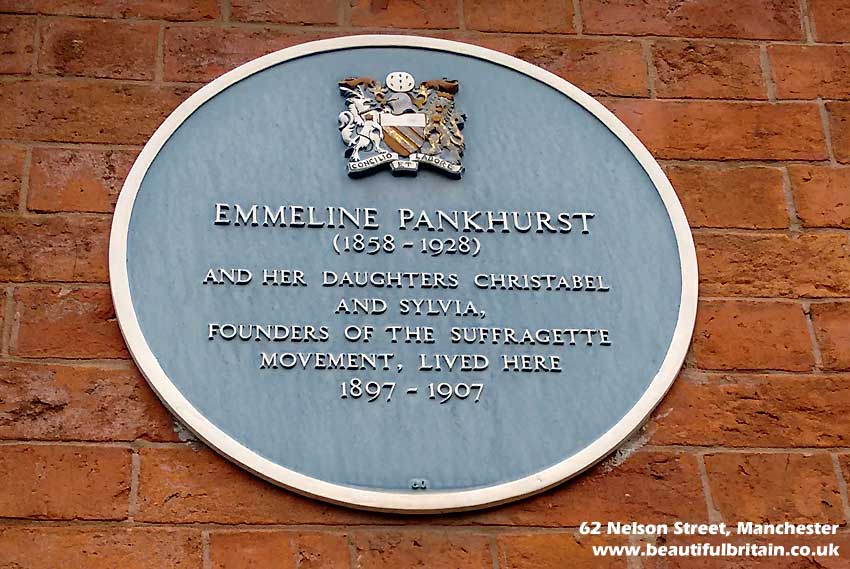 picture)
1936 The death of the author G.K. Chesterton, well known for his fictional priest-detective Father Brown who is featured in a series of 53 short stories. They were made into a TV series, filmed in the village of Blockley (north Cotswolds) and primarily here, (see 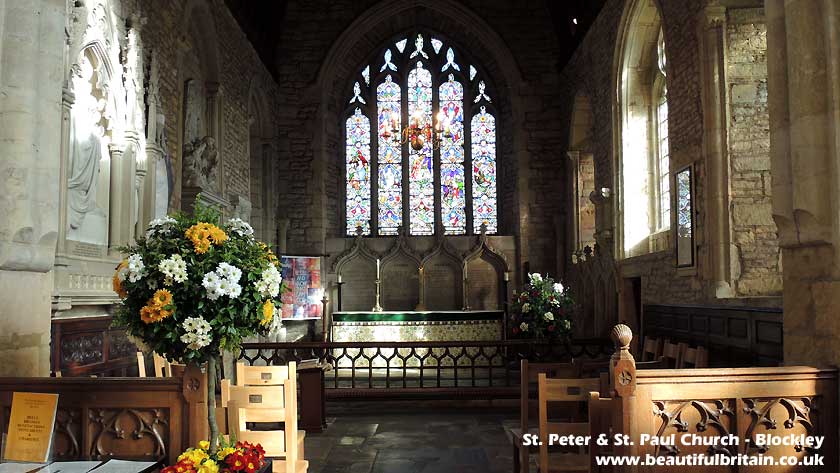 picture) at St. Peter & St. Paul Church. These photographs of the filming (see
 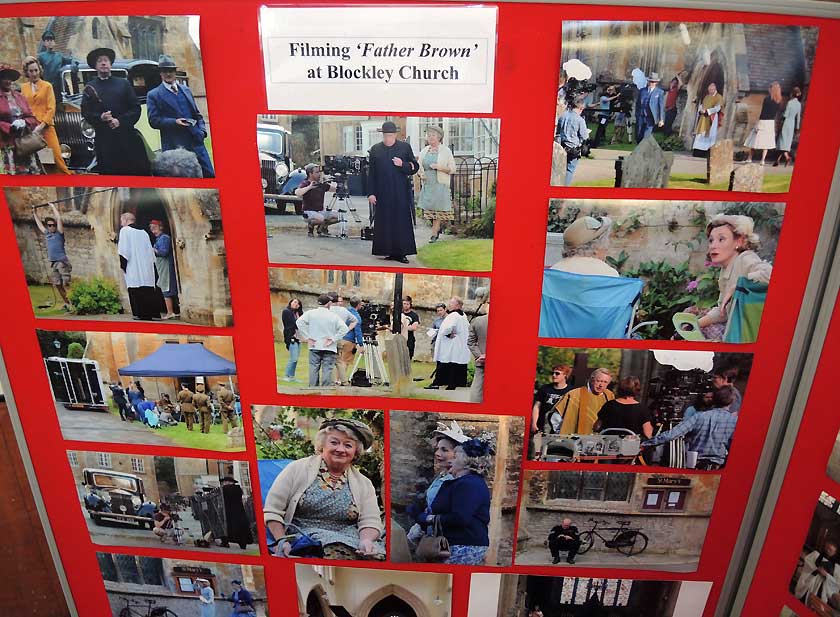 picture) are displayed in the church.
1944World War II: After several
failed attempts, the British Army abandoned Operation Perch, its plan to
capture the German-occupied town of Caen. Caen was a major Allied objective
in the early stages of the invasion of northwest Europe but a combination
of fierce German resistance and failures at the British command level
foiled the operation before its objectives were achieved.
1946John Logie Baird, Scottish
inventor who developed television died.
1968British yachtsman Robin
Knox-Johnson set out to sail solo around the world.
1970Manchester United footballer
Bobby Charlton played his 106th and last international match for England
against West Germany in the World Cup finals in Mexico. His first game had
been in April 1958 against Scotland.
1972Hundreds of thousands of
holidaymakers faced flight delays and cancellations as pilots threatened to
strike over hijack fears.
1976Former British Prime Minister
Harold Wilson received a knighthood.
1982Argentine forces surrendered at
Port Stanley, ending the Falklands War. 255 Britons and 652 Argentines died
in the conflict. See the  picture of the Falklands Memorial in Holy Trinity Church,
Hull and this memorial (see
picture of the Falklands Memorial in Holy Trinity Church,
Hull and this memorial (see  picture) which centres on a five-tonne rock from the Falkland
Islands, a gift from the islanders.
picture) which centres on a five-tonne rock from the Falkland
Islands, a gift from the islanders.
1995Pauline Clare, 47, became the
first woman to be appointed chief constable in Britain.
1997Queen Elizabeth II birthday
honours included a George Medal for teacher Lisa Potts, survivor of a
machete attack at her school (1996) and a posthumous Queen's Gallantry
medal for headmaster Philip Lawrence murdered outside his school in
December 1995.
2013Airbus A350, the newest
aircraft from European planemaker Airbus successfully completed its maiden
test flight. The plane, seen as vital to the future of Airbus is a direct
competitor to US rival Boeing's 787 Dreamliner.
2016 Rochdale Council re-opened the River Roch (which runs below the town centre), to expose the 14th century bridge (see  picture). Seven bridges had been joined together for a distance of 446 metres in the early 1900s when tram lines were extended to the town, making it the widest bridge in Europe.
2017 A fire in the 24-storey Grenfell Tower block at North Kensington, West London caused 72 deaths. The fire started accidentally in a fridge-freezer on the fourth floor and the building burned for about 60 hours. The rapid spread of the fire destroyed the building and was thought to have been accelerated by the building's exterior cladding, which at the time was of a common type in widespread use. A full inquiry into the fire was opened on 21st May 2018.