
On This Day - 28th March
1760 The birth of Thomas Clarkson, a leading campaigner against the slave trade in the British Empire. He helped found The Society for Effecting the Abolition of the Slave Trade and helped achieve passage of the Slave Trade Act of 1807, which ended British trade in slaves. In his later years Clarkson campaigned for the abolition of slavery worldwide.
1800The Irish Parliament passed the Act of Union with England. The Act included
joining Ireland to Great Britain to form a single kingdom, the United Kingdom
of Great Britain and Ireland.
1819The birth, at Crimble Hall - Rochdale (see 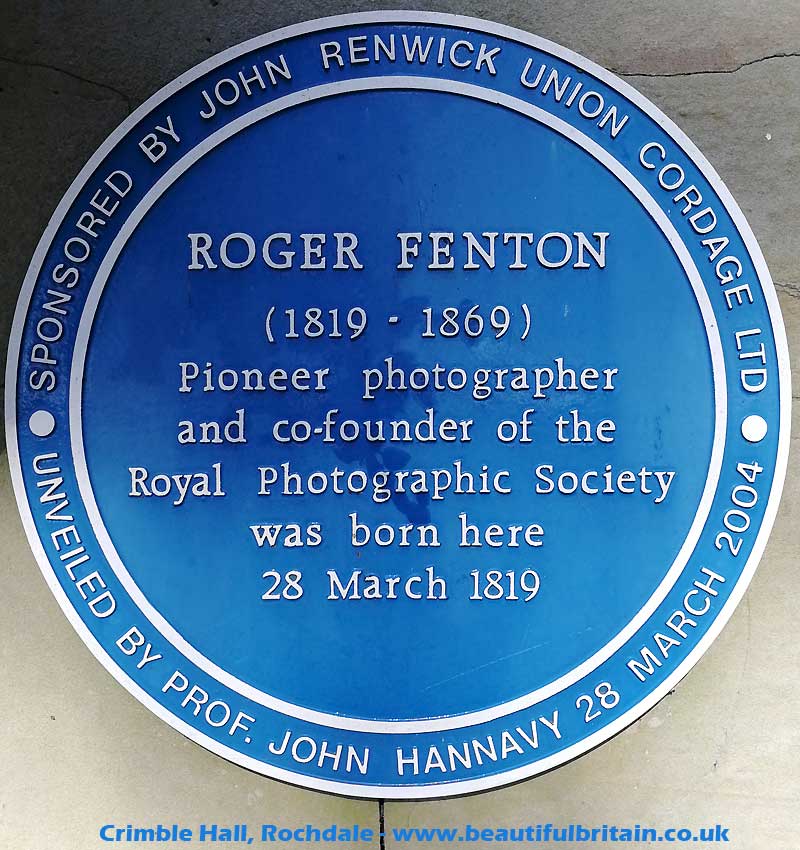 blue plaque) of Roger Fenton, noted as one of the first war photographers (Crimean War) and co-founder of the Royal Photographic Society.
1819The birth of Sir Joseph William Bazalgette, English civil engineer. As chief engineer of London's Metropolitan Board of Works he created a sewer network for central London which was instrumental in relieving the city from cholera epidemics, whilst also beginning the cleansing of the River Thames.
1866The birth of Jimmy Ross, Scottish footballer nicknamed 'The Little Demon'. When the Football League implemented a maximum wage of £4 per week for professional football players and full-time players like Ross could earn up to £10 a week, the prospect of a reduced wage was a serious threat to their livelihood. In order to curb this threat, Ross and other top players of the time formed the Association Footballers' Union.
1913The first Morris Oxford car left the converted Military Academy at Cowley,
Oxfordshire. It was William Morris's first factory.
1917The Women's Army Auxiliary Corps (WAAC) was founded. They were Britain's
first official service women.
1921Dirk Bogarde, English actor and author was born.
1941English novelist Virginia Woolf, suffering from depression, filled her overcoat pocket with stones and walked into the River Ouse near her home in Sussex and drowned herself. Her body was not found until 18th April.
1942British commandos destroyed the U-boat base at St Nazaire. The destroyer
Campbeltown rammed the dock gates at 20 knots with five tons of explosives
on board. A German ship trying to cut off the British commandos as they made
their getaway in fast launches was sunk, in error, by German guns.
1945Germany dropped its last V2 bomb on Britain.
1964Pirate radio station, Radio Caroline, began transmitting from a ship
in the North Sea. Simon Dee, who later became the first ‘pirate DJ’ to join the BBC was the first voice to be heard on Radio Caroline.
1979Prime Minister James Callaghan lost a parliamentary vote of confidence
by a minority of one, forcing him to call an early election.
1991A jury returned a verdict of accidental death at the end of the inquest
into the Sheffield Hillsborough disaster in which 96 football fans died. The
90-day inquest was the longest in British history and recommended extra security
measures at football stadiums. On 19th December 2012 the original accidental death verdict was overturned, paving the way for a new investigation. On 27th March 2014 the police watchdog identified 13 'suspects' (a mixture of retired and serving officers) at the centre of the probe into the Hillsborough investigation, with a fresh inquest into the 96 deaths, which began in Warrington on Monday, 31st March 2014.
2004The death of Sir Peter Ustinov, English actor, writer, dramatist, filmmaker, theatre and opera director, stage designer, author, screenwriter, comedian, humorist, newspaper and magazine columnist, radio broadcaster and television presenter!
2014Beryl Walker, 88, was named as the oldest paper girl in the world by Guinness World Records. "Beryl has been doing the round for 35 years, gets up at 6am every morning and hops on her bike 'Hercules' to deliver papers to homes in Gloucester. She works six days a week and cycles over eight miles a day.
2017 A 12-sided £1 coin went into circulation. The new coins feature a string of security features including a hologram that changes from a '£' symbol to the number '1' when the coin is seen from different angles. They are being made at the Royal Mint (see 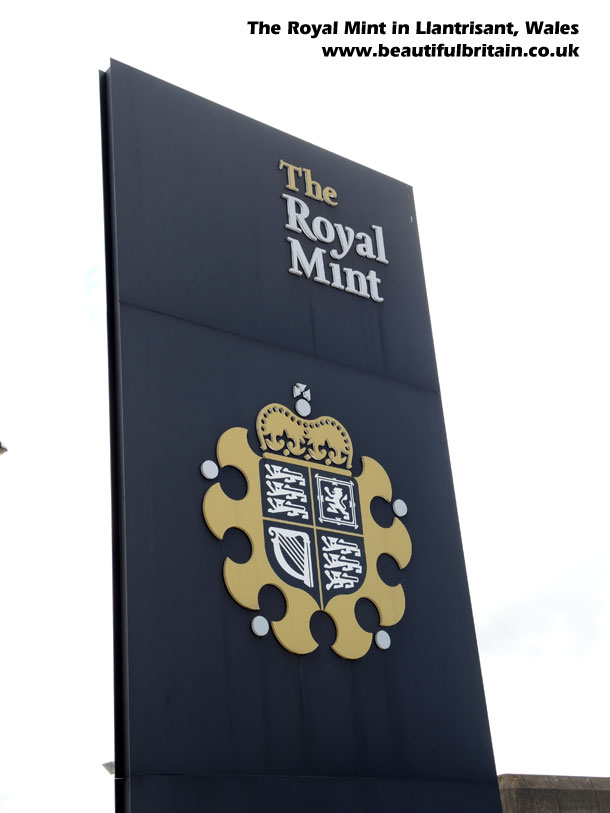 picture) in Llantrisant, Wales.