
On This Day - 7th March
1530 When King Henry VIII's divorce request was denied by the Pope, Henry declared himself (not the Pope) as the supreme head of the English church.
1671The birth of Robert Roy MacGregor, usually known simply as Rob Roy, the famous Scottish folk hero and outlaw of the early 18th century. He died on 28th December 1734 and is buried in Balquhidder churchyard - Stirling : See 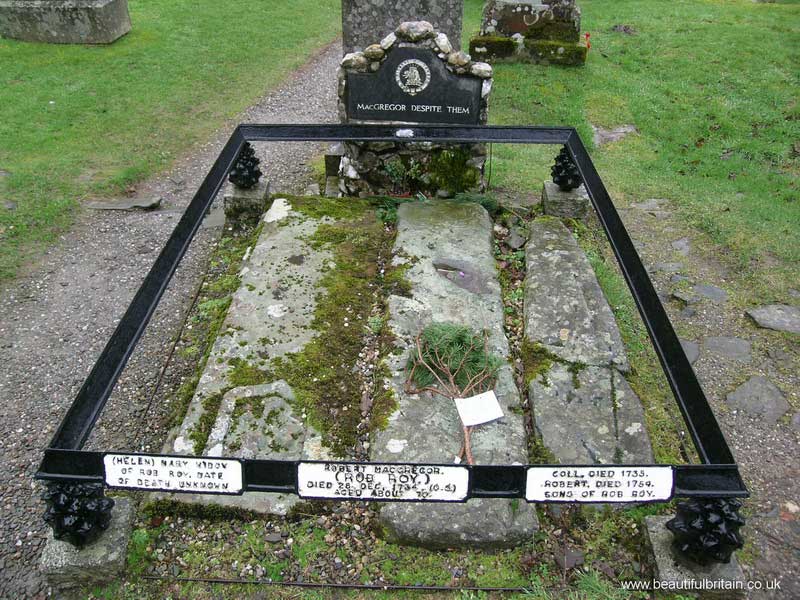 picture.
1778Explorer Captain James Cook's log reported the sighting of Oregon, on the west coast of the United States. They were the first Europeans to visit Oregon for more than 200 years.
1802Edwin Henry Landseer, English painter, well known for his paintings of animals, particularly horses, dogs and stags, was born. The best known of Landseer's works, however, are the sculptures of the lions in Trafalgar Square.
1804John Wedgwood, son of the pottery manufacturer Josiah Wedgwood founded the prestigious Royal Horticultural Society.
1810 The death of Vice Admiral Cuthbert Collingwood, an admiral of the Royal Navy, notable as a partner with Lord Nelson in several of the British victories of the Napoleonic Wars. Born at Newcastle-upon-Tyne, this statue of Collingwood (see 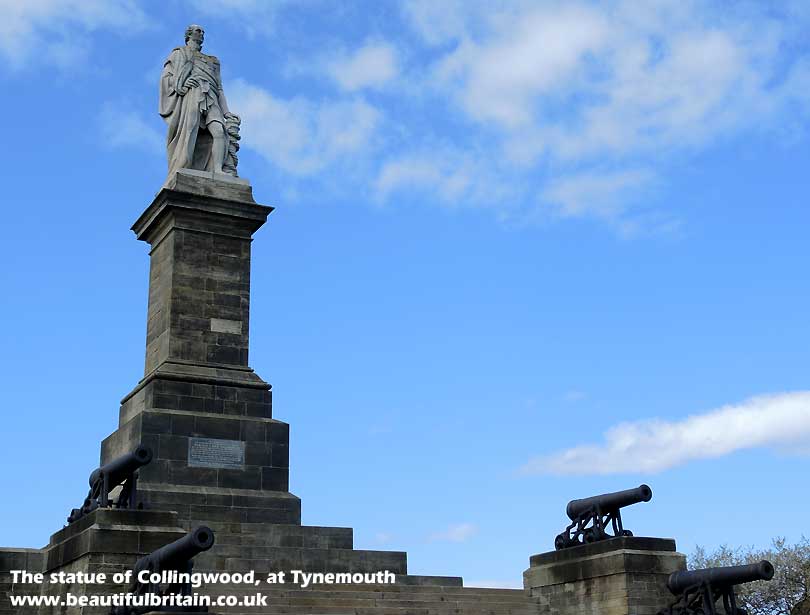 picture) is at Tynemouth overlooking the River Tyne.
1876The Scottish-born inventor, Alexander Graham Bell, patented the telephone. Bell's father, grandfather, and brother had all been associated with work on elocution and speech, and both his mother and wife were deaf; factors that profoundly influenced Bell's life's work. Ironically, Bell considered the telephone an intrusion on his real work as a scientist and he refused to have a telephone in his study.
1900A fire at Buckingham Palace destroyed part of its roof.
1926The first transatlantic telephone call was made, from London to New York.
1930The birth of Antony Armstrong-Jones (Lord Snowdon) British aristocrat and former husband of Princess Margaret.
1935Malcolm Campbell set a land speed record of 276.8 mph in Florida.
1946Doctors mounted a campaign to oppose the introduction of a National Health Service.
1968The first news programme in colour was broadcast on BBC2.
1969Queen Elizabeth II opened the new Victoria Line on London's Underground.
1975The body of Lesley Whittle, a 17-year-old heiress who had been kidnapped from her Shropshire home 52 days earlier, was found at the bottom of a drain shaft. She had been held for 52 days then strangled by Donald Nielson, known as The Black Panther.
1988The IRA confirmed that the three people shot dead by security forces
in Gibraltar the previous day were members of an active service unit.
1990The Egyptian Fayed brothers were allowed to keep Harrods despite an official
report that branded them liars during their £615m takeover bid of the
House of Fraser Stores.
2014Birmingham city council began investigating an alleged plot to oust headteachers in the city's schools, replacing them with people who would run their schools on 'strict Islamic principles'. The plan, dubbed 'Operation Trojan Horse' claimed that up to four schools in the city had already been taken over.
2015 The one millionth Morris Minor to be produced was sold at auction by Surrey-based specialist car auctioneers 'Historics at Brooklands' for £25,760; 55 years after it rolled off the production line. The classic British car had 23,364 miles 'on the clock' and was still registered on the original number plate 1 MHU, meaning one million in engineering terms.