
On This Day - 5th March
5th March is Saint Piran's Day and the national day of Cornwall. It is named after one of the patron saints of Cornwall, Saint Piran, who is also the patron saint of tin miners.
1133The birth of King Henry II, who was to become the first Plantagenet king
of England.
1461Wars of the Roses: Lancastrian King Henry VI was deposed by his Yorkist cousin, who then became King Edward IV.
1824The First Anglo-Burmese War: The British officially declared war on Burma.
1850Robert Stephenson's Britannia bridge, linking Bangor, Wales to the Isle
of Anglesey, was opened. Unable to use an arch design because the Admiralty
would not allow the strait to be closed to the passage of sailing ships, Stephenson
conceived the idea of using a pair of completely enclosed iron tubes, rectangular
in section, supported in the centre by a pier built on Britannia Rock. The
bridge was destroyed by fire on 23rd May 1970. The reconstructed bridge, opened in 1980, was also tubular, but an arched design. See  picture of the Britannia bridge.
1857James Townsend Saward, alias ‘Jim the Penman’, the most notorious
forger of his age, was convicted of forging cheques. Saward was a respected
solicitor with chambers in the Temple. He and his accomplices were sentenced
to transportation to Australia.
1900The British Government was offered peace proposals to end the Boer War, but rejected them.
1936The British fighter plane Spitfire made its first test flight from Eastleigh,
Southampton, powered by a Rolls-Royce Merlin engine. It was designed by Reginald
Mitchell and was the fighter plane that helped to win the Battle of Britain.
Mitchell died in 1937 without ever knowing how successful his aircraft
would become. The Spitfire was first put into service with the Royal Air Force
in 1938 and they remained in active service (as photo reconnaissance planes)
with the Royal Air Force until 1954. See  picture of a Spitfire at the Cosford Museum, Shropshire.
1943The first flight of the Gloster Meteor jet aircraft. It was the first British jet fighter and the Allies' first operational jet. The Meteor's development was heavily reliant on its ground-breaking turbojet engines, developed by Sir Frank Whittle.
1946Prime Minister Winston Churchill coined the phrase 'The Iron Curtain' as the divide between Eastern and Western Europe.
1948The birth of Elaine Paige, singer and actress. Her debut was in the 1968 production of Hair. She played Eva Perón in the first production of Evita in 1978 which won her the Laurence Olivier Award for Performance of the Year in a Musical.
1966BOAC Flight 911 (Speedbird 911), a round-the-world flight operated by British Overseas Airways Corporation disintegrated and crashed on Mount Fuji, Japan, killing all 113 passengers and 11 crew members. It was the third fatal passenger airline accident in Tokyo in a month.
1977 The death (aged 27) of Thomas "Tom" Pryce, British racing driver and the only Welsh driver to have won a Formula One race. During the practice session for the 1977 South African Grand Prix, Pryce was faster than everyone, including world champion drivers Niki Lauda and James Hunt. During the race, a safety marshal ran into the path of Pryce's car and both men were killed. This memorial to Pryce (see  picture) was unveiled in 2009 in his home town of Ruthin.
2001PC Alison Armitage (aged 29) became the first female officer in the Greater Manchester Police force to be killed in the line of duty since it was formed in 1974.
2002Prime Minister Tony Blair was urged by 39 MPs not to back military action
in Iraq.
2014Birmingham city council announced the sell-off of four of its hugely popular venues, including the National Exhibition Centre (NEC). See 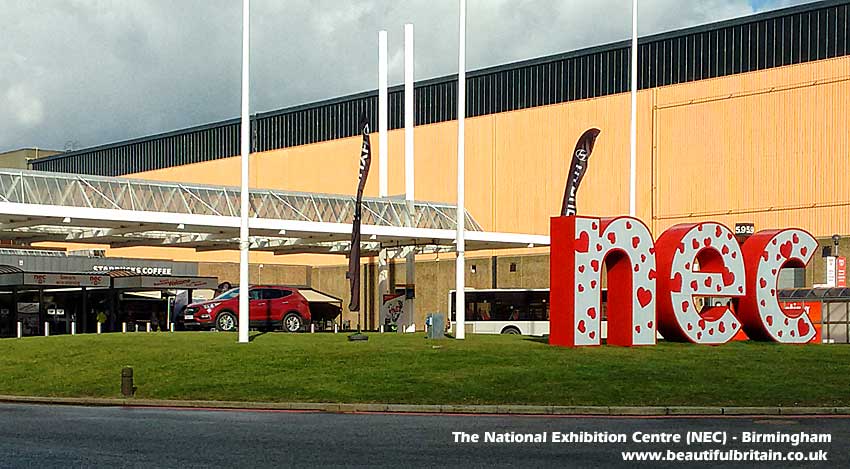 picture.