
On This Day - 29th March
1461 Over 28,000 people were killed in the battle of Towton, North Yorkshire,
during the War of the Roses (Lancaster against York). See
Over 28,000 people were killed in the battle of Towton, North Yorkshire,
during the War of the Roses (Lancaster against York). See  picture of the Towton Cross memorial. It is described as 'probably the largest and bloodiest battle ever fought on English soil'. The Lancastrians, under
Henry VI, were crushed and the throne was claimed by Edward IV.
picture of the Towton Cross memorial. It is described as 'probably the largest and bloodiest battle ever fought on English soil'. The Lancastrians, under
Henry VI, were crushed and the throne was claimed by Edward IV.
1632The Treaty of Saint-Germain was signed, returning Quebec to French control after the English had seized it in 1629.
1644The battle of Cheriton (near Alresford in Hampshire). Sir Ralph Hopton’s 6,000 strong Royalist army faced a Parliamentarian force of 10,000 men commanded by Sir William Waller. It was a major turning point in the English Civil War and resulted in an important Parliamentarian victory that helped shape the future of England.
1788The death of Charles Wesley, English evangelist and hymn-writer of more than 6,000 hymns. He was
an evangelist like his brother John, who was the founder of Methodism. Their father was an Anglican cleric and they lived here (see 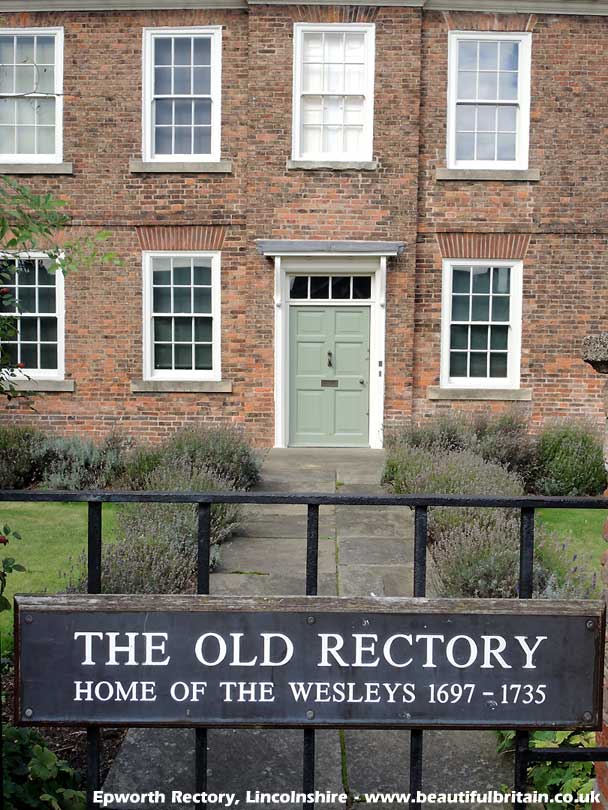 picture). This window in Epworth Methodist Church (see
 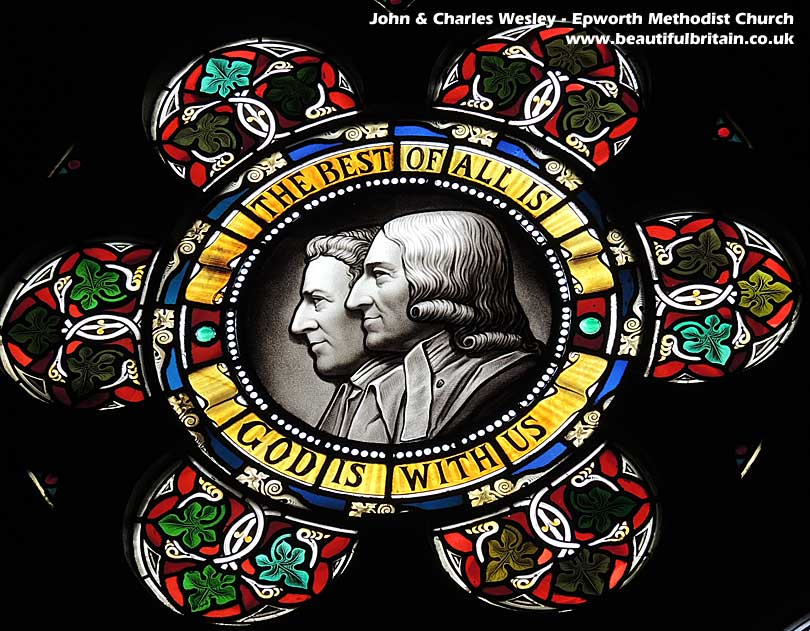 picture) features the two brothers. Charles Wesley was the first Methodist visitor to Heptonstall and his brother John laid the foundation stone to Heptonstall Methodist Chapel in 1764. It is the oldest Methodist Chapel (see
 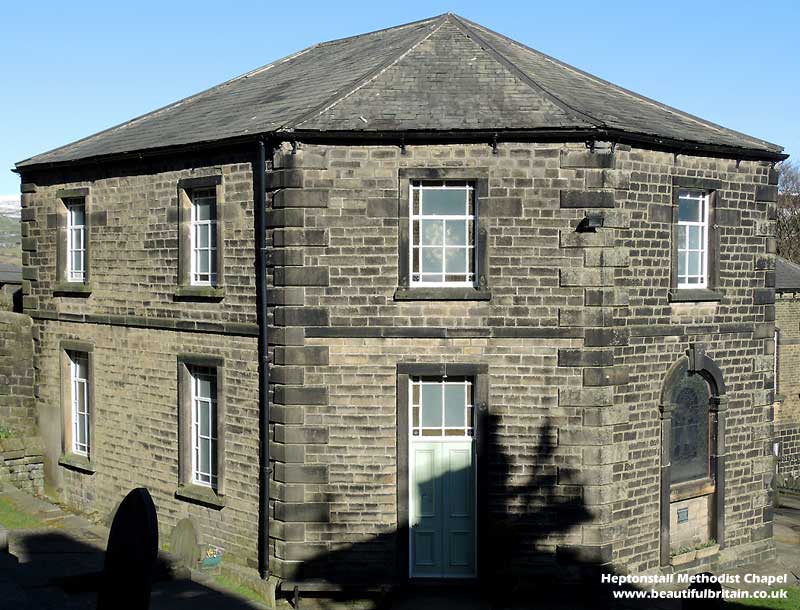 picture) in the world in continuous use.
1869 The birth of Sir Edwin Landseer Lutyens, English architect. After World War I Lutyens became architect to the Imperial War Graves Commission. His work included the Cenotaphs in London, Manchester, Rochdale (see -  picture) and the Lancashire Fusiliers War Memorial (see -
 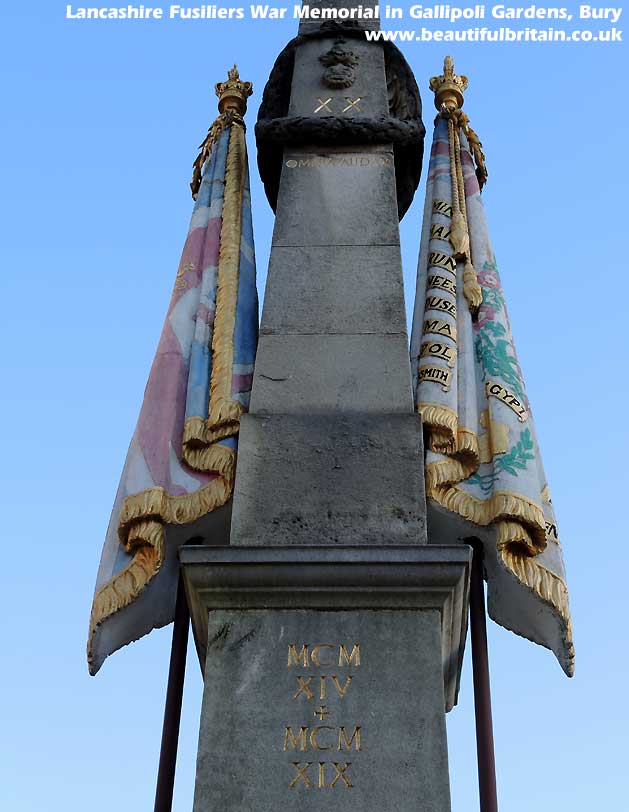 picture) in Gallipoli Gardens, Bury.
1871Queen Victoria opened the Royal Albert Hall in London. The hall was originally supposed to have been called The Central Hall of Arts and Sciences, but the name was changed by Queen Victoria to Royal Albert Hall of Arts and Sciences when laying the foundation stone, as a dedication to her deceased husband and consort Prince Albert.
1912The last entry in British explorer Captain Robert Falcon Scott's diary.
He died in Antarctica, along with the rest of his party, whilst returning from
the South Pole. This statue of Robert Falcon Scott (see 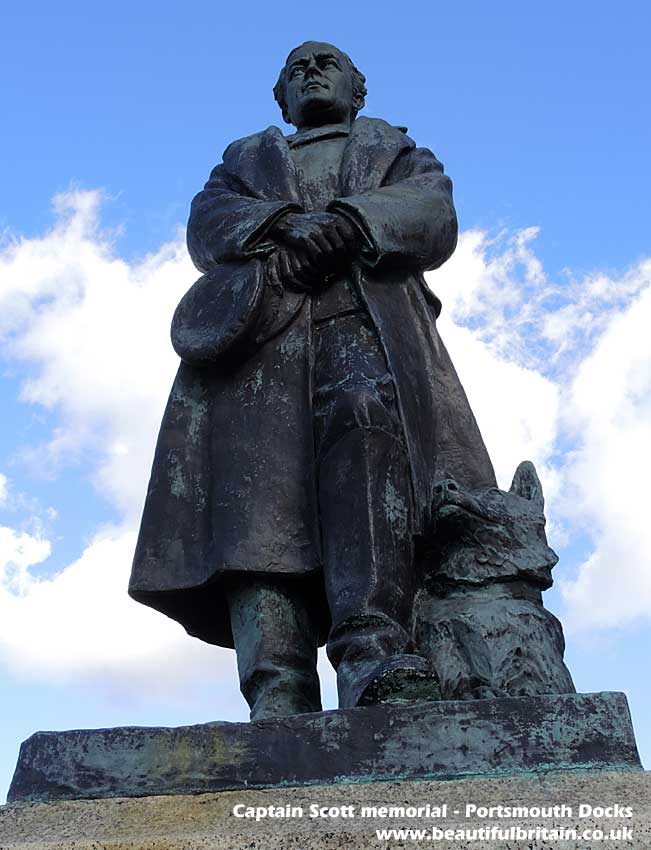 picture) at Portsmouth Historic Dockyard was sculpted by his widow, Kathleen Scott. See also
 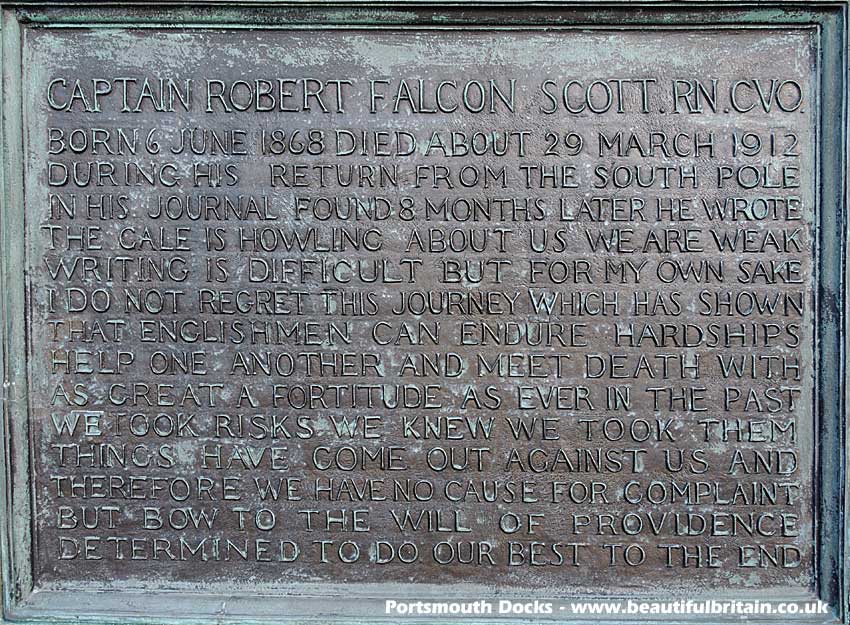 picture of the plaque. This (see
  picture) is what he wrote about his comrade Edward Wilson. Cheltenham has a monument to the artist, zoologist and explorer Edward Wilson and the Edward Wilson - Cheltenham Art Gallery & Museum that has an exhibition of his work and the fated voyage.
1920Sir William Robertson, who enlisted in 1877, became a field marshal in
the British Army, the first man to rise to this rank from private.
1927Sir Henry Segrave beat Malcolm Campbell’s land speed record in
his 'Mystery' car (a 1,000 hp Sunbeam with a World War I aircraft engine) on
the Daytona Beach, clocking 203.79 mph. He became the first driver to exceed
200 mph.
1940The Bank of England introduced thin metal strips into banknotes as an
anti-forgery device.
1942World War II and the bombing of Lübeck. It was the first major success for the RAF Bomber Command against Germany and a German city.
1943John Major, former British Prime Minister, was born.
1967The Torrey Canyon oil tanker 'refused' to sink, despite more than a day
of heavy bombing. Tens of thousands of tons of oil formed a slick 35 miles
long and up to 20 miles wide around the area.
1981The first London marathon took place, with around 7,000 entrants.
1988Lloyd Honeyghan became the first British boxer to regain a world title
since Ted ‘Kid’ Lewis, 71 years previously. Honeyghan knocked out
Jorgé Vaca of Mexico in the third round at the Wembley Arena, London.
1999The case of James Hanratty was sent back to the Court of Appeal, 37 years
after he was hanged for murder. New DNA evidence emerged and a police inquiry
highlighted flaws in the original investigation.
2004The Republic of Ireland became the first country in the world to ban smoking in all work places, including bars and restaurants.
2014Same sex weddings in England and Wales became legal, several months earlier than had been planned.
2015 A memorial to the murdered soldier Lee Rigby was opened at Middleton Memorial Gardens (see 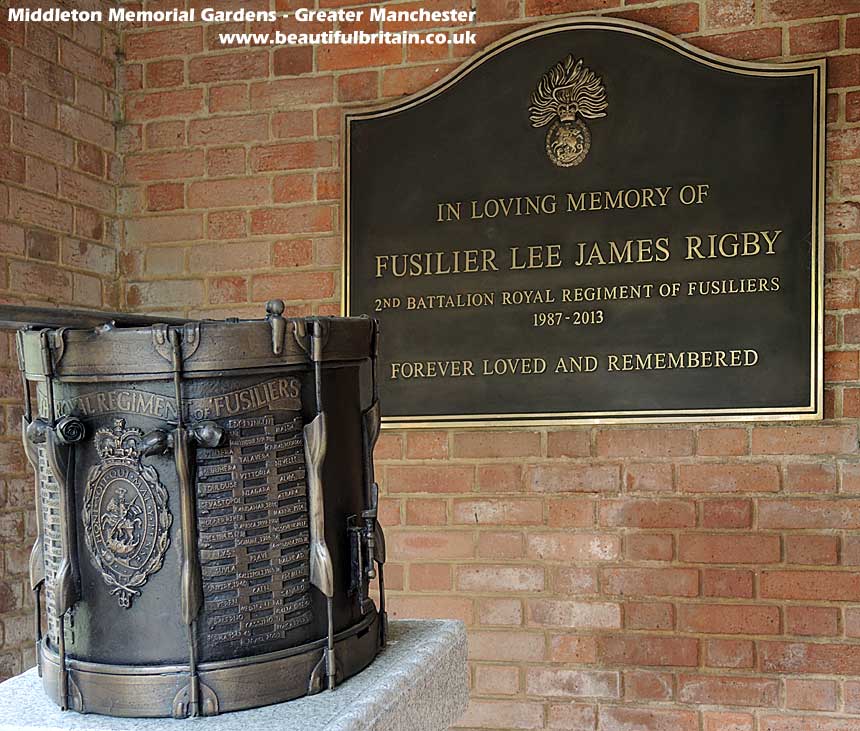 picture) in Greater Manchester. The 25 year old fusilier was killed outside Woolwich Barracks in London on 22nd May 2013 by Islamist extremists Michael Adebolajo and Michael Adebowale.
2017 Theresa May triggered 'Article 50' to start the negotiation process for Britain to leave the European Union
2019 The day written into law for the UK to leave the European Union, two years after the triggering of Article 50. The process has been delayed after much political debate and wrangling, with the earliest Brexit is likely to happen now being 12th April 2019. By the time that you read this, the leaving date might have changed to 22nd May or ..... who knows?