
On This Day - 15th September
1830 George Stephenson's Manchester and Liverpool railway opened.
During the ceremony, William Huskisson, MP, became the first person to be killed
by a train when he crossed the track to shake hands with the Duke of Wellington. Stephenson was from humble beginnings and was illiterate until the age of 18. The entire family lived in just one room (see  picture) at a house at Wylam. The house (see
 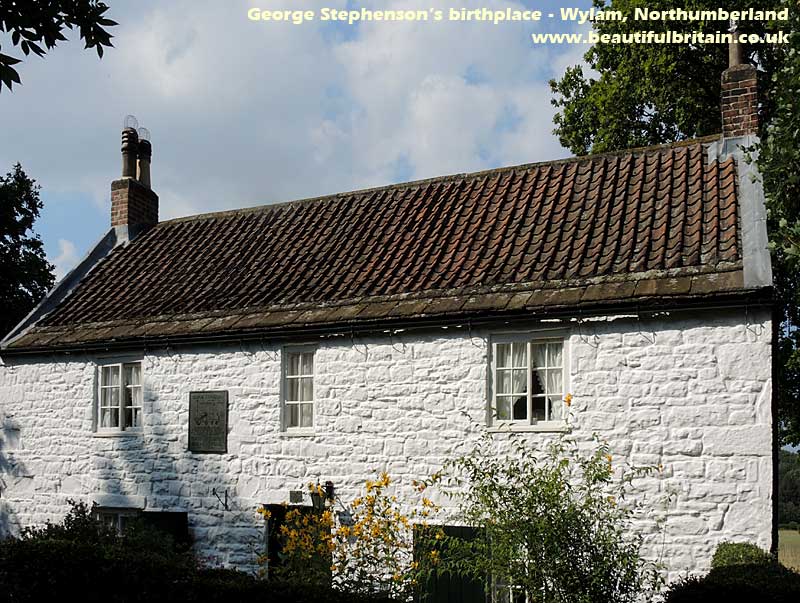 picture) was shared with three other families.
1859 The death of the engineer Isambard Kingdom Brunel.
He was involved in dock design, railway engineering and marine engineering. He built the SS Great Western in 1837, SS Great Britain (see  picture) in 1843 & SS Great Eastern
in 1858, each the largest in the world at launch date.
picture) in 1843 & SS Great Eastern
in 1858, each the largest in the world at launch date.
1871 The first British-based international mail order business was begun by the Army and Navy Co-operative. They published their first catalogue in February 1872.
1890 Agatha Christie, English detective novelist was born.
1901 The birth of Sir Donald Bailey, English civil engineer who invented the Bailey bridge, a wood and steel bridge small and light enough to be carried in trucks and lifted into place by hand, yet strong enough to carry tanks. Field Marshal Montgomery is recorded as saying that without the Bailey bridge, we would not have won the war.
1916 Military tanks, designed by Ernest Swinton, were first used by the British Army, in the Somme offensive.
1940 The tide turned in the Battle of Britain as the German air force sustained
heavy losses inflicted by the Royal Air Force. The defeat was serious enough
to convince Nazi leader Adolf Hitler to abandon his plans for an invasion of
Britain. The day was chosen as "Battle of Britain Day". See  picture of a Spitfire at the RAF Museum in Cosford, Shropshire.)
1960 London introduced Traffic Wardens onto the streets of the capital.
1966 The launch at Barrow (see 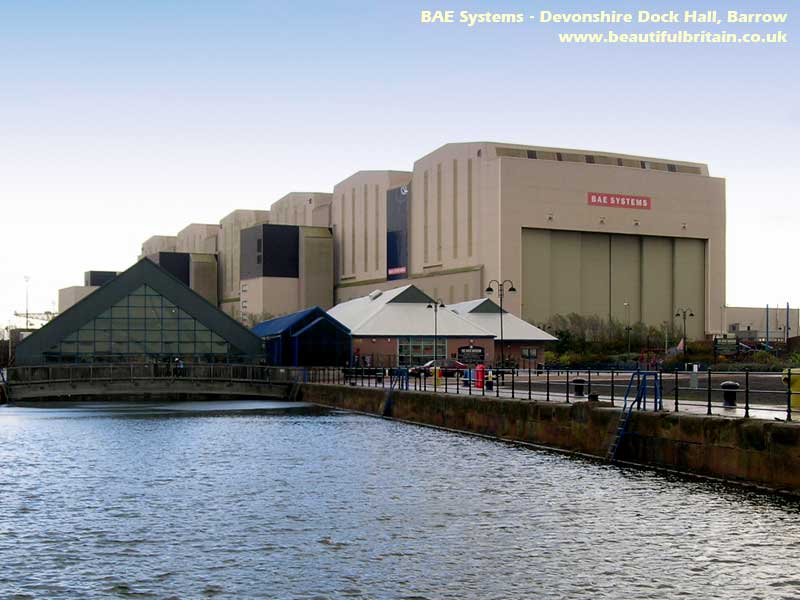 picture of BAE Systems' Devonshire Dock Hall, Barrow) of HMS Resolution, the first of a class of four nuclear ballistic missile submarines (SSBN) built for the Royal Navy as part of the UK Polaris programme. Her long period of sea trials culminated in the test firing of a Polaris missile from the USAF Eastern Test Range off Cape Kennedy at 11:15 on 15th February 1968. The class was part of the 10th Submarine Squadron, all based at Faslane Naval Base in Scotland.
1971 Prince Charles joined the Royal Naval College, Dartmouth, under the graduate entry scheme, as Acting Sub-Lieutenant. The Duke of Edinburgh, and his great-uncle, Lord Mountbatten, had both been at Dartmouth.
1981 The death of the actor Harold Bennett, best remembered as 'Young Mr. Grace' in the 1970s British sitcom Are You Being Served? and as the character Mr. Blewitt in Dad's Army from 1969 to 1977.
1984 Prince Harry, 3rd in succession to the throne, was born.
1985 Tony Jacklin's team of golfers beat the United States in the Ryder Cup for the first time in 28 years.
2000 The fuel protests which had paralysed Britain for seven days, ended.
2000 Home Secretary Jack Straw decided that parents would not be allowed access to the sex offenders' register.
2006 The death of Raymond Baxter, television presenter and writer who is best known for being the first presenter of Tomorrow's World, continuing for 12 years, from 1965 to 1977. He also gave radio commentary at the coronation of Queen Elizabeth II, the funerals of King George VI, Winston Churchill and Lord Mountbatten of Burma, and the first flight of Concorde.
2014 Phones 4u, which had more than over 600 stores throughout the United Kingdom, went into administration after EE, Vodafone, Orange & O2, the company's final remaining suppliers, ended their contracts.
2016 The government gave the go ahead for a new £18bn nuclear power station at Hinkley Point (see 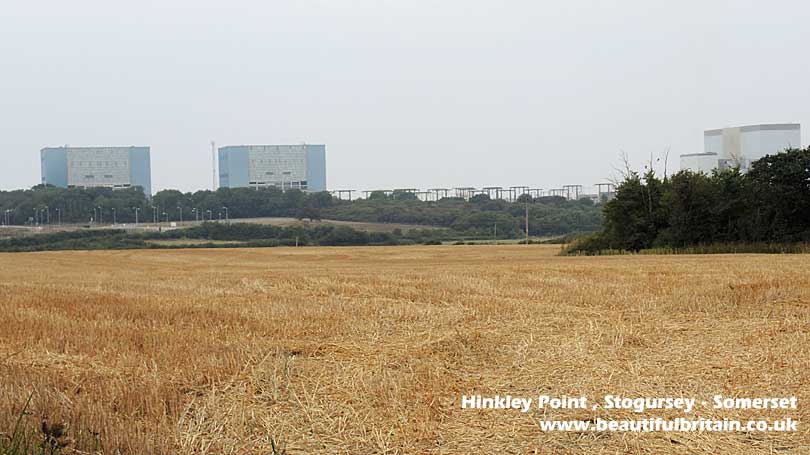 picture) in Somerset after imposing 'significant new safeguards' to protect national security.The new plant (Hinkley Point C) is to be financed by the French and the Chinese.